

Loading
Journal of Cellular Immunology
ISSN: 2689-2812
Volume 3, Issue 5, p296-354
Articles published in this issue are Open Access and licensed under Creative Commons Attribution License (CC BY NC) where the readers can reuse, download, distribute the article in whole or part by mentioning proper credits to the authors.
Short and Sweet: Viral 5`-UTR as a Canonical and Non-Canonical Translation Initiation Switch
The replication of viruses requires host cell functions, specifically for protein synthesis, as viruses lack their own translational machinery. Failure to translate viral mRNAs and generate viral proteins would affect the propagation and evolution of a virus. Thus, independently of their size, complexity, and genomes, viruses evolved sophisticated molecular mechanisms to hijack the translational apparatus of a host in order to recruit ribosomes for efficient protein production.
J Cell Immunol, 2021, Volume 3, Issue 5, p296-304 | DOI: 10.33696/immunology.3.110

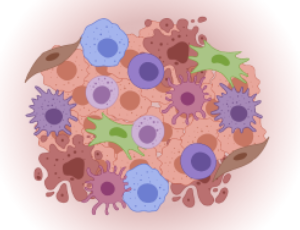
Exploring and Targeting the Tumor Immune Microenvironment of Neuroblastoma
Neuroblastoma is derived from the developing sympathetic nervous system and is the most common extracranial solid tumor of childhood.
J Cell Immunol, 2021, Volume 3, Issue 5, p305-316 | DOI: 10.33696/immunology.3.111
COVID-19 Clinical Outcomes and Vaccine Efficacy among Patients with Hematologic Malignancies
The coronavirus disease 2019 (COVID-19) pandemic places the treating hematologist in a quandary: how best to protect patients with hematologic malignancies from potentially deadly COVID-19 infection while also providing the best therapy for their disease and maximizing opportunities for cure. Cancer patients as a whole trend toward more severe infection and increased mortality from COVID-19 infection.
J Cell Immunol, 2021, Volume 3, Issue 5, p317-320 | DOI: 10.33696/immunology.3.112
Guanylate Binding Proteins promote anti-Leishmania Host Cell Defense
For their survival, many intracellular pathogens build and retain pathogen-containing vacuoles (PVs) to hide from the cytosolic host defense systems. Among the several PV-resident human pathogens are the obligate intracellular protozoa parasites Leishmania donovani and Toxoplasma gondii. The proinflammatory cytokine IFNγ, a key player in cellular immunity, can orchestrate a variety of defensive functions that destroy or prevent these intravacuolar pathogens from replicating inside host.
J Cell Immunol, 2021, Volume 3, Issue 5, p321-325 | DOI: 10.33696/immunology.3.113
Using Immune Cell/Adipocyte Co-Culture Models to Identify Inflammatory Paracrine Signaling Mechanisms: A Process Attenuated by Long-Chain N-3 Polyunsaturated Fatty Acids
Obese adipose tissue (AT) is characterized by increased recruitment and infiltration of multiple immune cell populations, in particular T cells (CD4+ or CD8+ subsets) and macrophages, that interact with adipocytes through paracrine signaling (i.e., cross-talk). Adipocyte/ immune cell cross-talk results in increased inflammatory and chemoattractant mediator production that contributes to local (i.e., AT) and systemic metabolic dysfunction.
J Cell Immunol, 2021, Volume 3, Issue 5, p326-335 | DOI: 10.33696/immunology.3.114
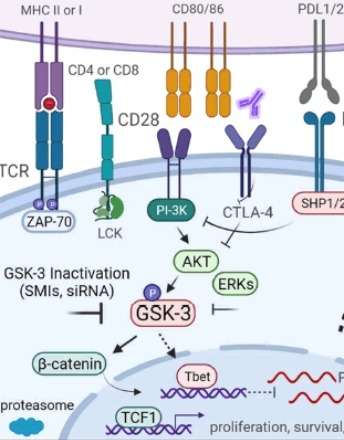
Glycogen Synthase Kinase-3 (GSK-3) Regulation of Inhibitory Coreceptor Expression in T-cell Immunity
The serine/threonine kinase, glycogen synthase kinase 3 (GSK-3) has been implicated in immune cell activation and function. Our recent studies have shown that the abrogation of GSK-3 activity down-regulates the expression of key inhibitory receptors PD-1 and LAG-3. It also regulates the expression of the transcription factor NFAT which, in turn, is responsible for inhibiting PD-1/ LAG-3 transcription as well as activating the expression of cytolytic effector proteins such as perforin and granzyme B.
J Cell Immunol, 2021, Volume 3, Issue 5, p336-342 | DOI: 10.33696/immunology.3.115
Immune Cells and Transcriptional Signatures Revealed Novel Regulators and Predict Clinical Response to Biologic Therapy in Ulcerative Colitis
Inflammatory Bowel Disease (IBD), which includes Crohn’s Disease (CD) and Ulcerative Colitis (UC), has a heterogeneous pathogenesis underlined by genetic predisposition, intestinal barrier dysfunction, impaired immune response, and microbiota imbalance. This proceeds to aberrant immune cells presence and function in the affected tissue, activation of signaling pathways, and expression of regulators that subsequently drive inflammation.
J Cell Immunol, 2021, Volume 3, Issue 5, p343-347 | DOI: 10.33696/immunology.3.116
Resilience in Rheumatic and Musculoskeletal Diseases
Chronic conditions such as rheumatic diseases often carry a great burden, with pain, disability, and mood disorders ultimately leading to a poor quality of life. Resilience, defined as the skill to positively cope with stressful and critical events, could mediate the influence of rheumatic disease on patients’ life and may have a role in withstanding it. While resilience could be in some cases an innate ability, it can also be acquired through a dynamic process.
J Cell Immunol, 2021, Volume 3, Issue 5, p348-354 | DOI: 10.33696/immunology.3.117
Chimeric Antigen Receptor CAR NK Cells Emerging Immunotherapy for the Treatment of Cancer
Although NK cells are recognized as effector lymphocytes of the innate immune system, they also regulate the adaptive immune response by releasing inflammatory cytokines and developing immunological memory. Unlike other lymphocytes such as T or B cells, NK cells do not express rearrangeable, antigen-specific receptors.
Emerging Role of TRPML1 Mucolipin Endolysosomal Channel in Cancer
The transient receptor potential mucolipin 1 (TRPML1) is an endolysosomal channel belonging to the TRP family. Clinically, mutations of TRPML1 have been responsible for a severe lysosomal storage disorder called mucolipidosis type IV.
Cyclic Nucleotide Signaling Pathways in Apicomplexan Parasites Provide a Valuable Source for Novel Drug Targets
Malaria is one of the most important disabling human, tropical disease caused by different Plasmodium species, which are protozoan parasites belonging to the Apicomplexa. The Apicomplexan parasites have a plastid like structure the “apicoplast” and comprise the genera Plasmodium, Toxoplasma and Cryptosporidium causing malaria, toxoplasmosis, and cryptosporidiosis.
COVID-19 Clinical Research
While the global COVID-19 pandemic has challenged the entire humanity and health systems, it also triggered researchers to urgently perform clinical trials to assess the safety and efficacy of many agents and modalities to combat COVID-19. As of April 22, over 650 clinical studies have been registered both in USA and internationally. Results from these studies are also coming at a brisk pace in this unprecedented emergency.
Ubiquitin Proteasome System Regulates Biological Particles Interaction in Particle Disease (PD) via NF-κB Signaling
Considering their outstanding mechanical character, it is inevitable to utilize titanium and titanium composite for biomedical engineering application [1-6]. However, the particles releasing from these bulks or composites of biomaterials after long term implanting in human body will cause cell apoptosis or cell death, inflammation, bone
Circulating Cell-Free RNA: A New Perspective for Endometrial Cancer
In order to implement the knowledge of cancer to monitor its evolution and setting, in the last decade, new minimally invasive and repeatable samples collection have been developed such as liquid biopsy. Cancer biomarkers originating from tumors can represent the molecular status of the tumor or its metastases which release them directly into body fluids or indirectly due to disruption of tumor/metastatic tissue. These biomarkers are detectable in liquid biopsy.
DNA Nanotechnology Engineered Vesicle for Mimicking Biomolecular Signaling
Bio-inspired strategy is kind of interesting to fabricate devices and perform dynamic operations [1]. Various devices have been made, such as airplane, radar and submarine. In life science, as the fundamental entity, million years’ evolution enables cell becomes the most successful functionality.
Impact of Cisplatin Dosing Regimens on Mammary Tumor Growth in an Animal Model
In a recent paper, we introduced a variant of the classical Simeoni tumor growth model, and illustrated its value in assessing tumor growth in a reproducible mouse model for mammary tumors. Our modification consisted of incorporating delay differential equations in the mathematical formulation of the Simeoni model, to represent the delay in drug action often observed under chemotherapeutic or immunotherapeutic regimens.
Deubiquitinase as Potential Targets for Cancer Immunotherapy
During the last few decades, immunotherapy is considered to be an important approach to help our immune system to fight various kinds of diseases, such as tumor. Sometimes, it works very well for some types of cancers, for example: bladder cancer, colorectal cancer, breast cancer and lymphoma.
Exploiting Nanotechnology to Target Viruses
Infectious diseases caused by microorganisms of the most varied natures and by viral entities cause millions of deaths every year. Around the world, viral infections have impacted civilizations’ circumstances since the earliest times, including the current panorama of the SARS-CoV-2 pandemic known as coronavirus disease in 2019 (COVID-19). In this sense, in the last century,
The Effect of Glucocorticoids on Angiogenesis in the Treatment of Solid Tumors
Glucocorticoids (GCs) are defined by their role in maintaining glucose homeostasis and natural GCs are a class of corticosteroids secreted by the adrenal cortex. Cortisol is the most important natural GC in humans. Cellular cortisol levels are regulated by the tissue-specific metabolic enzymes 11β-hydroxysteroid dehydrogenase 1 and 2 (11β-HSD 1 and 2); 11β-HSD 1 converts inactive cortisone to active cortisol, while 11β-HSD 2 has the opposite function.
How Well Do Hemodialysis Patients Respond to the BNT162b2 mRNA COVID-19 Vaccine?
In January 2020, the World Health Organization (WHO) classified COVID-19 to be a Public Health Emergency of International Concern and declared it a pandemic on March 11, 2020 [1]. Over one hundred and eighty-five million people have been infected by SARS-CoV-2 and roughly four million have died worldwide so far
The Potential Role of SEPT6 in Liver Fibrosis and Human Hepatocellular Carcinoma
Liver fibrosis is a reversible wound-healing response in which a variety of cells and factors are involved in and results in excessive deposition of extracellular matrix (ECM). Cirrhosis is one of the significant causes of portal hypertension and end-stage liver disease, and it is the 14th most common cause of death around the world. Approximately 1.03 million people worldwide die from liver cirrhosis every year.
Reduced BCR Signaling and a Metabolic Shift Accompanies Malignant Progression of Follicular Lymphoma: A Lesson from Transcriptomics
In the manuscript entitled “The ion channels and transporters gene expression profile indicates a shift in excitability and metabolisms during malignant progression of Follicular Lymphoma”, we reported recent advances in our understanding of how the gene expression profile of ion channels and transporters (ICT-GEP) contributes to identify specific signatures associated with Follicular Lymphoma (FL), with those FL that acquire chemoresistance after a relapsing-remitting course, and with the more aggressive Diffuse Large Cell Lymphoma (DLBCL), which in some cases represent the evolution of FLs.
The Challenge of Cognitive Dissonance in the Delivery of Precision Medicine in Veterinary Oncology
The use of molecular and genomic analysis of a cancer as a means to define a patient-specific treatment is interchangeably referred to as Precision Medicine, Personalized Medicine, or Genomically-directed medicine (herein, collectively PMED). In the foregoing commentary we have focused on PMED approaches related to treatment selection and do not prioritize the development of novel molecular assays used to guide patient diagnostics or prognostication.
Role of the Gut Microbiome in the Modulation of Cancer Immunotherapy Response
The gut microbiome or gut flora is a vast community of microorganisms such as bacteria, viruses, protozoa, and fungi that inhabit the digestive tract of the human and other animals. In the human body, bacterial species colonize into the oral cavity, skin, vagina, and placenta, however, the largest population of microorganisms resides in the intestine. The majority of gut microbiota belong to the phyla Firmicutes, Bacteroidetes, Proteobacteria and Actinobacteria.
Can Filtration Technology Advance Culture of Circulating Tumor Cells towards Precision Medicine?
Expansion of Circulating Tumor Cells (CTC), the metastatic seeds of cancer in the blood stream, holds great potential in clinical application, especially towards precision medicine. Given the relatively rare nature of CTCs, their culture remains to be a significant challenge. When developing technologies for CTC culture, there are key elements that need careful consideration, including the speed of culture, compatibility with downstream analysis, and the implementation of the technology into established clinical daily routines. Herein, we briefly discuss the implications of our recent report of an ultrathin filter for the capture and culture of circulating colon cancer cells.
Influence of Clinical Risk Factors on Outcomes in Men with Stage I Non-Seminomatous Germ Cell Tumor Undergoing Robot-Assisted Retroperitoneal Lymph Node Dissection
We recently published our multi-institutional experience performing primary robot-assisted retroperitoneal lymph node dissection (RA-RPLND) for men with non-seminomatous germ cell tumor (NSGCT). We concluded that primary RA-RPLND for NSGCT can be performed safely with low complication rates, acceptable early oncologic outcomes, and lower overall theoretical chemotherapy burden. In this commentary, we explore outcomes in clinical stage I patients stratified by clinical risk factors (RF) and estimate reductions in chemotherapy burden.
Sentinel Lymph Node Biopsy after Neoadjuvant Chemotherapy for Breast Cancer
Breast cancer is the second most common cancer worldwide, affecting nearly one in eight women. Accurate cancer staging is essential for determining the patient’s prognosis and for choosing the appropriate treatment. The staging system most often used is the American Joint Committee on Cancer (AJCC) TNM system, where T refers to the size of the tumor, N refers to spread of the primary cancer to nearby lymph nodes, and M refers to the spread of metastasis to distant sites in the body.
Platelet Hyperactivity and Dysfunction in Diabetes and Cancer
However, the entire coagulation cascade is dysfunctional, in progressed chronic diabetes and cancer patients. Platelets (PLTs) in type 2 diabetic (DT2) involved in Thrombosis and Haemostasis (T&H) of individuals adhere to vascular endothelium and aggregate more voluntarily than those in healthy individuals, as are abnormalities in the microvascular and macrovascular circulations. However it is already known that the circulating PLTs are essential for T&H, inflammation growth factors delivery, regeneration; and knowledge of their function is fundamental to understanding the pathophysiology of vascular disease in diabetes and cancer-related diseases.
Scientific Archives is a global publisher initiated with the mission of ensuring equal opportunity for accessing science to research community all over the world. Spreading research findings with great relevance to all channels without any barrier is our goal. We want to overcome the challenges of Open Access with ensured quality and transparency.