

Loading
Journal of Cellular Immunology
ISSN: 2689-2812
Volume 3, Issue 6, p355-418
Articles published in this issue are Open Access and licensed under Creative Commons Attribution License (CC BY NC) where the readers can reuse, download, distribute the article in whole or part by mentioning proper credits to the authors.
Joint Health Markers in Hemophilia: The State of the Art
Recurrent joint bleeds in hemophilia lead to (irreversible) joint damage, so-called hemophilic arthropathy causing major morbidity amongst hemophilia patients. Progression of arthropathy is monitored by clinical examination and imaging, but sensitive joint outcome measurements detecting early and subclinical joint damage are lacking. Biochemical markers reflecting joint tissue turnover can potentially provide this significant information about the joint status.
J Cell Immunol, 2021, Volume 3, Issue 6, p355-363 | DOI: 10.33696/immunology.3.124
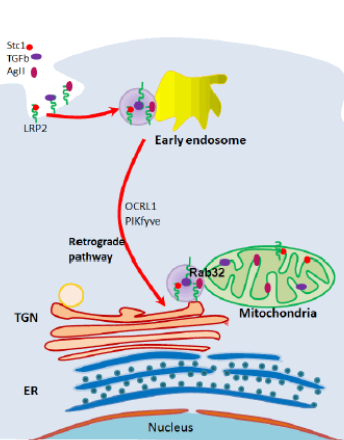
Megalin-Mediated Trafficking of Mitochondrial Intracrines: Relevance to Signaling and Metabolism
The multi-ligand binding protein megalin (LRP2) is ubiquitously expressed and facilitates cell uptake of hormones, nutrients and vitamins. We have recently shown megalin is present in the mitochondria of cultured epithelial and mesenchymal cells, as well as many organs and tissues. Mitochondrial megalin associates with stanniocalcin-1 and SIRT3; two proteins that promote anti-oxidant defenses.
J Cell Immunol, 2021, Volume 3, Issue 6, p364-369 | DOI: 10.33696/immunology.3.118

The Return of Tocilizumab for Patients with COVID-19 Pneumonia
The COVID-19 pandemic has been devastating for many for over one year. Vaccination has helped decrease the number of cases, but there are still multiple challenges to end the pandemic, such as the advent of variants, vaccine hesitancy, access to vaccines, and the impaired efficacy of vaccines in immunocompromised persons. Due to the hyperinflammatory state of SARS-COV-2 infections, research has been done on treatments that curtail the hyperinflammation.
J Cell Immunol, 2021, Volume 3, Issue 6, p370-374 | DOI: 10.33696/immunology.3.119
Proteome-wide Epitope Prediction: Leveraging Bioinformatic Technologies in Rational Vaccine Design
Artificial intelligence-based prediction technologies have allowed definition of T-cell epitopes presented by Major Histocompatibility Complex (MHC) molecules with allele-specificity of presentation. While some have utilized these technologies on a smaller scale, recent work has expanded the workable proteome size, leveraged both classes of Major Histocompatibility (MHC) molecules, extended the range of host species assessed during comparative analysis, and incorporated pathogen genetic diversity to highlight broadly useful epitopes.
J Cell Immunol, 2021, Volume 3, Issue 6, p375-379 | DOI: 10.33696/immunology.3.120
Application of Mucosal Immune-related Molecular Adjuvants CCL19 and CCL28 in Enhancing the Function of HSV-2 gD DNA Vaccine
Herpes simplex virus type 2 (HSV-2) develops an annual incidence of 2.3 million people worldwide, which can lead to life-long latent infections, asymptomatic and reactivations, and with occasional symptomatic episodes causing ulcerative lesions in the genitalia and naus. The most serious complications are the long-term neurological sequelae and death of newborns during pregnancy.
J Cell Immunol, 2021, Volume 3, Issue 6, p380-386 | DOI: 10.33696/immunology.3.121
Targeting Ovarian Cancer with IL-2 Cytokine/Antibody Complexes: A Summary and Recent Advances
Interleukin (IL)-2 was first identified as a potent T cell growth factor in 1976 and cloned in 1983. In the late 1990s, IL-2 gained further attention as the first immunotherapy demonstrating clinical efficacy against metastatic cancer, as high dose IL-2 was approved by the United States Food & Drug Administration (FDA) for the treatment of metastatic renal cell carcinoma in 1992 and metastatic melanoma in 1998.
J Cell Immunol, 2021, Volume 3, Issue 6, p387-396 | DOI: 10.33696/immunology.3.122
Human Gray and White Matter Metabolomics to Differentiate APOE and Stage Dependent Changes in Alzheimer’s Disease
Alzheimer’s disease (AD) is the most common form of dementia with hallmarks of ß-amyloid (Aß) plaques, tau tangles, and neurodegeneration. Studies have shown that neurodegeneration components, especially brain metabolic deficits, are more predictable for AD severity than Aß and tau. However, detailed knowledge of the biochemical composition of AD brain tissue vs. normal brain tissue remains unclear.
J Cell Immunol, 2021, Volume 3, Issue 6, p397-412 | DOI: 10.33696/immunology.3.123
Rethinking Radiation Dose-Fractionation in the Immuno- Oncology Era
Leveraging the immunomodulatory effects of radiation therapy (RT) for synergy with immunotherapeutic agents for the treatment of cancer is an area of immense interest. A pressing deficiency in the translation of this strategy into the clinic is the lack of clarity on the impact of radiation dose-fractionation on host anti-cancer immune defences.
J Cell Immunol, 2021, Volume 3, Issue 6, p413-418 | DOI: 10.33696/immunology.3.125
Prevalence of Symptom Clusters in Cancer Patients at First Presentation in Palliative Care Clinic as per Different Disease Groups
Cancer has its own disease burden and patients usually suffer from symptom clusters when they are referred for palliative treatment. Identification of symptom cluster trajectories will help clinician to take into account measures that can optimize quality of life of palliative patients. Therefore the aim of this paper is to determine the overall prevalence of symptoms and symptoms clusters in different disease groups according to etiology at the time of first visit to Palliative care clinic by using HIS Palliative First Assessment note indicating Edmonton symptom scale.
Chimeric Antigen Receptor CAR NK Cells Emerging Immunotherapy for the Treatment of Cancer
Although NK cells are recognized as effector lymphocytes of the innate immune system, they also regulate the adaptive immune response by releasing inflammatory cytokines and developing immunological memory. Unlike other lymphocytes such as T or B cells, NK cells do not express rearrangeable, antigen-specific receptors.
Emerging Role of TRPML1 Mucolipin Endolysosomal Channel in Cancer
The transient receptor potential mucolipin 1 (TRPML1) is an endolysosomal channel belonging to the TRP family. Clinically, mutations of TRPML1 have been responsible for a severe lysosomal storage disorder called mucolipidosis type IV.
COVID-19 Clinical Research
While the global COVID-19 pandemic has challenged the entire humanity and health systems, it also triggered researchers to urgently perform clinical trials to assess the safety and efficacy of many agents and modalities to combat COVID-19. As of April 22, over 650 clinical studies have been registered both in USA and internationally. Results from these studies are also coming at a brisk pace in this unprecedented emergency.
Therapeutic Values of Ketamine for COVID-19-Cared Patients: An Expert’s Point of View
Ketamine has long been used in the field of anesthesia [1]. Its rapid and long-acting analgesic effects associated with its dissociative properties have also established its use in prehospital and emergency department patients.
Uniportal VATS Lobectomy for Lung Cancer: Feasibility and Cost Effectiveness in a Single Center Experience
In last decades, video-assisted thoracic surgery (VATS) together with robotic-assisted thoracic surgery (RATS) can be considered the biggest innovation in thoracic surgery. This approach drastically changed the way of performing surgical operations, improving patient’s outcome undergoing thoracic surgery.
A Bioinformatics Protocol for Rational Design of Peptide Vaccines and the COVID-19 Rampage
The currently ongoing coronavirus pandemic, the SARSCOV- 2, interchangeably referred to as the COVID-19 infection, has in a short span of time altered the ways and means of almost all of mankind. So strong has been its effect that all human activity ceased in one way or another for a considerable time, led to significant loss of life and economic drain of.
Circulating Cell-Free RNA: A New Perspective for Endometrial Cancer
In order to implement the knowledge of cancer to monitor its evolution and setting, in the last decade, new minimally invasive and repeatable samples collection have been developed such as liquid biopsy. Cancer biomarkers originating from tumors can represent the molecular status of the tumor or its metastases which release them directly into body fluids or indirectly due to disruption of tumor/metastatic tissue. These biomarkers are detectable in liquid biopsy.
DNA Nanotechnology Engineered Vesicle for Mimicking Biomolecular Signaling
Bio-inspired strategy is kind of interesting to fabricate devices and perform dynamic operations [1]. Various devices have been made, such as airplane, radar and submarine. In life science, as the fundamental entity, million years’ evolution enables cell becomes the most successful functionality.
Searching for Easy Reliable Prognostic Parametres in Colorectal Cancer Patients Evaluation
Tumor node metastasis (TNM) staging system is the most useful method in predicting prognosis of colorectal cancer (CRC), the third most common cause of death worldwide, even if other biological markers are currently under evaluation to assess their role in affecting CRC outcome and planning the best tailored therapeutic approach. Several molecular factors are being demonstrated to be effective in influencing both overall survival (OS) and disease-free survival (DFS) in CRC, acting on different aspects of tumor promoting and progression.
DILI, HILI, RUCAM Algorithm, and AI, the Artificial Intelligence: Provocative issues, Progress, and Proposals
Artificial Intelligence (AI) principles published in 1956 included the recommendation to use algorithms for solving complex processes. The creation of the Roussel Uclaf Causality Assessment Method (RUCAM) was published in 1993 with integration of an intelligent algorithm to solve issues of causality assessment in cases of complex suspected drug induced liver injury (DILI) cases. Other causality assessment methods (CAMs) published before the era of AI and RUCAM followed rather general principles without precise and valid algorithm.
Lessons Learnt from COVID-19: How Can We Prepare for Another Pandemic?
Five months into the COVID-19 pandemic, the U.S. death toll from the virus has now surpassed 100,000 people. Many more cases remain nationwide, while an unknown number of patients currently harbor the virus asymptomatically. While health officials are now optimistic regarding the decline in prevalence and number of deaths due to COVID-19 and the possibility of a vaccine by the fall, we cannot lose sight of the bigger picture: the next pandemic.
Safety of Using Rituximab Therapy During COVID-19 Pandemic
Our modern world is facing extraordinary circumstances while passing through a serious pandemic caused by the novel coronavirus (COVID-19) which may lead to multi-organ system failure & death. Bcell depletion could compromise antiviral immunity, which makes the safety of rituximab use in the COVID19 era unclear.
Deubiquitinase as Potential Targets for Cancer Immunotherapy
During the last few decades, immunotherapy is considered to be an important approach to help our immune system to fight various kinds of diseases, such as tumor. Sometimes, it works very well for some types of cancers, for example: bladder cancer, colorectal cancer, breast cancer and lymphoma.
Distinct Phosphorylation of STAT1 Confers Distinct DNA Binding and Gene-regulatory Properties
Signal transducer and activator of transcription 1 (STAT1) protein plays a pivotal role in various biological processes especially the regulation of innate and adaptive immune responses. Phosphorylation represents a key step in the activation of STAT1 and its transcriptional outcome. Binding of various extracellular ligands to their specific cell-surface receptors activates different phosphorylation of STAT1 followed by a distinct change of gene expression patterns.
Educators as Essential Workers in the Era of COVID-19: Applying Lessons from Disaster Recovery
In the article, “Mental Health Framework: Coronavirus pandemic in post-Katrina New Orleans” [1], Shervington and Richardson offer recommendations about how to anticipate and address disaster-related, trauma exposures associated with the coronavirus pandemic
How Well Do Hemodialysis Patients Respond to the BNT162b2 mRNA COVID-19 Vaccine?
In January 2020, the World Health Organization (WHO) classified COVID-19 to be a Public Health Emergency of International Concern and declared it a pandemic on March 11, 2020 [1]. Over one hundred and eighty-five million people have been infected by SARS-CoV-2 and roughly four million have died worldwide so far
Synthetic Lethal Drug Combinations Targeting Proteasome and Histone Deacetylase Inhibitors in TP53-Mutated Cancers
Background: We have recently published SL-BioDP, a web resource for querying, exploration and visualization of potential synthetic lethal targets and possible synergistic drug combinations for 18 cancer types. Methods: From our predictive synthetic lethality model used in SL-BioDP, we inferred TP53 mutation lead to potential synergistic drug combination of Bortezomib and Vorinostat. Here we show, how to extrapolate the drug combination results by combining drug screening data from cancer cell lines and showed the potential synergy of the drug targets, proteasome, and histone deacetylase (HDAC) pathways respectively, for patient survival advantage.
Role of the Gut Microbiome in the Modulation of Cancer Immunotherapy Response
The gut microbiome or gut flora is a vast community of microorganisms such as bacteria, viruses, protozoa, and fungi that inhabit the digestive tract of the human and other animals. In the human body, bacterial species colonize into the oral cavity, skin, vagina, and placenta, however, the largest population of microorganisms resides in the intestine. The majority of gut microbiota belong to the phyla Firmicutes, Bacteroidetes, Proteobacteria and Actinobacteria.
Do Support Vector Machines Play a Role in Stratifying Patient Population Based on Cancer Biomarkers
Cancer is a worldwide public health issue that affects millions of people every year. In 2018 there were 17 million newly documented cases of cancer globally (8.8 million in men and 8.2 million in women), leading to 9.6 million deaths. Cancer is a vastly heterogeneous disease, with over 100 different types of cancer currently identified in humans; the most common types of cancer are lung, female breast, bowel and prostate, these four types account for more than 40% of all new cancer case
Scientific Archives is a global publisher initiated with the mission of ensuring equal opportunity for accessing science to research community all over the world. Spreading research findings with great relevance to all channels without any barrier is our goal. We want to overcome the challenges of Open Access with ensured quality and transparency.