

Introduction
Despite recent pharmaceutical advancements in the treatment of ovarian cancer, high-grade serous ovarian cancer (HGSOC) remains the most lethal gynecologic malignancy [1]. Due to vague symptoms such as abdominal pain, decreased appetite, or weight loss, most HGSOC patients are diagnosed at advanced stages, resulting in a low survival rate of 49% [2]. This statistic has not changed for many years, emphasizing the need to investigate new treatment options for HGSOC patients. The recently published review titled “Exploring Metabolic Approaches for Epithelial Ovarian Cancer Therapy” by Kumari et al. provides a comprehensive overview of the growing field of tumor metabolism. The review suggests exploiting vulnerabilities such as heightened glycolysis, increased fatty acid metabolism, and dysregulated amino acid metabolic pathways in HGSOC [3]. Kumari et al. also highlight the importance of understanding metabolic plasticity and how it can give ovarian tumors a survival advantage to sustain their aggressive growth and metastasis. Importantly, the review raises the possibility that metabolic reprogramming may contribute to the emergence of drug resistance.
Metabolic pathways provide a potential avenue for drug development in the treatment of HGSOC, as currently available therapies remain limited in efficacy and often result in acquired drug resistance. Kumari et al. include a detailed list of ongoing and completed clinical/preclinical trials exploring various targets to leverage tumor metabolism and how these drugs affect the surrounding immune landscape in the tumor microenvironment [3]. Thus, the current literature suggests that HGSOC tumors reprogram their metabolism to sustain aggressive growth and dissemination. Exploring how to leverage this metabolic plasticity may provide opportunities to improve HGSOC treatment.
Following surgical debulking, HGSOC patients typically receive a combination of platinum- and taxane-based chemotherapy. Although most patients initially respond to the treatment, approximately 70% of patients with advanced disease eventually experience recurrence, and many ultimately develop platinum-resistant disease [4,5]. More recently, poly (ADP-ribose) polymerase (PARP) inhibitors (PARPi) were developed to exploit homologous recombination (HR) deficiency, particularly in HGSOC tumors harboring BRCA1/2 mutations or alterations in other HR repair genes [5]. PARP inhibitors such as olaparib and niraparib have shown substantial clinical benefit and have been FDA-approved for use as maintenance therapy for platinum-sensitive HR-deficient (HRD) cancers, including HGSOC [6]. Despite the various treatments available, HGSOC remains a major clinical challenge, fueling the need to further investigate new therapeutic strategies to overcome treatment resistance.
Many studies discussed in the aforementioned review describe the use of metabolic therapies in combination with platinum- and taxane-based chemotherapy to enhance antitumor effects on both cancer cells and the tumor immune microenvironment. Nonetheless, a gap in our understanding of how drug resistance reshapes tumor metabolism remains. In particular, the mechanisms by which PARP inhibitor resistance alters tumor metabolism in HGSOC remain incompletely understood.
PARP inhibitors have shown their greatest benefit in tumors with BRCA1/2 mutations or other forms of homologous recombination deficiency [4]. Almost 50% of HGSOC tumors exhibit HR deficiency, making PARP inhibitors particularly relevant for a substantial subset of patients [7]. This finding highlights the need to further investigate the metabolic changes that emerge during the development of PARPi resistance and identify pathways that could be therapeutically targeted to overcome or delay resistance.
PARP Inhibition and Synthetic Lethality
PARP inhibitors are particularly effective in HR-deficient tumors, where impaired homologous recombination creates a selective vulnerability to PARP inhibition (Figure 1) [8]. PARP inhibitors block PARP1/2 catalytic activity. They can also stabilize PARP–DNA complexes at single-strand break (SSB) sites (PARP trapping), promoting the accumulation of replication-associated DNA damage. Unresolved lesions and PARP-DNA complexes can stall or collapse replication forks, generating replication-associated double-strand breaks (DSBs). In HRD tumors, particularly those with BRCA mutations, the cell resorts to more error-prone mechanisms of DSB repair such as non-homologous end-joining or theta-mediated end-joining [8,9]. These error-prone modes of DNA repair often result in genomic instability, promoting synthetic lethality when PARP-dependent repair is impaired in cells already deficient in HR. Thus, the efficacy of PARP inhibitors relies heavily on HR dysfunction to selectively target cancer cells.
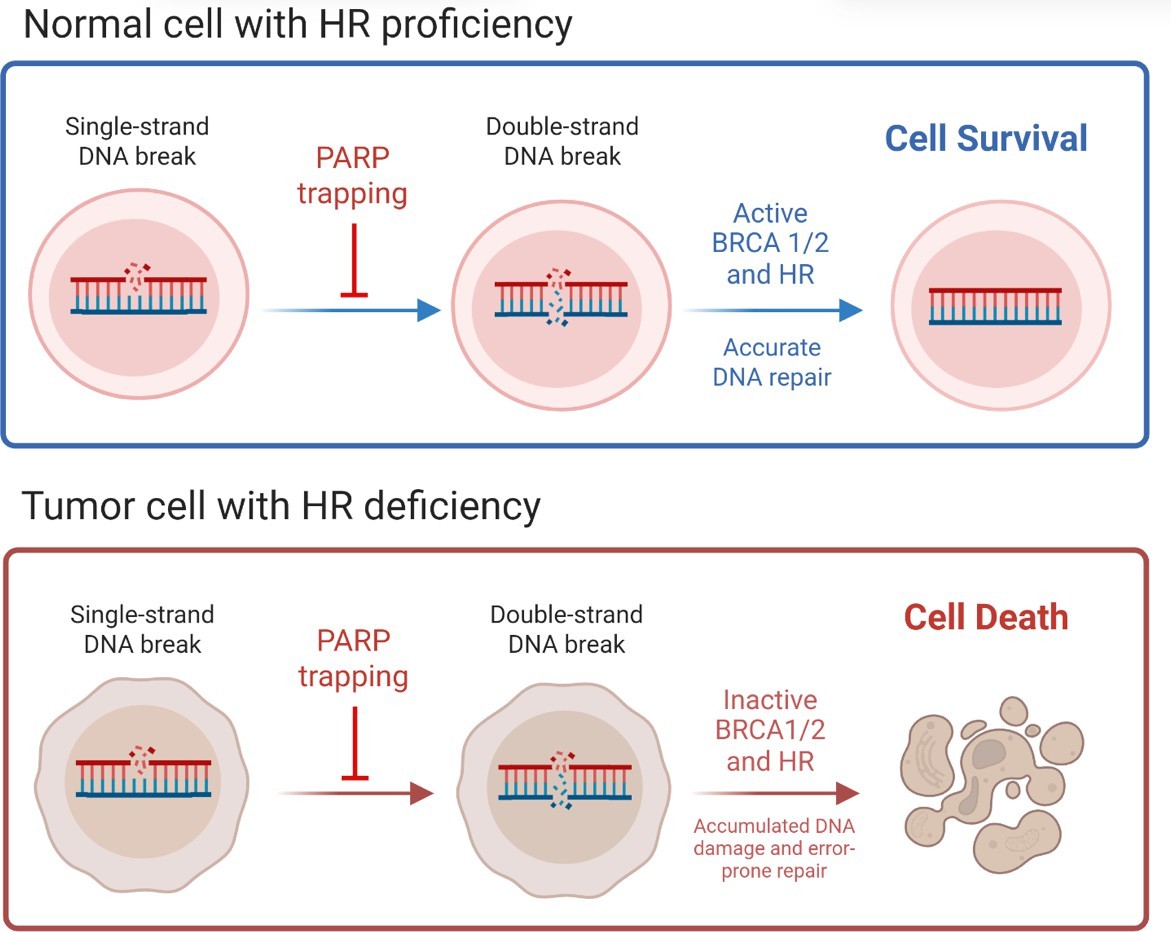
Figure 1. PARP inhibitors selectively target HR-deficient tumor cells by trapping PARP on single-stranded DNA breaks. Figure adapted from BioRender.
The FDA first approved olaparib in 2014 for patients with germline BRCA-mutated advanced ovarian cancer after multiple prior lines of chemotherapy and subsequently approved it for first-line maintenance for BRCA-mutated advanced ovarian cancer in 2018 [6]. Additionally, other PARP inhibitors such as rucaparib and niraparib, have been developed [10]. Unfortunately, 40–70% of patients eventually develop resistance to these PARP inhibitors [5]. Some studies have suggested that resistance to PARP inhibition can be due to secondary mutations that restore HR proficiency, increased drug efflux, PARP mutations, or activation of alternative DNA repair mechanisms [11]. Despite these findings, effective strategies to overcome acquired PARPi resistance remain a critical unmet clinical need. Therefore, alternative approaches are needed to address the ongoing clinical challenge of acquired PARPi resistance.
PARPi Resistance Reprograms Tumor Metabolism
Metabolic plasticity is one of the hallmarks of cancer biology, allowing cancer cells to survive under harsh conditions, especially during therapeutic challenges [12]. There is growing support for the notion that PARP inhibitors may induce metabolic stress that triggers adaptive metabolic reprogramming in tumor cells, which can contribute to acquired resistance. Thus, metabolic reprogramming may offer new therapeutic opportunities by exposing vulnerabilities that can be exploited to overcome PARPi resistance (Figure 2).
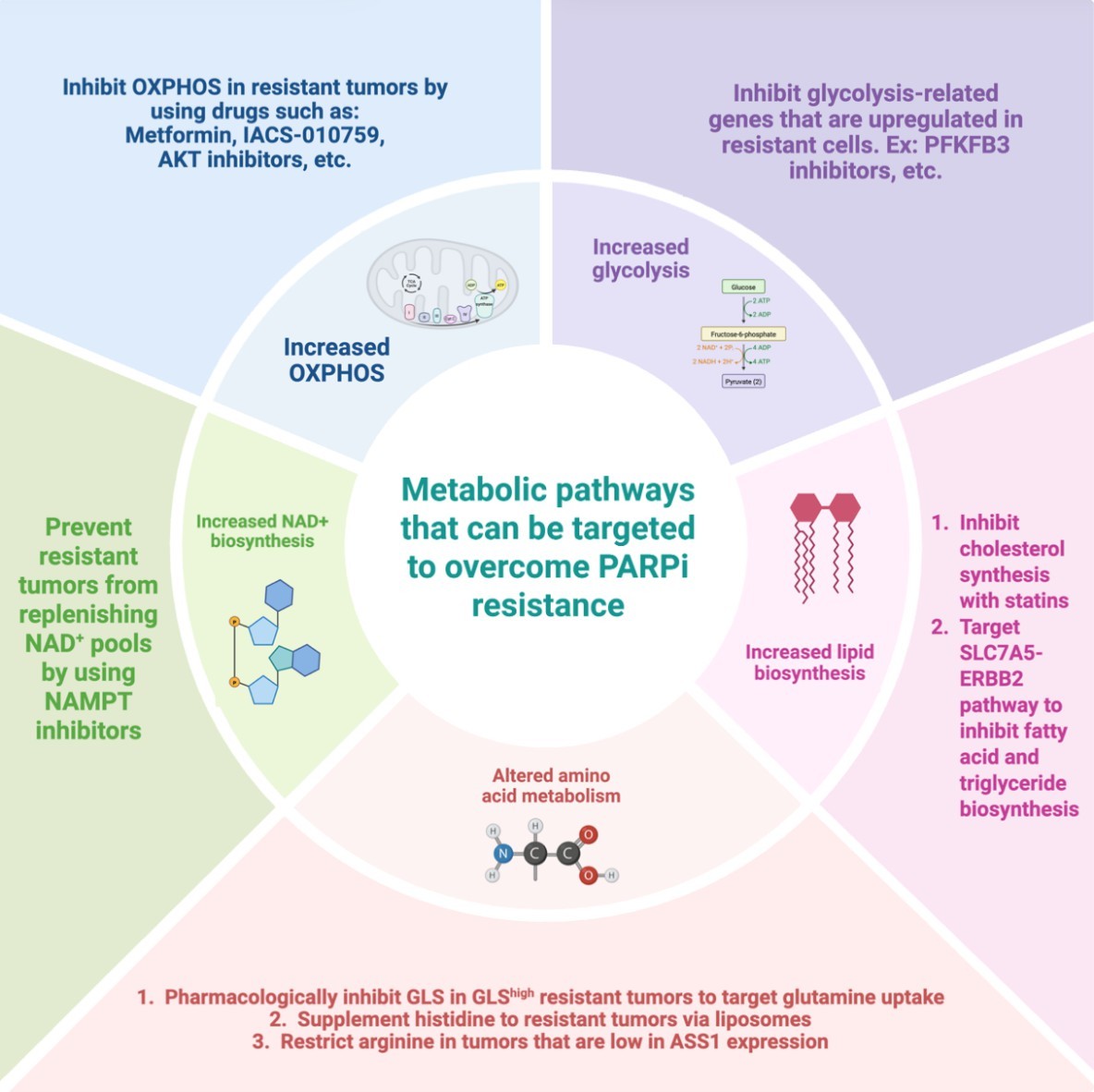
Figure 2. Potential metabolic pathways that can be targeted to overcome resistance to PARP inhibitors. Figure generated using BioRender.
Glycolysis
As mentioned in Kumari et al., some HGSOC tumors may upregulate glycolysis in response to drug challenges and environmental stress, which may create therapeutic vulnerabilities that can be exploited [3,13]. For example, it has been shown that 6-phosphofructo-2-kinase/fructose-2,6-biphosphatase 3 (PFKFB3), a gene involved in the positive regulation of cellular glucose metabolism, is upregulated in PARPi-resistant ovarian cancer cell lines, and knockdown of this gene resensitized resistant cells to olaparib, niraparib, and rucaparib [14]. PFKFB3 inhibition also suppressed HR-mediated DNA repair, thereby enhancing the damage caused by PARP inhibitors. This suggests that PFKFB3 inhibitors can act synergistically with PARP inhibitors to overcome acquired resistance in HGSOC including in HR-proficient ovarian cancer models. Thus, in PARPi-resistant cells that exhibit high glycolytic activity, targeting glycolysis regulators may offer a potential approach to overcoming PARPi resistance in HGSOC patients.
Lipid and Cholesterol Biosynthesis
PARP inhibitors have also been shown to modulate lipid biosynthesis by altering the composition of membrane lipids, disrupting cholesterol homeostasis (increasing high-density-to-low-density lipoprotein ratio), and downregulating de novo lipid biosynthesis [8]. For example, niraparib has been shown to activate the 24,25-epoxysterol shunt pathway, a regulatory pathway in cholesterol biosynthesis, in triple-negative breast cancer cells [15]. In that same study, inhibition of cholesterol synthesis using statins exhibited a synergistic effect with PARP inhibitors in inhibiting tumor cell proliferation in the BRCA1-deficient UWB1.289 ovarian cancer cell line [15]. By exploiting the PARPi-induced lipid metabolic changes in ovarian cancer, we may also be able to enhance the efficacy of PARP inhibitors.
On the other hand, in olaparib-resistant ovarian cancer cells, a de novo lipid synthesis pathway was recently implicated in the development of olaparib resistance [16]. The glutamine and leucine transmembrane transporter SLC7A5 was highly upregulated in olaparib-resistant ovarian cancer cells. SLC7A5 promoted ERBB2 expression and downstream de novo lipid synthesis, thereby supporting tumor growth [16]. The results of this study further highlight how PARPi resistance can affect multiple facets of tumor metabolism to sustain tumor growth. Thus, further investigation into changes in lipid metabolism associated with PARPi-resistance may reveal new therapeutic opportunities to overcome or delay acquired PARPi resistance.
Amino Acid Metabolism
PARP inhibitors have also been shown to shift metabolic needs of tumor cells by upregulating glutamine metabolism. Upregulating glutamine synthesis may supply tumor cells with nucleotides that facilitate DNA repair and contribute to PARPi resistance [13]. Glutamine uptake and utilization are controlled in part by membrane transporters and by the enzyme glutaminase (GLS), which converts glutamine to glutamate to support biosynthetic and energetic demands. It has been demonstrated that in platinum-resistant ovarian tumors with high GLS expression, combining the GLS inhibitor CB-839 with olaparib inhibited proliferation in vitro and prolonged survival in vivo [13,17]. However, platinum resistance does not establish acquired PARPi resistance, and whether this combination reverses the latter remains to be determined.
On the other hand, tumor cells that have acquired resistance to PARP inhibitors have also been shown to reprogram their amino acid metabolism [18]. For example, a recently published study compared the metabolomes of treatment-naïve and resistant BRCA-deficient breast cancer patient samples to explore how PARPi resistance reprograms amino acid metabolism. Compared with treatment-naïve cells, resistant cells showed increased intracellular levels of glycine, aspartate, and alanine, while showing markedly reduced levels of histidine and arginine [18]. To target these metabolic changes, supplementation with liposomes containing histidine significantly reduced tumor cell viability in vitro and enhanced olaparib response in vivo [18]. These findings highlight the need to further investigate whether histidine metabolism can also potentially be exploited for BRCA-deficient ovarian cancer tumors as well.
Interestingly, PARPi-resistant ovarian cancer cells have also been shown to downregulate the enzyme arginosuccinate synthase 1 (ASS1), which is responsible for de novo arginine synthesis in the cell [19]. Reduced arginine biosynthesis can render these cells dependent on extracellular arginine rather than de novo synthesis. Thus, for PARPi-resistant ovarian cancer tumors with low levels of ASS1 expression, it has been shown that arginine starvation may be a viable strategy to overcome niraparib resistance [19].
Together, these studies illustrate the distinction between metabolic responses to PARPi exposure, such as altered glutamine utilization, and changes described in acquired-resistance models, including ASS1 downregulation in ovarian cancer and altered amino acid uptake.
Oxidative Phosphorylation
While olaparib treatment has been shown to lower oxidative phosphorylation and reprogram the cells toward glycolysis, a subset of HRD cancer cells that survive PARPi challenge may paradoxically upregulate oxidative phosphorylation (OXPHOS) [13]. Kumari et al. describe studies targeting OXPHOS with agents such as metformin to exploit metabolic vulnerabilities in ovarian cancer [3]. Intriguingly, in HR-proficient ovarian cancer cells, inhibition of OXPHOS with metformin or the mitochondrial complex I inhibitor IACS-010759 has been shown to enhance the effects of olaparib by reducing cell proliferation and colony formation [20,21]. Targeting OXPHOS also impairs DSB repair in tumor cells, thereby mimicking HR-deficiency [20]. Metformin has also been shown to suppress the growth of BRCA-deficient tumors in vivo, although this effect was demonstrated in the absence of PARP inhibitor treatment [21]. Although these studies support further investigation of OXPHOS inhibition, whether this approach can reverse established PARPi resistance in ovarian cancer remains to be determined.
It has also been shown that HGSOC tumors may switch between glycolysis and oxidative phosphorylation for energy production depending on the treatment and environment [13]. Certain tumors may upregulate glycolytic enzymes, while others upregulate OXPHOS-related genes. This metabolic plasticity in HGSOC tumors may contribute to aggressive behavior and relapse, as targeting one metabolic pathway could drive cells to rely more heavily on an alternative pathway. However, a recent study found that in triple-negative breast cancer, combined inhibition of AKT and PARP potentiates olaparib activity and suppresses oxidative phosphorylation without pushing the cells to compensate with heightened glycolysis [22]. Thus, this finding warrants further investigation to determine whether this combination strategy could potentially be applicable to PARPi-resistant HGSOC tumors with increased oxidative phosphorylation.
NAD+ Biosynthesis
PARP proteins require a readily available supply of nicotinamide adenine dinucleotide (NAD+) for PARylation reactions involved in the DNA damage response [8,23]. Thus, when PARP proteins are activated, they deplete cytoplasmic levels of NAD+, which can result in the inhibition of glycolysis and the TCA cycle. Therefore, excessive activation of PARP during DNA repair may in turn activate cell death mechanisms due to rapid depletion of the NAD+ pools required to maintain these metabolic pathways [8]. PARP inhibitors bind to the NAD+-binding catalytic site of PARP1/2, thereby inhibiting PARylation and, to varying degrees, stabilizing PARP-DNA complexes at sites of DNA damage, which in turn increases the availability of NAD+ for other metabolic pathways.
To adapt to PARPi treatment, resistant cells may increase NAD+ availability through upregulation of the NAD+ salvage pathway, potentially reducing sensitivity to PARP inhibition [13]. NAMPT is a rate-limiting enzyme in the NAD+ salvage pathway. In HGSOC, it has been shown that a combination of NAMPT and PARP inhibitors synergize to inhibit proliferation of olaparib-resistant cells in vitro, in patient-derived organoids, and in vivo [23]. Findings from this study highlight how we may potentially exploit PARPi-induced upregulation of NAD+ biosynthesis to enhance the clinical efficacy of PARP inhibitors in resistant tumors.
Conclusion
Despite their efficacy in targeting DNA repair, PARP inhibitors can also induce metabolic adaptations that may contribute to the development of resistance. The examples outlined above highlight the complex, interconnected relationships between PARPi response and metabolic reprogramming. Defining which metabolic dependencies are causal and therapeutically actionable in PARPi-resistant HGSOC will be essential for developing rational combination strategies to overcome or delay resistance.
Acknowledgments
This work was supported by the US National Institutes of Health (R00CA241395 to S.K.), American Cancer Society (DBG-23-1034075-01-DMC to S.K.), and The Kaleidoscope of Hope Ovarian Cancer Foundation (to S.K.), TUFCCC/HC Regional Comprehensive Cancer Health Disparity Partnership from the National Cancer Institute of the National Institutes of Health (U54 CA221704(5) to S.G.).
References
2. Fu R, Hu R, Li W, Lv X, Zhao H, Li F. Unveiling drug resistance pathways in high-grade serous ovarian cancer(HGSOC): recent advances and future perspectives. Front Immunol. 2025 Apr 30;16:1556377.
3. Kumari S, Gupta S, Jamil A, Tabatabaei D, Karakashev S. Exploring Metabolic Approaches for Epithelial Ovarian Cancer Therapy. J Cell Physiol. 2025 Jan;240(1):e31495.
4. Zou Y, Zhang H, Chen P, Tang J, Yang S, Nicot C, et al. Clinical approaches to overcome PARP inhibitor resistance. Mol Cancer. 2025 May 30;24(1):156.
5. Kulkarni S, Seneviratne N, Tosun Ç, Madhusudan S. PARP inhibitors in ovarian cancer: Mechanisms of resistance and implications to therapy. DNA Repair (Amst). 2025 May;149:103830.
6. Arora S, Balasubramaniam S, Zhang H, Berman T, Narayan P, Suzman D, et al. FDA Approval Summary: Olaparib Monotherapy or in Combination with Bevacizumab for the Maintenance Treatment of Patients with Advanced Ovarian Cancer. Oncologist. 2021 Jan;26(1):e164–72.
7. Pavanello M, Vieira CM, Arenhardt MP, Nogueira-Rodrigues A. Homologous Recombination Proficiency in High-Grade Serous Epithelial Ovarian Cancer Tumors: The Dark Side of the Moon. Curr Issues Mol Biol. 2025 Sep 1;47(9):702.
8. Li J, Mu D, Li J, Lan M, Wu W, Zhang S, et al. PARP inhibitors target cellular energy metabolism: Mechanisms of action and clinical implications. Transl Oncol. 2026 Jun;68:102757.
9. Chandramouly G, Fried W, Gordon J, Ralph D, Keuk C, Kumari S, et al. RTx-303, an Orally Bioavailable Polθ Polymerase Inhibitor That Potentiates PARP Inhibitors in BRCA Mutant Tumors. J Med Chem. 2025 Nov 13;68(21):22196–215.
10. Redelico T. Rucaparib and Niraparib in Advanced Ovarian Cancer. J Adv Pract Oncol. 2019 May-Jun;10(4):402–8.
11. Giudice E, Gentile M, Salutari V, Ricci C, Musacchio L, Carbone MV, et al. PARP Inhibitors Resistance: Mechanisms and Perspectives. Cancers (Basel). 2022 Mar 10;14(6):1420.
12. Keoh LQ, Chiu CF, Ramasamy TS. Metabolic Plasticity and Cancer Stem Cell Metabolism: Exploring the Glycolysis-OXPHOS Switch as a Mechanism for Resistance and Tumorigenesis. Stem Cell Rev Rep. 2025 Nov;21(8):2446–68.
13. Guo X, Liu Z, Li X, Zhou B, Chen J. Metabolic vulnerabilities in ovarian cancer decoding the nexus between nutrient adaptation and therapy resistance. J Adv Res. 2026 Oct;88:589–610.
14. Xiao Y, Wu Y, Wang Q, Li M, Deng C, Gu X. Repression of PFKFB3 sensitizes ovarian cancer to PARP inhibitors by impairing homologous recombination repair. Cell Commun Signal. 2025 Jan 25;23(1):48.
15. Rutkowska A, Eberl HC, Werner T, Hennrich ML, Sévin DC, Petretich M, et al. Synergistic Effects of PARP Inhibition and Cholesterol Biosynthesis Pathway Modulation. Cancer Res Commun. 2024 Sep 1;4(9):2427–43.
16. Liu S, He Y, Ning X, Xu W, Hu X, Qin L, et al. SLC7A5-ERBB2 axis drives olaparib resistance via de novo lipid synthesis in ovarian cancer. Oncogene. 2026 Jan;45(2):140–263.
17. Shen YA, Hong J, Asaka R, Asaka S, Hsu FC, Suryo Rahmanto Y, et al. Inhibition of the MYC-Regulated Glutaminase Metabolic Axis Is an Effective Synthetic Lethal Approach for Treating Chemoresistant Ovarian Cancers. Cancer Res. 2020 Oct 15;80(20):4514–26.
18. Zhang J, Tufail M, Deng Y, Ling HJ, Peng L, Wu J, et al. Liposomes containing histidine overcome poly ADP-ribose polymerase inhibitor resistance. Drug Resist Updat. 2026 Sep;88:101432.
19. Wang H, Wang X, Zhang W, Hu S, Chen H, Liu J, et al. Arginine restriction exploits DNMT3B-ASS1-driven arginine auxotrophy and mTORC1-suppressed autophagy to overcome niraparib resistance in ovarian cancer. Cancer Lett. 2026 Aug 28;654:218582.
20. Formenti L, Abramo F, Dellavedova G, Dematteis V, Decio A, Grasselli C, et al. Impairment of oxidative metabolism compromises Rad51 recruitment and potentiates PARP inhibitor effectiveness in ovarian cancer. J Exp Clin Cancer Res. 2026 Jan 14;45(1):45.
21. Lahiguera Á, Hyroššová P, Figueras A, Garzón D, Moreno R, Soto-Cerrato V, et al. Tumors defective in homologous recombination rely on oxidative metabolism: relevance to treatments with PARP inhibitors. EMBO Mol Med. 2020 Jun 8;12(6):e11217.
22. Adam NMK, Vámos E, Ahmadi H, Maloba GO, Arshi A, Gallyas Junior F. Dual Inhibition of PARP and Akt Induces Metabolic Collapse and Apoptosis in Breast Cancer Cells. Cancers (Basel). 2025 Nov 29;17(23):3828.
23. Sauriol SA, Carmona E, Udaskin ML, Radulovich N, Leclerc-Desaulniers K, Rottapel R, et al. Inhibition of nicotinamide dinucleotide salvage pathway counters acquired and intrinsic poly(ADP-ribose) polymerase inhibitor resistance in high-grade serous ovarian cancer. Sci Rep. 2023 Feb 27;13(1):3334.