Loading
AUTHOR INFO

Elliot M. Levine
Rosalind Franklin University Chicago Medical School, USAArticles List
Ultrasound in Obstetrics and Gynecology
Elliot M. Levine
Advanced ultrasound offers an important diagnostic clinical tool for the specialty of Obstetrics (OB) and Gynecology (GYN). The advanced ultrasound technologies, such as power Doppler angiography, with its assessment of vascular flow, adds to the described clinical benefits. The imaging technology that this represents, offers diagnostic abilities for a variety of obstetric and gynecologic conditions
Arch Obstet Gynecol, 2020, Volume 1, Issue 1, p1-4 | DOI: 10.33696/Gynaecology.1.001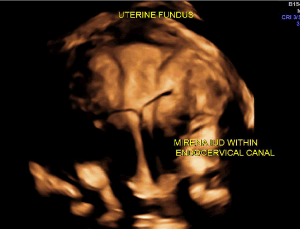
Intrauterine Device Embedment Resulting in Its Fracture: A Case Series
Leah Delfinado , Imaan Ansari , Elliot M. Levine , Carlos M. Fernandez , Marie Cabiya
Purpose: As long-acting reversible contraceptive choices are becoming more popular among young women, proper informed consent over potential complications should be addressed when such decisions are made. A local case series was analyzed to consider the risk of intrauterine device (IUD) fracture. Materials and Methods: A retrospective review of provider experience with the intrauterine device over a seven-year period was undertaken, to specifically analyze the incidence of IUD embedment and fracture in the studied population.
Arch Obstet Gynecol, 2021, Volume 2, Issue 1, p1-4 | DOI: 10.33696/Gynaecology.2.009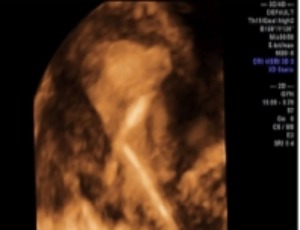
Ectopic Pregnancy: Vascularity Index as a Novel Diagnostic Criterion
Carlos M. Fernandez , Elliot M. Levine , Irma Sodini , Mai Britt Campbell , Stephen Locher
Since the medical management of ectopic pregnancy (EP) was introduced by Dr. Steven Ory, and published in 1986 in the American Journal of Obstetrics and Gynecology, diagnostic criteria have been established to predict its successful medical treatment with methotrexate (MTX), including its maximum diameter (MaxDia), its associated human chorionic gonadotropin (hCG) level, and whether there was identified cardiac motion (CM).
Arch Obstet Gynecol, 2022, Volume 3, Issue 2, p71-78 | DOI: 10.33696/Gynaecology.3.033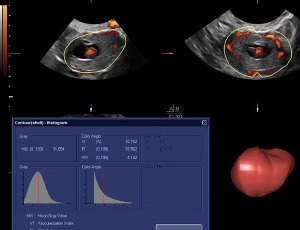
Racial/Ethnic Bias and Its Role in Severe Maternal Morbidity
Leah Delfinado , Elliot M. Levine , Carlos M. Fernandez
Racial and ethnic health disparities have been identified by many information sources in recent years, and a specific example of this is severe maternal morbidity and mortality, which includes mortality from postpartum hemorrhage. It is this racial/ethnic health disparity that has been highlighted in news reports that should be of concern to all physicians and healthcare providers, recognizing that women of color have more than three times the risk of dying in childbirth than white women.
Arch Obstet Gynecol, 2023, Volume 4, Issue 1, p4-6 | DOI: 10.33696/Gynaecology.4.035
Addressing Racial/Ethnic Healthcare Disparities and the Rising Incidence of Syphilis
Elliot M. Levine , Carlos M. Fernandez
Some sexually transmitted infections have posed a particular epidemiologic problem for some communities, in that racial/ethnic disparities have been demonstrated. Syphilis represents a specific example of such an infection, compounding the medical problem further by adding to the serious consequences of its vertical perinatal transmissibility to the neonate, in addition to its sexual, or horizontal, transmission.
Arch Obstet Gynecol, 2023, Volume 4, Issue 3, p62-64 | DOI: 10.33696/Gynaecology.4.045
Predatory versus Non-Predatory Journals: An Important Distinction to be Made
Elliot M. Levine
The term, “predatory”, is defined in Webster’s dictionary as “inclined or intended to injure or exploit others for personal gain”. This term was first applied to some journals by Professor Beall in 2012, describing those journals as being without scholarly merit and being exploitative for a journal’s gain.
Arch Obstet Gynecol, 2023, Volume 4, Issue 4, p114-115 | DOI: 10.33696/Gynaecology.4.055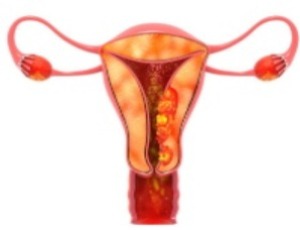
Use of Algorithms to Predict Disease in Obstetrics: A Clinical Perspective
Elliot M. Levine
Artificial Intelligence (AI) has been the subject of many contributions to the lay and professional literature in the past few years. While it may seem that the medical benefits of its use are immense, there may be reasons to consider a degree of caution in this regard. In particular, the clinical value of using algorithms to predict disease should be measured against the cases in which such algorithms are not used. Then, the resultant costs can be measured to show possible clinical benefit of AI.
Arch Obstet Gynecol, 2024, Volume 5, Issue 1, p16-17 | DOI: 10.33696/Gynaecology.5.058
Exploration of Real-World Obstetric Data Regarding Cesarean Delivery Rate Since the ARRIVE Trial
Carlos M. Fernandez , Elliot M. Levine , Teresa Tam
The cesarean delivery rate reported for the USA is an important element which impacts parturients in many ways, and which is a measurable factor. It is essential to determine if this rate compares with what had been predicted according to a previously published randomized controlled trial recommending an early term induction of labor. Such a comparison is possible, and should be reviewed, and which follows.
Arch Obstet Gynecol, 2024, Volume 5, Issue 3, p127-128 | DOI: 10.33696/Gynaecology.5.071
Primary Dysmenorrhea: A Questionable Diagnosis in the Modern Era
Elliot M. Levine , Carlos M. Fernandez , Teresa Tam
The term “Primary Dysmenorrhea” may no longer adequately describe a patient’s diagnosis, given the capabilities of modern imaging technology to detect possible deep infiltrating endometriosis. Laparoscopy alone may not be sufficient for diagnosing endometriosis. Considering the availability of specific therapeutic interventions tailored for endometriosis, there is a compelling case for pursuing a more targeted diagnostic approach.
Arch Obstet Gynecol, 2025, Volume 6, Issue 1, p27-29 | DOI: 10.33696/Gynaecology.6.081
Comprehensive Management of Endometriosis: Implementation from Research to Clinical Practice
Carlos M. Fernandez , Elliot M. Levine , Teresa Tam
Appendiceal endometriosis (AE) represents a clinically significant yet frequently overlooked manifestation of endometriosis that may contribute to persistent symptoms and suboptimal treatment outcomes. Multiple comprehensive reviews demonstrate that appendiceal involvement occurs in a notable percentage of women with endometriosis and can present with distinctive symptom patterns.
Arch Obstet Gynecol, 2025, Volume 6, Issue 2, p82-84 | DOI: 10.33696/Gynaecology.6.090
Methotrexate Treatment of Ectopic Pregnancy
Elliot M. Levine
In their detailed review of randomized controlled trials (RCTs) of intact tubal ectopic pregnancies (EPs) treated with methotrexate (MTX), the benefit of single dose MTX treatment was made clear,recognizing the easily administered low-cost treatment as having an 81% success rate.
Arch Obstet Gynecol, 6, 3, p95-95
Co Authors