

Abstract
Background: Metabolic Dysfunction–Associated Steatotic Liver Disease (MASLD) and Metabolic Dysfunction–Associated Steatohepatitis (MASH) are closely linked to obesity, insulin resistance, metabolic syndrome, and Type 2 Diabetes Mellitus (T2DM), all of which contribute to fibrosis progression and liver-related complications.
Objective: To systematically review the association of metabolic syndrome and T2DM with progression of MASLD/MASH to advanced fibrosis and cirrhosis, and to evaluate the effects of metabolic pharmacotherapies on hepatic and clinical outcomes.
Methods: This systematic review was registered in PROSPERO (CRD420261322056) and conducted according to PRISMA 2020 guidelines. PubMed/MEDLINE, Embase, and Cochrane Library were searched for studies published between January 2016 and September 2025. Randomized controlled trials and prospective controlled studies involving adults with MASLD/MASH, liver fibrosis, or cirrhosis associated with metabolic syndrome and/or T2DM were included. Risk of bias was assessed using RoB 2.0 and certainty of evidence was evaluated using GRADE.
Results: Twenty-six studies were included in the qualitative synthesis. Metabolic dysfunction and insulin resistance were consistently associated with worsening liver disease severity. GLP-1 receptor agonists, dual incretin agonists, and SGLT2 inhibitors were associated with reductions in hepatic steatosis, improvements in liver enzyme levels, better glycemic control, and weight loss. Resolution of MASH and improvement in fibrosis were reported mainly with semaglutide, liraglutide, tirzepatide, and pegozafermin, although evidence for advanced fibrosis regression remained limited and heterogeneous. Lifestyle interventions and sustained weight loss also showed clinically relevant histological benefits. However, evidence for long-term outcomes, including prevention of cirrhosis, hepatocellular carcinoma, hepatic decompensation, and liver-related mortality, remains insufficient.
Conclusion: Metabolic syndrome and T2DM play a central role in the progression of MASLD/MASH toward advanced fibrosis and cirrhosis. Pharmacological strategies targeting metabolic dysfunction, particularly GLP-1 receptor agonists, dual incretin agonists, and SGLT2 inhibitors; appear promising for improving hepatic and metabolic surrogate outcomes, but robust evidence for long-term cirrhosis-related clinical benefit is still lacking.
Keywords
MASLD/MASH, Type 2 diabetes mellitus, Metabolic syndrome, Liver fibrosis, Cirrhosis, GLP-1 receptor agonists, SGLT2 inhibitors, Fibrosis progression
Introduction
Metabolic Dysfunction–Associated Steatotic Liver Disease (MASLD), including its inflammatory subtype known as Metabolic Dysfunction–Associated Steatohepatitis (MASH), currently represents one of the fastest-growing causes of chronic liver disease, advanced fibrosis, and cirrhosis worldwide [1–3]. Over the past several decades, the rising prevalence of obesity, metabolic syndrome, and Type 2 Diabetes Mellitus (T2DM) has substantially altered the epidemiological profile of chronic liver diseases, making metabolic abnormalities key drivers of liver injury progression [3,4]. It is estimated that approximately 20% of patients with MASH progress to advanced fibrosis over the natural history of the disease [5], highlighting the clinical magnitude and progressive impact of this condition on healthcare systems.
In this context, the interplay between metabolic syndrome, insulin resistance, and chronic low-grade inflammation plays a decisive role in the progression of hepatic steatosis to advanced fibrosis and cirrhosis [6,7]. Furthermore, insulin resistance increases hepatic lipotoxicity, oxidative stress, and activation of pro-inflammatory and profibrotic pathways, thereby promoting progressive liver remodeling and worse clinical outcomes [7,8]. Concurrently, T2DM has been consistently linked to a higher risk of fibrosis progression, hepatic decompensation, hepatocellular carcinoma, and liver-related mortality [3,4]. Even in studies whose primary endpoints did not include progression to cirrhosis, a consistent association was observed between metabolic disorders, hepatic fat accumulation, and worsening liver disease [1,5].
Given this close pathophysiological relationship, therapeutic interventions aimed at metabolic control have attracted increasing interest as potential strategies to slow the progression of liver fibrosis. Recent evidence indicates that approaches capable of reducing insulin resistance, visceral adiposity, and systemic inflammation can improve liver histology and decrease inflammatory activity [5,9,10]. In this setting, several drug classes used in the management of T2DM and metabolic syndrome have been widely investigated for their hepatic effects, including metformin, pioglitazone, GLP-1 receptor agonists, SGLT2 inhibitors, DPP-4 inhibitors, and statins [1–3,11–16].
Among these therapies, incretin-based agents have shown particularly promising results. Recent studies have reported significant improvements in hepatic steatosis, reductions in intrahepatic lipid content, and higher rates of MASH resolution without worsening fibrosis [1–3]. Similarly, SGLT2 inhibitors have demonstrated relevant benefits regarding metabolic parameters, liver enzyme levels, and hepatic fat content [12–14]. Other metabolic therapies, including pioglitazone, statins, and lipid-modifying agents, have also been associated with improvements in liver and metabolic markers [15,17,18].
However, despite advances in reducing steatosis and hepatic inflammation, robust evidence regarding the impact of these interventions on long-term clinical outcomes, such as regression of advanced fibrosis, prevention of cirrhosis, hepatocellular carcinoma, and liver-related mortality, remains limited [1,3,19]. Additionally, the available literature exhibits considerable methodological heterogeneity, including differences in study populations, diagnostic criteria, follow-up duration, pharmacological interventions, and outcomes assessed. Although several recent clinical trials have expanded knowledge regarding metabolic therapies for MASLD/MASH [1–3,19], a definitive consensus has not yet been reached on the magnitude of benefit these strategies provide for fibrosis progression and cirrhosis development.
Therefore, a critical and systematic synthesis of current evidence is required to integrate key clinical and therapeutic findings related to the interaction between metabolic dysfunction and progression of chronic liver disease. Accordingly, this systematic review aims to analyze the influence of metabolic syndrome, type 2 diabetes mellitus, and major metabolic pharmacological therapies on the progression of fibrosis and liver cirrhosis in patients with MASLD/MASH, while discussing their potential impacts on liver-related, metabolic, and prognostic outcomes.
Methods
Study design and search strategy
This is a systematic literature review conducted in accordance with the Preferred Reporting Items for Systematic Reviews and Meta-Analyses (PRISMA 2020) guidelines. The review protocol was registered in advance with the International Prospective Register of Systematic Reviews (PROSPERO) under registration number CRD420261322056.
This work was structured around two core axes of interest:
- Metabolic dysfunction as a driver of disease progression: to evaluate how metabolic syndrome and type 2 diabetes mellitus influence the progression of MASLD/MASH toward advanced fibrosis and cirrhosis;
- Metabolic pharmacotherapies as potential modifiers of liver outcomes: to assess the effects of pharmacological interventions used for metabolic control on liver-related clinical and histological outcomes.
Literature searches were performed across the PubMed/MEDLINE, Embase, and Cochrane Library databases, covering studies published from January 2016 through September 2025, which represents the date of the final search. The search strategy was adapted to the specific syntax and indexing requirements of each database to ensure optimal sensitivity and specificity. The complete, detailed search strategy for each platform is provided as Supplementary Material. In addition, manual searches were conducted in the reference lists of all included studies and relevant systematic reviews to identify potentially relevant articles not retrieved by the initial electronic search.
The search strategy was as follows:
(“Liver Cirrhosis” OR “Chronic Liver Disease” OR “Liver Fibrosis” OR “MASLD” OR “MASH” OR “Nonalcoholic Fatty Liver Disease”)
AND
(“Metabolic Syndrome” OR “Type 2 Diabetes Mellitus” OR “Obesity” OR “Insulin Resistance”)
AND
(Metformin OR Pioglitazone OR “GLP-1 Receptor Agonists” OR Liraglutide OR Semaglutide OR Tirzepatide OR “SGLT2 Inhibitors” OR Empagliflozin OR Dapagliflozin OR Statins)
AND
(“Fibrosis” OR “Cirrhosis” OR “Disease Progression” OR “Mortality” OR “Hepatocellular Carcinoma”)
Eligibility criteria
Studies were included if they met all of the following criteria:
- Randomized controlled trials;
- Prospective controlled studies;
- Studies conducted in human adults (aged ≥18 years);
- Patients diagnosed with MASLD/MASH, chronic liver disease, liver fibrosis, or cirrhosis;
- Presence of metabolic syndrome and/or type 2 diabetes mellitus;
- Evaluation of metabolic pharmacological therapies, including metformin, pioglitazone, GLP-1 receptor agonists, SGLT2 inhibitors, DPP-4 inhibitors, statins, and related agents;
- Reporting of at least one relevant liver-related or metabolic outcome, including fibrosis progression, MASH resolution, progression to cirrhosis, hepatic decompensation, hepatocellular carcinoma, mortality, histological changes, liver enzyme levels, or hepatic fat content.
Studies were excluded based on the following criteria:
- Retrospective observational studies;
- Cross-sectional studies;
- Case reports or case series;
- Narrative reviews, systematic reviews, and meta-analyses;
- Experimental studies in animals;
- Articles without full text available;
- Studies lacking relevant clinical or liver-related outcomes;
- Duplicate publications.
No restrictions were applied regarding the country of origin of the studies. Only articles published in English were included.
Study selection
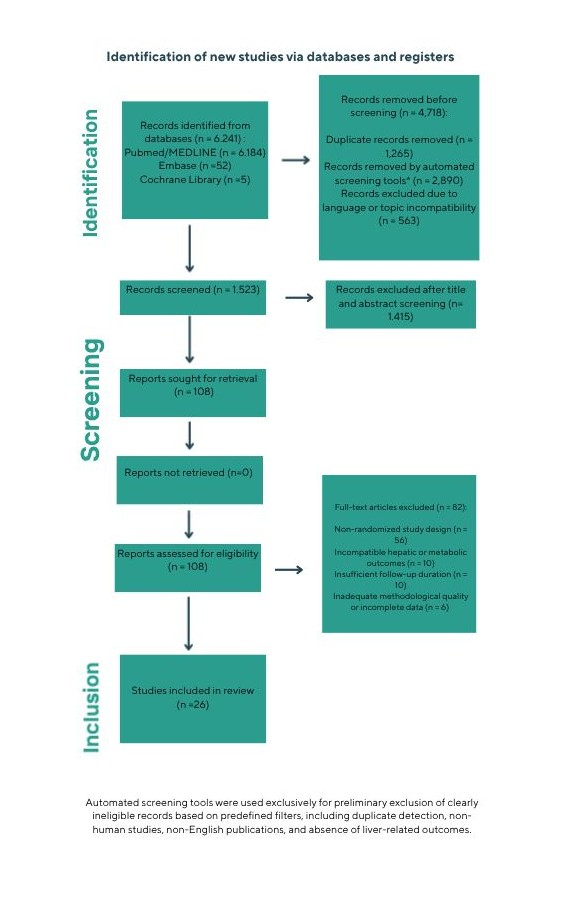
Study selection was performed independently by two reviewers in two stages. First, titles and abstracts retrieved from the databases were screened. Subsequently, potentially eligible studies underwent full-text review to assess inclusion and exclusion criteria. Disagreements between reviewers were resolved by consensus, and when necessary, a third reviewer was consulted. The study selection process was described using a flow diagram following PRISMA 2020 guidelines.
Data extraction
Data extraction was performed independently by two reviewers using a standardized form developed in advance. The following information was collected:
- Author names;
- Year of publication;
- Country of origin;
- Study design;
- Population characteristics;
- Sample size;
- Age and sex of participants;
- Metabolic comorbidities assessed;
- Pharmacological intervention used;
- Duration of follow-up;
- Liver-related and metabolic outcomes analyzed;
- Key clinical and laboratory findings.
Following extraction, data were reviewed and compared between evaluators to minimize inconsistencies and reduce the risk of extraction bias.
Risk of bias assessment
Risk of bias in included randomized controlled trials was evaluated using the Revised Cochrane Risk-of-Bias Tool for Randomized Trials (RoB 2.0).
The RoB 2.0 tool assesses five domains:
- Randomization process;
- Deviations from intended interventions;
- Missing outcome data;
- Outcome measurement;
- Selection of reported results.
Each domain was classified as:
- Low risk of bias;
- Some concerns;
- High risk of bias.
An overall risk-of-bias judgment was determined according to the tool’s guidelines. Assessment was performed independently by two reviewers, with any disagreements resolved by consensus.
| RoB 2.0 – Risk-of-bias assessment | ||||||
|---|---|---|---|---|---|---|
|
Study |
Randomization |
Deviations from intervention |
Missing data |
Outcome measurement |
Selective reporting |
Overall risk |
|
Loomba 2024 [1] |
Low |
Some concerns |
Low |
Low |
Low |
Some concerns |
|
Harrison 2025 [21] |
High |
High |
Low |
Low |
Low |
High |
|
Feng 2019 [10] |
High |
High |
Low |
Low |
Low |
High |
|
Mohamed 2024 [20] |
Low |
Low |
Low |
Low |
Low |
Low |
|
Yan 2019 [15] |
High |
Some concerns |
Low |
Low |
Low |
High |
|
Bril 2017 [16] |
Low |
High |
High |
Some concerns |
High |
High |
|
Wang 2024 [14] |
Some concerns |
High |
High |
Some concerns |
Some concerns |
High |
|
Masaeli 2025 [25] |
Some concerns |
High |
Low |
Low |
Some concerns |
High |
|
Takeda 2025 [26] |
Low |
Some concerns |
Low |
Some concerns |
Some concerns |
Some concerns |
|
Shojaei 2025 [11] |
Some concerns |
High |
High |
Some concerns |
Some concerns |
High |
|
Fukada 2025 [13] |
Low |
Low |
Low |
Low |
Low |
Low |
|
Hirata 2013 [17] |
Some concerns |
High |
Low |
Some concerns |
Some concerns |
High |
|
Pose 2025 [19] |
Low |
Low |
Low |
Low |
Low |
Low |
|
Caussy 2025 [22] |
Low |
Low |
Low |
Low |
High |
Some concerns |
|
Loomba 2023 [3] |
Low |
Low |
Low |
Low |
Low |
Low |
|
Borisov 2023 [23] |
Low |
Low |
Low |
Low |
Some concerns |
Some concerns |
|
Abdul-Ghani 2025 [8] |
Low |
Low |
Low |
Low |
Low |
Low |
|
McPherson 2017 [7] |
Low |
Low |
Low |
Low |
Low |
Low |
|
Koutoukidis 2025 [24] |
Some concerns |
Some concerns |
Low |
Low |
Low |
Low |
|
Nilghaz 2025 [9] |
Low |
Low |
Some concerns |
Low |
Low |
Some concerns |
|
Younis 2025 [18] |
Some concerns |
Low |
Some concerns |
Low |
Low |
Some concerns |
|
Vilar-Gomez 2015 [4] |
Low |
Low |
Low |
Low |
Low |
Low |
|
Loomba 2023 [2] |
Low |
Low |
Some concerns |
Low |
Low |
Some concerns |
|
Smits 2016 [12] |
Some concerns |
Low |
Some concerns |
Low |
Low |
Some concerns |
|
Šmíd 2022 [6] |
Low |
Low |
Some concerns |
Low |
Low |
Some concerns |
|
Gastaldelli 2024 [27] |
Low |
Low |
Low |
Low |
Low |
Low |
Data synthesis and analysis
A qualitative synthesis of included studies was performed, considering methodological characteristics, pharmacological interventions, and key liver-related and metabolic outcomes.
Studies were grouped according to the therapeutic class evaluated:
- GLP-1 receptor agonists;
- Dual incretin agonists;
- SGLT2 inhibitors;
- DPP-4 inhibitors;
- Insulin sensitizers;
- Statins and lipid-modifying agents.
Due to the methodological heterogeneity of the included studies, particularly regarding outcomes assessed, diagnostic methods, follow-up duration, and pharmacological interventions, a structured narrative synthesis was chosen, and no quantitative meta-analysis was performed.
Quality of evidence assessment
The overall quality of evidence was rated using the Grading of Recommendations Assessment, Development and Evaluation (GRADE) system, considering the following criteria:
- Risk of bias;
- Inconsistency;
- Indirectness of evidence;
- Imprecision;
- Publication bias.
Evidence quality was classified as:
- High;
- Moderate;
- Low;
- Very low.
This approach enabled a critical interpretation of methodological robustness and clinical reliability of the outcomes analyzed.
|
Outcome |
N° Studies |
Study Design |
Risk of Bias |
Inconsistency |
Indirectness |
Imprecision |
Publication Bias |
Certainty of Evidence |
|
Resolution of MASH without worsening fibrosis |
8 |
Randomized controlled trials |
Some concerns |
Low |
Low |
Moderate |
Undetected |
Moderate |
|
Improvement in liver fibrosis stage |
11 |
Randomized controlled trials |
Some concerns |
Moderate |
Low |
Moderate |
Undetected |
Moderate |
|
Reduction in hepatic steatosis |
18 |
Randomized controlled trials |
Low |
Low |
Low |
Low |
Undetected |
High |
|
Improvement in liver enzymes (ALT/AST) |
20 |
Randomized controlled trials |
Low |
Moderate |
Low |
Low |
Undetected |
Moderate |
|
Reduction in hepatic fat by MRI-PDFF |
9 |
Randomized controlled trials |
Low |
Low |
Low |
Low |
Undetected |
High |
|
Reduction in risk of progression to cirrhosis |
4 |
Randomized controlled trials |
Serious |
Serious |
Serious |
Serious |
Undetected |
Low |
|
Prevention of hepatocellular carcinoma |
2 |
Randomized + Observational evidence |
Serious |
Serious |
Serious |
Serious |
Undetected |
Very low |
|
Reduction in liver-related mortality |
3 |
Randomized+ Observational evidence |
Serious |
Serious |
Serious |
Serious |
Undetected |
Very low |
|
Improvement in metabolic parameters (HbA1c/HOMA-IR/ weight loss) |
22 |
Randomized controlled trials |
Low |
Low |
Low |
Low |
Undetected |
High |
|
Hepatic safety of therapies |
26 |
Randomized controlled trials |
Some concerns |
Low |
Low |
Moderate |
Undetected |
Moderate |
|
Reduction in inflammatory markers and lipid profile |
15 |
Randomized controlled trials |
Some concerns |
Moderate |
Low |
Moderate |
Undetected |
Moderate |
|
Prevention of advanced fibrosis progression |
7 |
Randomized controlled trials+ post-hoc analyses |
Some concerns |
Moderate |
Moderate |
Serious |
Undetected |
Low |
Results
The bibliographic search identified 6,241 records across the selected databases: 6,184 from PubMed/MEDLINE, 52 from Embase, and 5 from the Cochrane Library. After removing 1,265 duplicate records and excluding ineligible studies using automated tools and predefined thematic criteria, 1,523 studies remained for title and abstract screening. Of these, 1,415 were excluded for not meeting eligibility criteria. A total of 108 articles were selected for full-text review, of which 82 were subsequently excluded due to methodological inadequacy, absence of relevant liver-related outcomes, or insufficient follow-up duration. Ultimately, 26 studies were included in the qualitative synthesis of this systematic review (Figure 1).
The included studies were predominantly multicenter randomized controlled trials conducted across different regions of the world, including North America, Europe, Asia, and the Middle East [1–3,12,14]. Study populations consisted mainly of patients with MASLD/MASH associated with metabolic syndrome and T2DM, frequently presenting obesity, insulin resistance, and liver fibrosis at various stages. Sample sizes varied widely across studies, as did follow-up duration, which ranged from 12 weeks to 36 months. Pharmacological interventions evaluated included GLP-1 receptor agonists, dual incretin agonists, SGLT2 inhibitors, DPP-4 inhibitors, insulin sensitizers, statins, fibrates, and combined strategies targeting metabolic control [1–3,12,14,15,18]. Overall, the studies demonstrated a consistent association between improved systemic metabolic status and reductions in markers of liver disease activity.
|
Drug class |
Study & Reference number |
Main outcomes evaluated |
Key findings |
|
GLP-1/GIP agonist |
Loomba 2024 [1] |
MASH resolution, fibrosis improvement |
Tirzepatide significantly increased MASH resolution without worsening fibrosis stage |
|
Dual GLP-1/GCGR agonist |
Harrison 2025 [21] |
Hepatic fat fraction, ALT levels |
Pemvidutide reduced liver fat by up to 68% and normalized ALT levels |
|
GLP-1 agonist |
Feng 2019 [10] |
ALT, AST, body fat distribution |
Liraglutide reduced visceral fat, liver enzymes and insulin resistance compared with glibenclamide |
|
DPP-4 inhibitor |
Mohamed 2024 [20] |
Hepatic steatosis, glycemic control, liver enzymes |
Vildagliptin improved hepatic steatosis and glycemic control moderately, with no clear benefit on fibrosis |
|
GLP-1 + DPP-4 + insulin |
Yan 2019 [15] |
Intrahepatic lipid content, body weight |
Combined therapy reduced liver fat more effectively than single-agent treatment |
|
Statins |
Bril 2017 [16] |
Liver safety, fibrosis, transaminases |
Statins were safe in patients with MASLD/MASH; Did not worsen liver function or fibrosis |
|
Metformin + Ezetimibe |
Masaeli 2025 [25] |
Gene expression of PPAR-γ and adiponectin, lipid profile |
The combination of metformin and ezetimibe increased the expression of PPAR-γ and reduced triglycerides more than metformin alone |
|
Statin |
Wang 2024 [14] |
Liver enzymes, steatosis, lipid profile |
Rosuvastatin was safe and reduced liver fat and transaminase levels in moderate-to-severe MASLD |
|
Selective fibrate (PPAR-α) |
Takeda 2025 [26] |
Liver Fat Index (FLI) and lipid markers |
Pemafibrate was superior to omega-3 in reducing the liver fat index and improving the lipid profile in patients with dyslipidemia |
|
SGLT2 inhibitor |
Shojaei 2025 [11] |
Liver steatosis by MRI/USG, ALT/AST, HbA1c and HOMA-IR |
Empagliflozin significantly reduced liver fat, ALT and HbA1c, in addition to improving insulin resistance after 6 months |
|
SGLT2 inhibitor |
Fukada 2025 [13] |
ALT/AST, FibroScan and lipid profile |
Dapagliflozin promoted a significant reduction in liver enzymes and improved liver stiffness and steatosis |
|
Angiotensin Receptor Blocker (ARB) |
Hirata 2013 [17] |
ALT, AST, GGT, HOMA-IR, adiponectin and liver fat |
Telmisartan reduced liver enzymes and improved insulin resistance |
|
Lifestyle modification |
Vilar-Gomez 2015 [4] |
Liver histology |
Weight loss ≥10% was the main predictor of improvement in fibrosis and resolution of steatohepatitis |
|
Statin + Rifaximin |
Pose 2025 [19] |
Hepatic decompensation, mortality, complications |
There was no significant benefit in mortality in patients with advanced cirrhosis |
|
GLP-1/GIP agonist |
Caussy 2025 [22] |
MASH resolution and improvement of fibrosis |
Tirzepatide promoted MASH resolution by up to 62% |
|
GLP-1 receptor agonist |
Loomba 2023 [3] |
Improvement of fibrosis and metabolic parameters |
Semaglutide reduced liver fat and weight, but without significant improvement in fibrosis |
|
SGLT2 inhibitor |
Borisov 2023 [23] |
Incidence of MAFLD and progression of fibrosis |
Canagliflozin reduced the risk of MAFLD and advanced fibrosis |
|
Analog of FGF21 |
Loomba 2023 [2] |
NASH resolution and improvement of fibrosis |
Pegzafcrmin improved fibrosis and reduced liver fat |
|
Intensive calorie restriction |
Koutoukidis 2025 [24] |
Fibro-inflammation and liver stiffness |
Significant reduction of liver fat and fibro-inflammation |
|
BRA |
McPherson 2017 [7] |
Alteration of the stage of fibrosis |
Losartan did not demonstrate significant antifibrotic efficacy |
|
Triple antidiabetic therapy |
Abdul-Ghani 2025 [8] |
Liver fat content and HbA1c |
Triple therapy reduced liver fat more than sequential therapy |
|
Fibrate |
Younis 2025 [18] |
Safety profile, liver enzymes, fibrosis |
Fenofibrate showed good hepatic safety and improved lipid |
|
DASH Diet + TRF |
Nilghaz 2025 [9] |
CAP, ALT/AST, HOMA-IR |
DASH + TRF significantly reduced liver fat |
|
GLP-1 agonist + DPP-4 inhibitor |
Smits 2016 [12] |
Liver fat and liver stiffness |
Liraglutide and sitagliptin did not significantly reduce liver fat in 12 weeks |
|
Omega-3 polyunsaturated fatty acids |
Šmid 2022 [6] |
GGT, liver fat and stiffness |
Omega-3 reduced GGT, but without significant improvement in steatosis/fibrosis |
|
Insulin sensitizer (Pioglitazone) |
Gastaldelli 2024 [27] |
Insulin resistance, steatosis, fibrosis |
Improved insulin sensitivity and steatosis; Modest benefit on fibrosis in patients with severe insulin resistance |
MASH resolution and improvement in liver fibrosis
Incretin-based therapies produced the most consistent results regarding MASH resolution. The study conducted by Loomba et al. [1], showed that tirzepatide led to significant MASH resolution without worsening fibrosis compared with placebo, accompanied by substantial reductions in hepatic fat content and overall metabolic improvement. Similar findings were observed with semaglutide and pegozafermin [2,3], although the magnitude of fibrosis regression varied across studies.
Despite histological improvements observed with several interventions, significant regression of advanced fibrosis was less consistent than reductions in hepatic steatosis. In many studies, benefits regarding fibrosis were modest or limited to short-term follow-up [1,3,14]. Nonetheless, therapies targeting insulin resistance and body weight control showed meaningful potential to slow the progression of fibrosis.
Reduction in hepatic steatosis
Reduction in hepatic fat content was the most consistently reported outcome across included studies. Assessments using Magnetic Resonance Imaging–Proton Density Fat Fraction (MRI-PDFF) demonstrated significant decreases in intrahepatic lipid content following treatment with GLP-1 receptor agonists, dual incretin agonists, and SGLT2 inhibitors [1,3,12,14]. Trials evaluating liraglutide, semaglutide, and empagliflozin reported a relative reduction of up to 49% in hepatic lipid content measured by MRI-PDFF compared with placebo, alongside weight loss and improved insulin sensitivity [11,12,16]. Furthermore, combined strategies involving dietary restriction and pharmacological therapy exerted a synergistic effect on reducing hepatic fat accumulation [5,10].
Improvement in liver enzymes and metabolic parameters
Multiple pharmacological interventions resulted in significant reductions in serum Alanine Aminotransferase (ALT) and Aspartate Aminotransferase (AST) levels, indicating decreased hepatic inflammatory activity [11,12,16]. These effects were particularly evident in studies using liraglutide, empagliflozin, and dual incretin agonists [1,12]. Beyond liver-related benefits, consistent improvements in metabolic parameters were observed, including reductions in body weight, better glycemic control, decreased insulin resistance, and improved lipid profiles [9, 11,12,15]. Interventions with GLP-1 receptor agonists and SGLT2 inhibitors produced the greatest simultaneous benefits on both metabolic and liver-related outcomes.
Safety profile of pharmacological therapies
In general, the pharmacological therapies evaluated exhibited an acceptable safety profile. Statins demonstrated hepatic safety even in patients with metabolic dysfunction–associated liver disease [17]. Similarly, fibrates and SGLT2 inhibitors were not associated with worsening fibrosis or significant increases in liver-related adverse events [14,18]. The most frequently reported adverse effects were mild-to-moderate gastrointestinal symptoms, particularly among users of incretin-based therapies [1,3]. Nevertheless, most studies reported good tolerability and low rates of treatment discontinuation.
Risk of bias assessment
Risk of bias was evaluated using the RoB 2.0 tool. Most included studies were judged to have a low risk of bias or only some methodological concerns, primarily related to randomization procedures, blinding, and loss to follow-up. The main domains with potential methodological limitations included lack of blinding in some trials, heterogeneity in histological assessment methods, and short follow-up durations for evaluating long-term clinical outcomes. Studies assessing mortality, progression to cirrhosis, and hepatocellular carcinoma were associated with greater uncertainty due to the limited number of events and short follow-up periods [1,3,19].
Quality of evidence (GRADE)
The overall quality of evidence was assessed using the GRADE system. High-quality evidence was found for outcomes related to reductions in hepatic fat content measured by MRI-PDFF and improvements in hepatic steatosis [1,3,12]. Evidence regarding MASH resolution and improvement in hepatic inflammatory activity was rated as moderate, mainly due to methodological heterogeneity and limited follow-up duration. In contrast, outcomes of greater prognostic relevance, including regression of advanced fibrosis, prevention of cirrhosis, hepatocellular carcinoma, and liver-related mortality, were supported by low or very low-quality evidence [1,3,19]. This limitation stems primarily from the scarcity of long-term studies and the predominant use of surrogate markers rather than robust clinical endpoints.
Overall, the included studies indicate that pharmacological interventions aimed at metabolic control, especially incretin-based therapies and SGLT2 inhibitors, are associated with significant improvements in liver-related and metabolic outcomes in patients with MASLD/MASH. However, definitive evidence regarding the long-term impact of these therapies on progression of advanced fibrosis, cirrhosis, and liver-related mortality remains limited.
Discussion
Metabolic dysfunction as a mechanistic driver of disease progression
The findings of this systematic review confirm that metabolic dysfunction–associated steatotic liver disease (MASLD/MASH) is closely linked to metabolic syndrome and Type 2 Diabetes Mellitus (T2DM), and currently represents one of the most rapidly growing causes of progression to advanced fibrosis and cirrhosis worldwide [1,3,4]. Rather than merely coexisting conditions, these metabolic disorders converge through a unified pathophysiological axis: insulin resistance, visceral adiposity, hepatic lipotoxicity, and chronic low-grade systemic inflammation. Together, these mechanisms drive the transition from simple steatosis to inflammatory injury, fibrogenesis, and ultimately end-stage liver disease [6–8]. Insulin resistance promotes increased peripheral lipolysis and delivery of free fatty acids to the liver, while impairing their oxidation and secretion, leading to intracellular lipid accumulation. This excess lipid triggers oxidative stress, endoplasmic reticulum dysfunction, and activation of hepatic stellate cells, the key mediators of extracellular matrix deposition and fibrosis [7,8]. Consistent with this model, T2DM was associated with a more aggressive clinical course, including faster progression in MASLD/MASH, higher rates of clinical decompensation, and increased risk of Hepatocellular Carcinoma (HCC) and liver-related mortality [3,4]. These observations underscore that metabolic dysfunction is not just a risk factor, but a central driver of disease progression [7,8].
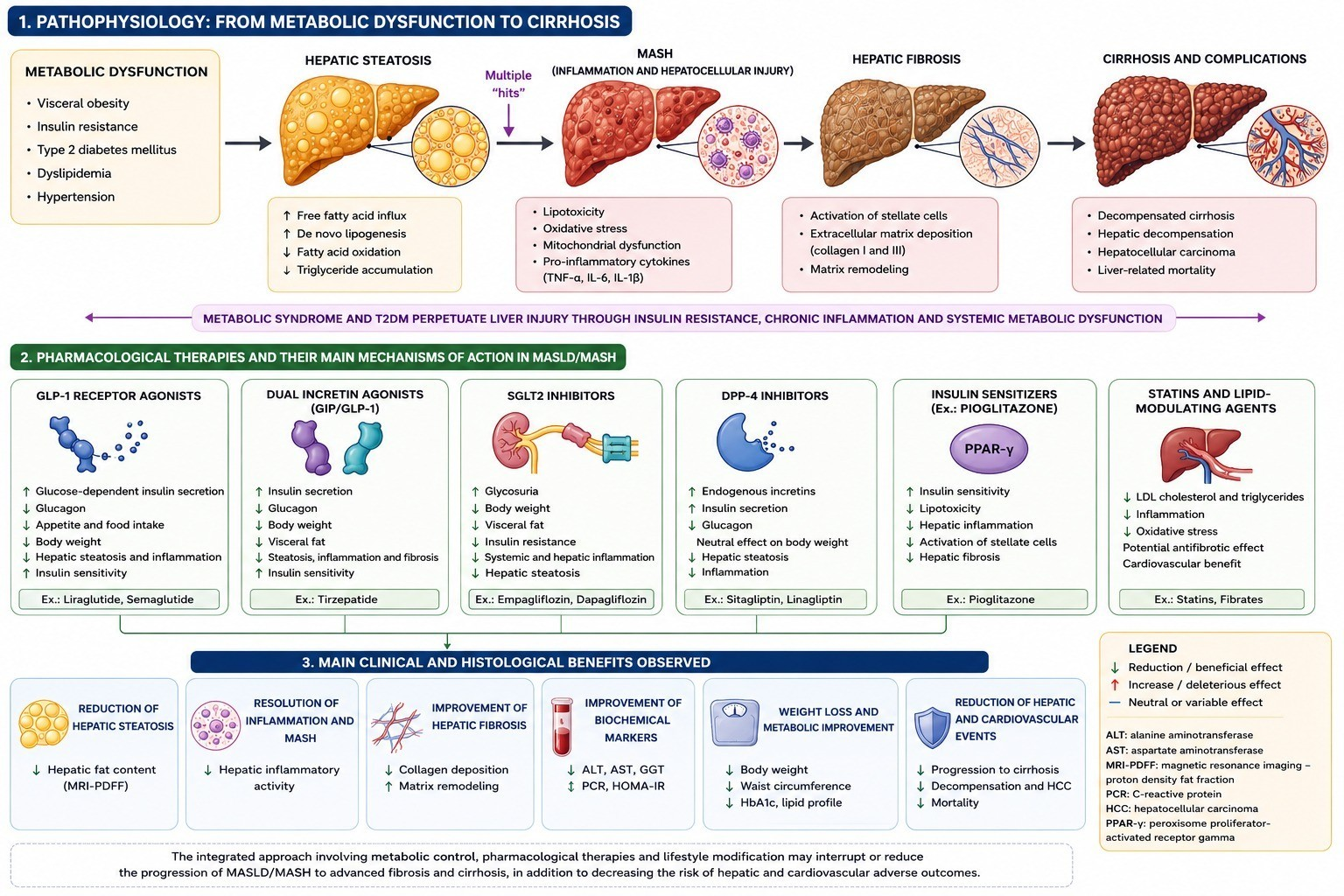
Pharmacological therapies improve surrogate and histological outcomes — but evidence is uneven
Therapies targeting metabolic pathways have emerged as potential strategies to modify the natural history of MASLD/MASH, though their effects vary substantially across different endpoints.
The strength of evidence can be categorized as follows:
- Stronger evidence supports favorable effects on easily measurable and reproducible outcomes. GLP-1 receptor agonists and dual incretin agonists were associated with consistent reductions in hepatic fat content, improvements in liver enzyme levels, and sustained weight loss [1–3]. Trials with tirzepatide demonstrated marked reductions in intrahepatic lipid content by MRI-proton density fat fraction (MRI-PDFF), alongside significant improvements in insulin sensitivity [1,22]. Semaglutide and pegozafermin also showed promise in reducing hepatic steatosis and normalizing metabolic parameters [2,3]. SGLT2 inhibitors demonstrated favorable effects on surrogate hepatic outcomes, including lower transaminase levels and reduced liver fat accumulation, likely through mechanisms involving reduced adiposity, improved insulin sensitivity, and diminished oxidative stress [12,14].
- Moderate evidence supports benefits regarding histological endpoints. Tirzepatide and semaglutide were associated with higher rates of MASH resolution without worsening fibrosis stage, while pioglitazone suggested histological improvement with fibrosis benefit in patients with marked insulin resistance [1–3,12]. However, the magnitude of fibrosis improvement remained modest and variable across studies, with responses largely limited to early or intermediate stages of disease [1,3].
- Weak or very low evidence exists for clinically meaningful long-term outcomes. Although metabolic therapies improve laboratory and imaging markers, robust data demonstrating protection against progression to cirrhosis, reduction in HCC risk, or improvement in liver-related mortality remain scarce [1,3,19].
Beyond pharmacotherapy, lifestyle modification remains the cornerstone of management. Strategies promoting sustained weight loss were associated with improvements in steatosis, reductions in hepatic inflammation, and greater likelihood of fibrosis improvement [5,10]. Weight loss of 7–10% or more of initial body weight correlated with meaningful histological improvement, while reductions exceeding 10% were linked to higher rates of MASH resolution and partial fibrosis regression [5].
Why cirrhosis-related outcomes remain uncertain
The limited evidence for disease-modifying effects on advanced liver disease stems from consistent methodological constraints across the available literature. First, most trials have relatively short follow-up periods, typically ranging from 12 to 72 weeks, too brief to capture progression to cirrhosis or decompensation, processes that evolve over years or decades [1,3]. Second, study populations have mostly enrolled patients with early-stage MASLD/MASH or mild-to-moderate fibrosis; few trials specifically include patients with advanced fibrosis or compensated cirrhosis, where the clinical need is greatest [1,3]. Third, studies rely heavily on surrogate endpoints; such as liver enzymes, imaging-based fat fraction, or transient elastography, rather than paired liver histology or hard clinical events, making extrapolation to long-term prognosis difficult. Finally, heterogeneity in study design, diagnostic criteria, and outcome definitions limits direct comparison and definitive conclusions [1,3,19].
Clinical implications and future research agenda
From a clinical perspective, these findings reinforce that management of MASLD/MASH must be multidimensional: intensive metabolic control, sustained reduction in visceral adiposity, and improvement in insulin sensitivity are fundamental to slowing disease progression. Pharmacological agents, especially GLP-1 receptor agonists, dual incretin agonists, and SGLT2 inhibitors, provide complementary benefits and should be considered in patients with T2DM or metabolic syndrome who do not achieve adequate control with lifestyle measures alone [1–3,12]. To address current gaps, future research should prioritize:
- Randomized controlled trials specifically enrolling patients with advanced fibrosis or compensated cirrhosis, to evaluate effects on disease progression and decompensation;
- Standardized histological endpoints, with paired liver biopsies at baseline and follow-up where feasible;
- Longer follow-up durations (3–5 years or more) to assess hard clinical outcomes: progression to cirrhosis, development of HCC, hepatic decompensation, and liver-related mortality;
- Direct head-to-head comparisons or network meta-analyses to determine relative efficacy and safety between drug classes;
- Evaluation of combination therapies targeting both metabolic and fibrogenic pathways simultaneously.
This review also has limitations of its own: methodological heterogeneity across studies, the predominance of surrogate outcomes, and the absence of a quantitative meta-analysis preclude precise estimation of treatment effect sizes. Nonetheless, the available evidence confirms that metabolic syndrome and T2DM are central drivers of disease progression in MASLD/MASH, and that therapies targeting these pathways hold significant potential to alter the course of disease, provided future studies are designed to overcome current limitations.
Conclusion
This systematic review highlights the pivotal role of metabolic syndrome and type 2 diabetes mellitus in driving the progression of metabolic dysfunction–associated steatotic liver disease (MASLD/MASH) through interconnected mechanisms involving insulin resistance, visceral adiposity, and chronic inflammation. Pharmacological interventions targeting metabolic dysfunction, particularly GLP-1 receptor agonists, dual incretin receptor agonists, and SGLT2 inhibitors, consistently improve hepatic steatosis, metabolic parameters, and selected histological outcomes. When integrated with sustained lifestyle modification, these therapies represent the most promising strategy for slowing disease progression and improving overall metabolic health. However, current evidence remains insufficient to establish their long-term effectiveness in preventing advanced fibrosis, cirrhosis, hepatocellular carcinoma, and liver-related mortality. Well-designed randomized controlled trials with extended follow-up and clinically meaningful endpoints are needed to determine whether these therapeutic benefits translate into durable improvements in long-term liver-related outcomes.
Conflict of Interest
The authors declare that they have no conflicts of interest.
Funding Statement
This research received no external funding.
Acknowledgements
The authors would like to express their deepest gratitude to Professor Dra. Maysa Rangel for her invaluable guidance, unwavering support, and dedicated mentorship throughout every stage of this study. Her scientific expertise, encouragement, and commitment to academic excellence were fundamental to the development and completion of this work. Beyond her technical contributions, her generosity in sharing knowledge and her constant encouragement inspired the authors to pursue this research with rigor, enthusiasm, and perseverance.
The authors also extend their sincere appreciation to all professors, colleagues, and institutions that, directly or indirectly, contributed to the realization of this study. Their insights, collaboration, and support enriched the research process and played an essential role in shaping the final manuscript.
Finally, the authors acknowledge the importance of teamwork, mutual trust, and the shared commitment to advancing medical knowledge. It is through collective efforts such as these that scientific research continues to evolve and contribute to better healthcare and patient outcomes.
The authors are deeply grateful to everyone who, in different ways, supported and encouraged this work.
Author Contributions
I.B.M. and A.T.P.A. contributed equally to the conception and design of the study, performed the literature search, data extraction, and risk of bias assessment. D.F.P.S. assisted in data synthesis and manuscript drafting. M.A.R.B.R. supervised all stages of the work, reviewed and critically revised the manuscript, and approved the final version for submission. All authors read and agreed to the published version of the manuscript.
References
2. Loomba R, Sanyal AJ, Kowdley KV, Bhatt DL, Alkhouri N, Frias JP, et al. Randomized, Controlled Trial of the FGF21 Analogue Pegozafermin in NASH. N Engl J Med. 2023 Sep 14;389(11):998–1008.
3. Loomba R, Abdelmalek MF, Armstrong MJ, Jara M, Kjær MS, Krarup N, et al. Semaglutide 2·4 mg once weekly in patients with non-alcoholic steatohepatitis-related cirrhosis: a randomised, placebo-controlled phase 2 trial. Lancet Gastroenterol Hepatol. 2023 Jun;8(6):511–22.
4. Vilar-Gomez E, Martinez-Perez Y, Calzadilla-Bertot L, Torres-Gonzalez A, Gra-Oramas B, Gonzalez-Fabian L, et al. Weight Loss Through Lifestyle Modification Significantly Reduces Features of Nonalcoholic Steatohepatitis. Gastroenterology. 2015 Aug;149(2):367–78.e5; quiz e14–5.
5. European Association for the Study of the Liver (EASL); European Association for the Study of Diabetes (EASD); European Association for the Study of Obesity (EASO). EASL-EASD-EASO Clinical Practice Guidelines on the management of metabolic dysfunction-associated steatotic liver disease (MASLD). J Hepatol. 2024 Sep;81(3):492–542.
6. Šmíd V, Dvořák K, Šedivý P, Kosek V, Leníček M, Dezortová M, et al. Effect of Omega-3 Polyunsaturated Fatty Acids on Lipid Metabolism in Patients With Metabolic Syndrome and NAFLD. Hepatol Commun. 2022 Jun;6(6):1336–49.
7. McPherson S, Wilkinson N, Tiniakos D, Wilkinson J, Burt AD, McColl E, et al. A randomised controlled trial of losartan as an anti-fibrotic agent in non-alcoholic steatohepatitis. PLoS One. 2017 Apr 18;12(4):e0175717.
8. Abdul-Ghani M, Puckett C, Abdelgani S, Merovci A, Lavrynenko O, Adams J, et al. Glycemic and non-glycemic benefits of initial triple therapy versus sequential add-on therapy in patients with new-onset diabetes: results from the EDICT study. BMJ Open Diabetes Res Care. 2025 Apr 27;13(2):e004981.
9. Nilghaz M, Sadeghi A, Koochakpoor G, Poustchi H, Khodadadi N, Narimani B, et al. The efficacy of DASH combined with time-restricted feeding (16/8) on metabolic associated fatty liver disease management: a randomized controlled trial. Sci Rep. 2025 Feb 27;15(1):7020.
10. Feng WH, Bi Y, Li P, Yin TT, Gao CX, Shen SM, et al. Effects of liraglutide, metformin and gliclazide on body composition in patients with both type 2 diabetes and non-alcoholic fatty liver disease: A randomized trial. J Diabetes Investig. 2019 Mar;10(2):399-407.
11. Shojaei F, Erfanifar A, Kalbasi S, Nikpour S, Gachkar L. The effect of empagliflozin on non-alcoholic fatty liver disease-related parameters in patients with type 2 diabetes mellitus: a randomized controlled trial. BMC Endocr Disord. 2025 Feb 26;25(1):52.
12. Smits MM, Tonneijck L, Muskiet MH, Kramer MH, Pouwels PJ, Pieters-van den Bos IC, et al. Twelve week liraglutide or sitagliptin does not affect hepatic fat in type 2 diabetes: a randomised placebo-controlled trial. Diabetologia. 2016 Dec;59(12):2588–93.
13. Fukada H, Kon K, Yaginuma R, Uchiyama A, Morinaga M, Ishizuka K, et al. Effectiveness and risks of dapagliflozin in treatment for metabolic dysfunction-associated steatotic liver disease with type 2 diabetes: a randomized controlled trial. Front Med (Lausanne). 2025 Mar 25;12:1542741.
14. Wang X, Lyu L, Li W, Xu L, Zhang H, Wang S, et al. Impact of rosuvastatin on metabolic syndrome patients with moderate to severe metabolic associated fatty liver disease without overt diabetes: A randomized clinical trial. Diabetes Metab Syndr. 2024 Sep;18(9):103126.
15. Yan J, Yao B, Kuang H, Yang X, Huang Q, Hong T, et al. Liraglutide, Sitagliptin, and Insulin Glargine Added to Metformin: The Effect on Body Weight and Intrahepatic Lipid in Patients With Type 2 Diabetes Mellitus and Nonalcoholic Fatty Liver Disease. Hepatology. 2019 Jun;69(6):2414–26.
16. Bril F, Portillo Sanchez P, Lomonaco R, Orsak B, Hecht J, Tio F, et al. Liver Safety of Statins in Prediabetes or T2DM and Nonalcoholic Steatohepatitis: Post Hoc Analysis of a Randomized Trial. J Clin Endocrinol Metab. 2017 Aug 1;102(8):2950–61.
17. Hirata T, Tomita K, Kawai T, Yokoyama H, Shimada A, Kikuchi M, et al. Effect of Telmisartan or Losartan for Treatment of Nonalcoholic Fatty Liver Disease: Fatty Liver Protection Trial by Telmisartan or Losartan Study (FANTASY). Int J Endocrinol. 2013;2013:587140. doi: 10.1155/2013/587140. Epub 2013 Aug 13. Erratum in: Int J Endocrinol. 2014;2014:302602.
18. Younis IR, Weber EJ, Nelson C, Qin AR, Watkins TR, Othman AA. Pharmacokinetics and Safety of Fenofibrate in Participants with Mild Hepatic Impairment or with Advanced Fibrosis due to Metabolic-Associated Fatty Liver Disease. J Clin Pharmacol. 2025 Jul;65(7):850–9.
19. Pose E, Jiménez C, Zaccherini G, Campion D, Piano S, Uschner FE, et al. Simvastatin and Rifaximin in Decompensated Cirrhosis: A Randomized Clinical Trial. JAMA. 2025 Mar 11;333(10):864–74.
20. Mohamed AS, Ahmad HM, Sharawy MA, Kamel FMM. The effect of vildagliptin versus metformin on hepatic steatosis in type 2 diabetic patients: a randomized controlled trial. BMC Pharmacol Toxicol. 2024 Dec 13;25(1):94.
21. Harrison SA, Calanna S, Cusi K, Linder M, Okanoue T, Ratziu V, Sanyal A, Sejling AS, Newsome PN. Semaglutide for the treatment of non-alcoholic steatohepatitis: Trial design and comparison of non-invasive biomarkers. Contemp Clin Trials. 2020 Oct;97:106174.
22. Aldiss P, Torices L, Ramne S, Jørgensen ME; Sucrase-Isomaltase Working Group; D'Amato M, Andersen MK. Sucrase Isomaltase Dysfunction Reduces Sucrose Intake in Mice and Humans. Gastroenterology. 2025 Mar;168(3):604–7e3.
23. Saxena AR, Frias JP, Gorman DN, Lopez RN, Andrawis N, Tsamandouras N, et al. Tolerability, safety and pharmacodynamics of oral, small-molecule glucagon-like peptide-1 receptor agonist danuglipron for type 2 diabetes: A 12-week, randomized, placebo-controlled, Phase 2 study comparing different dose-escalation schemes. Diabetes Obes Metab. 2023 Oct;25(10):2805–14.
24. Koutoukidis DA, Jebb SA, Tomlinson JW, Mozes FE, Pavlides M, Lacharie M, Saffioti F, Aveyard P, Cobbold JF. Severe Dietary Energy Restriction for Compensated Cirrhosis Due to Metabolic Dysfunction-Associated Steatotic Liver Disease: A Randomised Controlled Trial. J Cachexia Sarcopenia Muscle. 2025 Jun;16(3):e13783.
25. Kamel AY, Johnson ZD, Hernandez I, Nguyen C, Rolfe M, Joseph T, et al. Micronutrient deficiencies in inflammatory bowel disease: an incidence analysis. Eur J Gastroenterol Hepatol. 2024 Oct 1;36(10):1186–92.
26. Shin SK, Mishima Y, Lee Y, Kwon OS, Kim JH, Kim YS, et al. Current Landscape of Adoptive Cell Therapy and Challenge to Develop "Off-The-Shelf" Therapy for Hepatocellular Carcinoma. J Gastroenterol Hepatol. 2025 Apr;40(4):791–807.
27. Gastaldelli A, Harrison SA, Belfort-Aguilar R, Hardies LJ, Balas B, Schenker S, et al. Importance of changes in adipose tissue insulin resistance to histological response during thiazolidinedione treatment of patients with nonalcoholic steatohepatitis. Hepatology. 2009 Oct;50(4):1087–93.