

Introduction
Polymer hybrid composites containing multiple fillers have attracted considerable attention because combinations of different materials can provide properties that are difficult to achieve with a single filler [1]. Nevertheless, the performance of these composites strongly depends on filler dispersion and interfacial interactions within the polymer matrix [2–4]. Graphene Quantum Dots (GQDs) are nanoscale fragments of graphene with a planar structure and are classified as zero-dimensional carbon materials [3,5,6]. Figure 1 shows the chemical structure of GQDs. They offer high surface area, good electrical, optical, and dispersibility properties, and opportunities for chemical functionalization [4,7–9]. These characteristics make GQDs particularly attractive for decorating conventional fillers and creating multifunctional hybrid fillers. This editorial article presents findings from related research on the kinds of fillers decorated with GQDs, concentrating on the preparation of GQD-decorated fillers, the polymer matrices used, the effects of GQDs on the properties of polymer hybrid composites, and their applications.
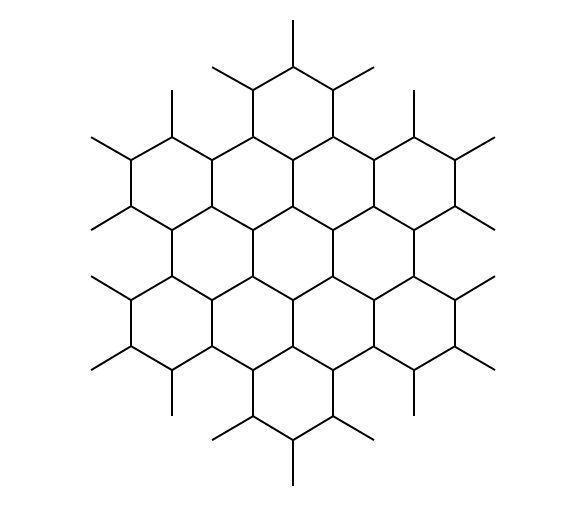
Figure 1. Chemical structure of GQDs.
Graphene Quantum Dot-Decorated Fillers
GQDs and heteroatom-doped GQDs have consequently been combined with fillers such as graphene [10], Graphene Oxide (GO) [5], Graphene Nanoribbons (GNRs) [2], Cellulose Nanocrystals (CNCs) [4], Montmorillonite (MMT) [3], Cerium Oxide (CeO2) [7], Zinc Oxide (ZnO) [8], Porous Silicon (PSi) [11], lithium-rich layered oxide [12], and gold (Au)-containing polyaniline (PANI) structures [13]. Figure 2 shows the chemical structures of graphene, GO, and CNCs. For example, GQD-decorated MMT showed enhanced dispersion and interaction with the polystyrene (PS) matrix [3], while GQD modification improved CNC dispersion in a high-density polyethylene (HDPE) matrix [4]. Therefore, these studies indicate that decoration can transform a conventional filler from a passive reinforcing phase into a multifunctional component capable of controlling interface interactions, electron transport, thermal behavior, and functional performance.
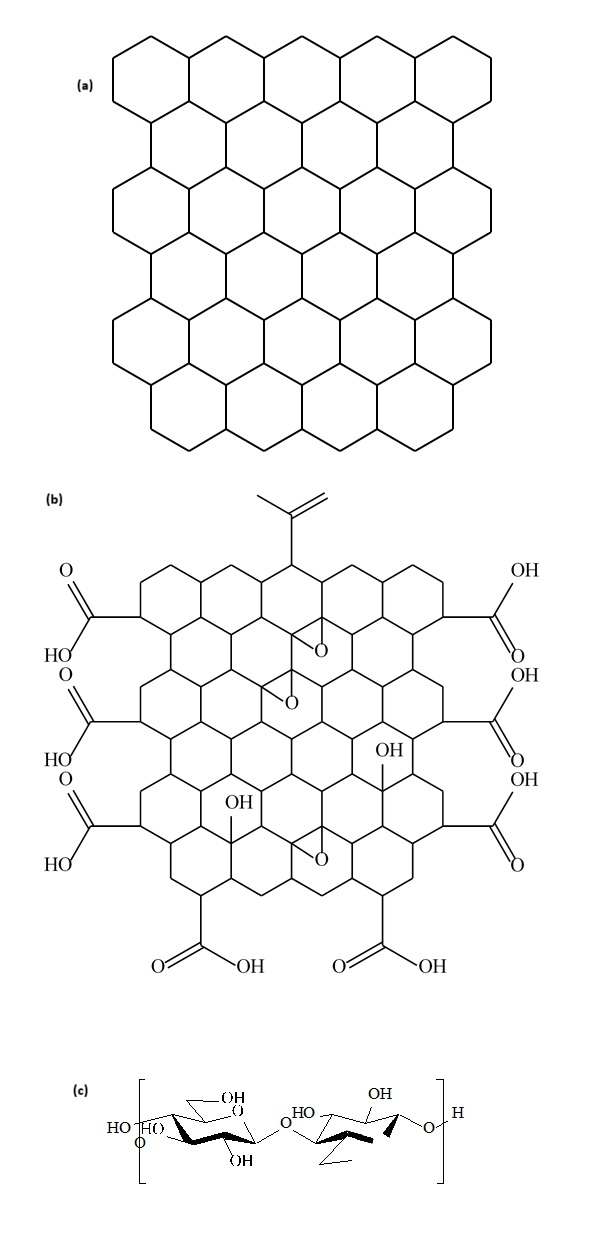
Figure 2. Chemical structures of (a) graphene, (b) GO, and (c) CNCs.
Preparation of Graphene Quantum Dot-Decorated Fillers
Several approaches have been employed to prepare GQD-decorated fillers. The hydrothermal method is particularly common because GQDs can be deposited directly on another material under controlled temperature and pressure. Bian et al. [10] used a one-step hydrothermal method to simultaneously reduce GO and generate nitrogen-doped GQDs (N-GQDs), resulting in N-GQDs deposited on the graphene sheets supported by cellulose fibers. Similarly, nitrogen and sulfur co-doped GQDs (N,S-GQDs) were grown directly on CeO2 nanoparticles through an in situ hydrothermal method before incorporation into PANI via chemical oxidative polymerization [7]. The hydrothermal method has also been used to prepare ZnO/polyethyleneimine (PEI)/N-GQD hybrid composites [8].
Other decoration strategies rely on physical or chemical reactions. GNR-GQD hybrids were synthesized through ultrasonication in chlorosulfonic acid and subsequently sulfonated before dispersion in sulfonated polyether ether ketone (sPEEK) [2]. Electrostatic layer-by-layer assembly using PEI as a bridge was used to combine GO and GQDs [5]. In another approach, modified GQDs were covalently attached to MMT clay using coupling agents, followed by incorporation of the decorated clay into PS through a solution mixing method [3]. GQDs can also be decorated through specific interactions, as demonstrated by N,S-GQDs attached to Au-PANI nanowires through Au-thiol linkage [13]. Collectively, the hydrothermal method, ultrasonication, electrostatic assembly, covalent attachment, and thiol interaction provide versatile routes for tailoring GQD-decorated fillers.
Polymer Matrices and Properties
The studied polymer matrices range from commodity thermoplastics to engineering polymers, conducting polymers, and natural polymers. PS represents an important example of conventional polymer reinforcement. GQD-decorated MMT was more effectively dispersed in PS and established stronger filler-matrix interactions than undecorated MMT [3]. The resulting nanocomposites exhibited improved thermal stability, greater storage modulus, enhanced residue formation, and substantially reduced flammability. Besides that, HDPE incorporating CNC/GQD complexes provides another clear example [4]. CNCs normally experience dispersion difficulties in hydrophobic matrices, whereas the presence of GQDs promoted more uniform CNC dispersion. The resulting composites exhibited a uniform morphology without clear agglomeration, improved thermal stability, and higher elastic modulus than neat HDPE. Moreover, their storage modulus was higher than that of neat HDPE, although GQD incorporation itself did not give a significant additional improvement relative to CNC-filled HDPE. This observation is important because it shows that GQDs may primarily function as interfacial and dispersion modifiers rather than always acting as direct mechanical reinforcements.
In engineering polymer membranes, sulfonated GNR-GQD hybrids dispersed in sPEEK simultaneously affected water uptake, ion exchange capacity, proton conductivity, and methanol permeability [2]. A membrane containing 1.5 wt% nanohybrid achieved a 40% increase in peak power density compared with the reference system and enhanced durability for up to 100 h. On top of that, a conducting PANI matrix provides another direction. N,S-GQD-decorated CeO2 incorporated into PANI increased conductive pathways [7], while N,S-GQDs attached to Au-PANI nanowires accelerated electron transfer and supplied sites for biomolecule immobilization [13]. Besides that, natural polymers have also benefited from these hybrid structures. GQD-decorated PSi loaded with therapeutic peptides was embedded in a chitosan film [11]. The GQDs enhanced peptide-loading capability and participated in fluorescence resonance energy transfer, enabling H2O2-responsive fluorescence and controlled drug release. Not only that, cellulose-based paper containing N-GQD-decorated graphene has similarly demonstrated strong ultraviolet absorption and fluorescence emission [10]. Figure 3 shows the chemical structures of PS, HDPE, sPEEK, PANI, and chitosan.
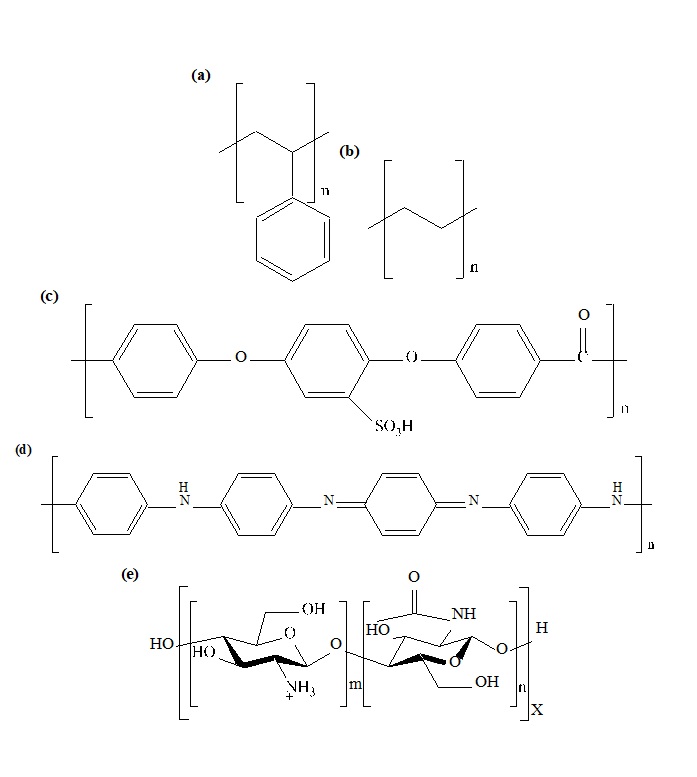
Figure 3. Chemical structures of (a) PS, (b) HDPE, (c) sPEEK, (d) PANI, and (e) chitosan.
Applications
The diversity of properties produced by GQD decoration has enabled applications extending well beyond conventional structural reinforcement. A fire-safe PS incorporating GQD-decorated MMT demonstrates that the concept is relevant to construction, transportation, aerospace, electronics, and other applications that require reduced polymer flammability [3]. Energy applications include proton-exchange membranes for direct methanol fuel cells [2], hybrid supercapacitor electrodes based on N,S-GQD-CeO2/PANI [7], and flexible lithium-ion battery cathode yarns containing GNR-GQD-modified Li-rich layered oxides [12]. The latter formed hierarchical conductive networks in which GQDs decorated the oxide surface, thereby strengthening interfacial contact.
Biomedical applications are equally prominent. GO-PEI-GQD hybrid composites demonstrated fluorescence imaging and enhanced photothermal responses for cancer theranostics [5], whereas GQD-decorated PSi/chitosan films enabled simultaneous wound monitoring and therapeutic delivery [11]. N,S-GQD-Au-PANI hybrid composites provided sensitive impedimetric detection of carcinoembryonic antigen, with a reported detection limit of 0.01 ng/mL [13]. ZnO/PEI/N-GQD hybrid composites further illustrate the potential of GQD decoration for optoelectronic and photodetector systems [8]. Meanwhile, N-GQD-graphene/cellulose hybrid composites show potential for fluorescent and optoelectronic paper, sensing, and related functional materials [10].
Conclusions
Graphene quantum dot decoration provides a promising strategy for designing multifunctional fillers for polymer hybrid composites. The studies considered here demonstrate that GQDs can be combined with carbon nanomaterials, nanocellulose, clays, metal oxides, porous silicon, and metallic-conducting polymer structures via a hydrothermal method, ultrasonication, electrostatic assembly, covalent attachment, and specific interactions. Rather than functioning solely as nanoscale reinforcements, GQDs can improve filler dispersion, strengthen interfacial interactions, increase conductive pathways, enhance thermal and fire behavior, provide fluorescence, and offer active sites for biological or electrical functions. The resulting polymer hybrid composites therefore have potential in fire-resistant materials, fuel cells, supercapacitors, batteries, cancer theranostics, smart wound dressings, sensors, and optoelectronics. Future development should focus on scalable decoration methods, control of GQD loading and surface area, long-term filler-matrix stability, and clearer structure-property relationships. Such advances could establish GQD-decorated fillers as an adaptable platform for converting conventional polymer composites into multifunctional materials.
References
2. Shukla A, Dhanasekaran P, Nagaraju N, Bhat SD, Pillai VK. A facile synthesis of graphene nanoribbon-quantum dot hybrids and their application for composite electrolyte membrane in direct methanol fuel cells. Electrochimica Acta. 2019 Feb 20;297:267–80.
3. Ma R, Shen R, Quan Y, Wang Q. Preparation of graphene quantum dots decorated montmorillonite to reinforce fire retardancy of polystyrene. Industrial & Engineering Chemistry Research. 2023 Aug 16;62(34):13510–8.
4. Bajwa DS, Chanda S, Ryan C, Bajwa SG, Stark N, Matteson K. Graphene quantum dots/cellulose nanocrystal inclusion complex for enhancing the physical and thermal properties of HDPE polymer matrix. Carbohydrate Polymer Technologies and Applications. 2024 Jun 1;7:100450.
5. Kumawat MK, Thakur M, Bahadur R, Kaku T, RS P, Suchitta A, et al. Preparation of graphene oxide-graphene quantum dots hybrid and its application in cancer theranostics. Materials Science and Engineering: C. 2019 Oct 1;103:109774.
6. Biswas R. A Brief Note on Multifaceted Aspect of Functional Quantum Dots. J Nanotechnol Nanomaterials. 2026;7(1):18–22.
7. Oskueyan G, Lakouraj MM, Mahyari M. Nitrogen and sulfur Co-Doped graphene quantum dots decorated CeO2 nanoparticles/polyaniline: As high efficient hybrid supercapacitor electrode materials. Electrochimica Acta. 2019 Mar 10;299:125–31.
8. Yildiz i. Electrical Properties of ZnO Nanoparticle-Embedded/Polyethylenimine-Functionalized Nitrogen-Doped Graphene Quantum Dot Nanocomposites. ACS Omega. 2026 Feb 25;11(9):15269–82.
9. Shamsuri AA. Functionalized Carbon Nano-onions for Polymer Composites. J Nanotechnol Nanomaterials. 2025;6(1):1–3.
10. Bian Y, He B, Li J. A one-step hydrothermal method of nitrogen-doped graphene quantum dots decorated graphene for fabrication of paper-based fluorescent composite. BioResources. 2016 May 15;11(3):6299–308.
11. Cui Y, Duan W, Jin Y, Wo F, Xi F, Wu J. Graphene quantum dot-decorated luminescent porous silicon dressing for theranostics of diabetic wounds. Acta Biomaterialia. 2021 Sep 1;131:544–54.
12. Sabah NU, Latif H, Öktem AS, Topac E, Kinayyigit s, Uysal A, et al. Dual-graphene conductive networks enable high-capacity Li-rich cathode yarns for textile lithium-ion batteries. Journal of Energy Storage. 2026 Nov 30;179:123948.
13. Ganganboina AB, Doong RA. Graphene quantum dots decorated gold-polyaniline nanowire for impedimetric detection of carcinoembryonic antigen. Scientific Reports. 2019 May 10;9(1):7214.