

Abstract
Purpose: To determine the relative importance of treatment-related attributes on patient preferences for chimeric antigen receptor T-cell (CAR-T) as second-line (2L) multiple myeloma (MM) therapy.
Methods: US patients with relapsed or refractory MM who completed ≥1 line of treatment were recruited via convenience sampling to complete a cross-sectional survey between December 2023 and March 2024. In a discrete choice experiment comprising a series of choice tasks, patients chose between 2 hypothetical 2L treatment profiles that varied based on 7 treatment attributes: median progression-free survival (mPFS), median overall survival (mOS), treatment response, serious adverse events (SAEs), neurologic events, cytokine release syndrome (CRS), and treatment administration (one-time infusion vs various routes and schedules for agents). Attributes and levels were derived from targeted literature review, clinical data, expert opinion, and patient interviews and focus groups to simulate real clinical decisions. Preference weights for attribute levels were estimated using hierarchical Bayesian modeling.
Results: Patients (N=127) were 54.3% female, mean age was 66.7 years, and 96.1% were receiving MM medication when surveyed. Patient preferences for 2L treatment were most influenced by increasing mOS from 2 to 6 additional years (|−0.88 – 0.81| = 1.69), increasing mPFS from 7 months to 4 years (|−0.45 – 0.60| = 1.05), decreasing risk of all-grade CRS from 95% to 0% (|−0.54 – 0.45| = 0.99), and decreasing SAE incidence from 73% to 28% (|−0.29 – 0.27| = 0.56). In contrast, decreasing response rate, treatment administration, and decreasing risk of CAR-T–associated grade 3/4 neurotoxicity had the least influence on treatment preferences. Patients preferred one-time infusion over other administration modes.
Conclusion: Survival metrics and safety characteristics concerning CRS had the largest impact on patient preferences for 2L treatment for relapsed MM, suggesting that treatments such as CAR-T will be preferred given the demonstrated PFS benefit as early as 2L treatment.
Keywords
CAR-T, Ciltacabtagene autoleucel, Discrete choice experiment, Multiple myeloma, Relapsed/refractory multiple myeloma, Patient preference, Shared decision-making
Abbreviations
2L: Second-Line; BCMA: B-Cell Maturation Antigen; CAR-T: Chimeric Antigen Receptor T-cell; cilta-cel: Ciltacabtagene Autoleucel; CRS: Cytokine Release Syndrome; DCE: Discrete Choice Experiment; LOT: Line of Therapy; MM: Multiple Myeloma; mOS: Median Overall Survival; mPFS: Median Progression-Free Survival; QoL: Quality of Life; SAE: Serious Adverse Event; SD: Standard Deviation; SE: Standard Error; US: United States
Introduction
Tremendous progress has been made in the treatment of multiple myeloma (MM), leading to extended patient survival [1]. With improved treatment options, patient preference for therapies that will maximize quality of life (QoL) becomes an important consideration for treatment selection [1]. Introduction of newer agents, such as chimeric antigen receptor T-cell (CAR-T) therapies and bispecific antibodies, has provided potential for highly durable responses in later lines of therapy (LOTs) [2]. The long-term clinical benefit of CAR-T therapies, along with the advantage of a single infusion with extended treatment-free intervals, has led to advancing CAR-T therapies to early LOTs [2,3]. When compared to standard therapies for patients with MM after 1 to 3 prior LOTs, data from the CARTITUDE-4 trial showed meaningful long-term clinical and health-related QoL benefits with use of ciltacabtagene autoleucel (cilta-cel)—a B-cell maturation antigen (BCMA)–targeting CAR-T therapy approved in several countries for treatment of lenalidomide-refractory MM after ≥1 prior LOT [3]. Improvements in QoL were also observed with the BCMA-targeting CAR-T therapy idecabtagene vicleucel after 2 to 4 LOTs in the KarMMa-3 trial [4]. However, it remains unclear which treatment attributes patients value when selecting an early-line MM therapy, and the magnitude by which an attribute may be valued relative to another [1]. Here, we present data from a discrete choice experiment (DCE) focused on the second-line (2L) setting as the earliest point within cilta-cel's approved indication (i.e., after ≥1 prior LOT) at which CAR-T therapy could be considered for patients with MM in order to highlight the relative importance of treatment-related attributes on patient preferences for CAR-T as 2L MM therapy.
Material and Methods
A convenience sample of patients from the United States (US) was recruited from an online research panel to participate in a cross-sectional, web-based survey between December 2023 and March 2024. Recruitment quotas by age, sex, race, and US census region were employed to ensure sample variability. Key inclusion criteria included age ≥50 years, patient-reported physician diagnosis of relapsed/refractory MM, and completion of ≥1 LOT after MM diagnosis. The study was granted exemption status from the Pearl institutional review board (Protocol #22-CERN-134) and was conducted according to good research practices for conjoint analyses as recommended by the International Society for Pharmacoeconomics and Outcomes Research. All participants provided electronic informed consent. Descriptive statistics were used to characterize patient sociodemographics and clinical characteristics.
A DCE was used to evaluate individual preferences for specific treatment attributes using a series of iterative choice tasks. Over the course of 12 choice tasks, patients were asked to select between 2 hypothetical 2L treatment profiles that varied on 7 attributes, each of which could vary by 2–5 levels. The attributes within the DCE were defined in short, patient-friendly terms for ease of patient understanding. Attributes and levels were identified and selected through a prespecified, multi-step process that combined evidence synthesis with independent patient and clinical expert input, consistent with recommended good research practices for the design of DCEs [5]. A targeted literature review was first conducted to identify treatment characteristics relevant to decision-making in MM, including efficacy outcomes, adverse events, and treatment dosing and administration. Sources included prior preference and qualitative studies, clinical trial publications, product labels, and other relevant publicly available evidence. The study team also defined the relevant competitive treatment set to ensure that the proposed levels reflected clinically plausible treatment profiles. Findings from this review were synthesized into a preliminary attributes-and-levels inventory. The preliminary inventory and draft survey were then reviewed by the study team, MM clinical experts, and 2 patient focus groups. This review assessed the clinical relevance, patient relevance, comprehensiveness, and appropriateness of the proposed attributes and levels. Subsequently, one-on-one cognitive interviews were conducted with 6 patients with MM. Using think-aloud and targeted probing techniques, the interviews evaluated whether the attributes were important and relevant to treatment decisions, whether the wording and level descriptions were clearly and consistently understood, and whether the number and complexity of attributes imposed an acceptable cognitive burden. As a best practice to reduce participant burden and increase statistical rigor, DCEs should include a parsimonious set of attributes, commonly between 5–7 [6,7]. Findings across the literature review, patient interviews, and expert review were triangulated and used to revise and finalize the attributes, attribute levels, and supporting survey content, ensuring that the final attribute set reflected the outcomes most relevant to patients. Through this process, the number of most important attributes for patients with MM when making treatment decisions was narrowed to 7 (median overall survival [mOS], median progression-free survival [mPFS], risk of all-grade cytokine release syndrome [CRS] events, risk of serious adverse events [SAEs] requiring hospitalization, risk of CAR-T–associated grade 3/4 neurotoxicity [described as neurologic symptoms lasting ~11 days], response rate, and dosing frequency/route of administration). On the basis of patient feedback, gastrointestinal toxicity was the least important among the side effect attributes to participants in their treatment decision and, therefore, was not included in the DCE. All respondents answered a different combination of tasks. Preference weights for attribute levels were estimated using hierarchical Bayesian modeling.
Results
A total of 2251 patients with MM accessed the screener portion of the survey (Figure 1). Of these, 224 failed the security challenge to access the survey portion, 261 did not complete the screening, and 1360 did not meet the eligibility criteria. Among those passing the screening portion, 12 declined consent and 21 did not complete the survey. Of the 373 patients who completed the survey, records from 127 patients were retained for analysis after removing 246 records for quality concerns (e.g., completion time ≤30% of the median completion time; Figure 1). The mean (standard deviation [SD]) age of these patients was 66.7 (4.8) years, with a mean (SD) age at MM diagnosis of 60.5 (8.0) years, and a mean (SD) time since diagnosis of 70.5 (82.7) months. Of these patients, 54.3% were female, 61.4% were White, and 96.1% were on active MM treatment. The proportion of patients who had received 1, 2, 3, and ≥4 LOTs was 2.4%, 44.9%, 36.2%, and 16.5%, respectively, with 9.4% of patients having received CAR-T therapy.
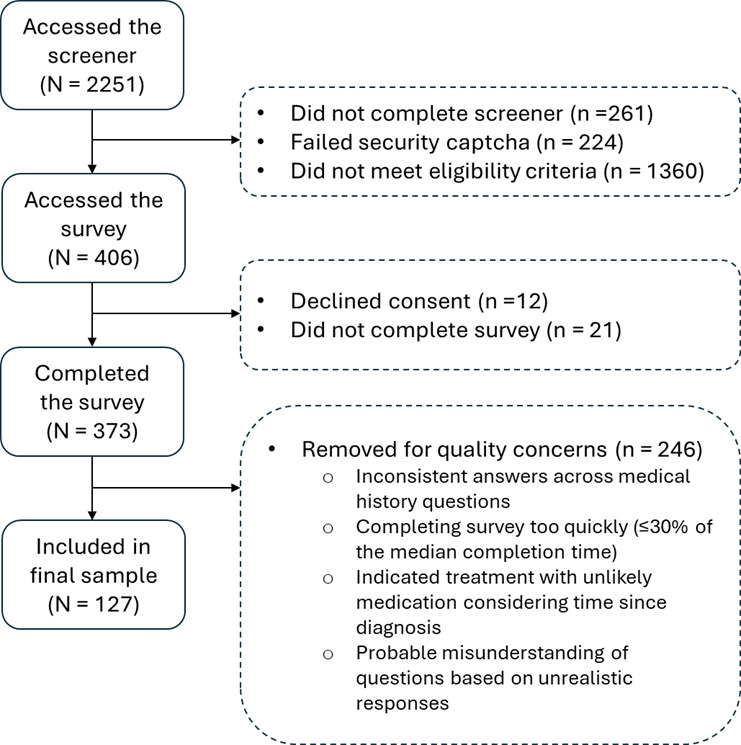
Figure 1. Patient selection for the final analysis sample.
As evidenced by a larger absolute difference between the most and least preferred attribute levels, patient preferences for 2L MM treatment were most influenced, on average, by increasing mOS from 2 additional years (least preferred) to 6 additional years (most preferred; |−0.88 – 0.81| = 1.69), increasing mPFS from 7 months to 4 years (|−0.45 – 0.60| = 1.05), decreasing risk of all-grade CRS events from 95% to 0% (|−0.54 – 0.45| = 0.99), and decreasing incidence of SAEs from 73% to 28% (|−0.29 – 0.27| = 0.56; Figure 2). Decreasing response rate from 95% to 55% (|0.16 – −0.10| = 0.26), one-time treatment versus complex combination therapy (|0.19 – −0.17| = 0.36), and decreasing risk of CAR-T–associated grade 3/4 neurotoxicity from 9% to 0% (|−0.20 – 0.20| = 0.40), on average, had the least influence on treatment preferences relative to the other attributes assessed. While not the most influential factor, patients preferred a one-time infusion over other modes of administration (e.g., weekly or every-other-week injection; |−0.17 – 0.19| = 0.36).
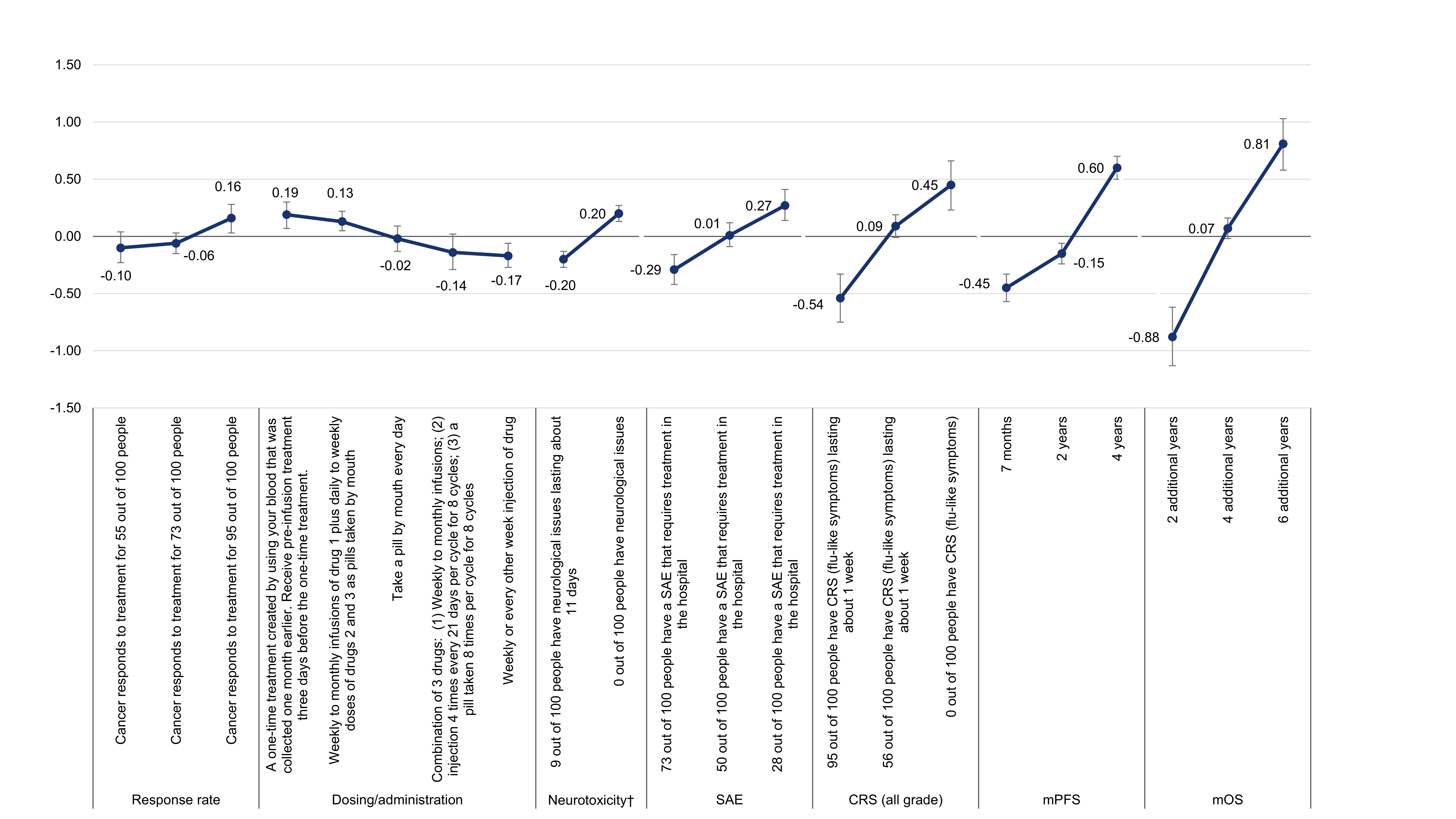
Figure 2. Attribute preference weights for treatment characteristics influencing patient treatment preferences.* CAR-T: Chimeric Antigen Receptor T-cell; CRS: Cytokine Release Syndrome; mOS: Median Overall Survival; mPFS: Median Progression-Free Survival; SAE: Serious Adverse Events. *All preference weights of levels within an attribute sum to 0. Preference weights should not be interpreted by themselves; instead, the magnitude of change within one attribute should be compared to the change within another attribute. †CAR-T–associated (grade 3/4) neurotoxicity.
Preference weights were then used to calculate utility scores for treatment profiles, and the probability of patients selecting a profile over all the alternatives was calculated by exponentiating each profile’s utility and rescaling so that all profiles summed to 100%. Among the attributes evaluated, mOS was most important to patients (mean, 21.8%; standard error [SE], 1.08) when selecting their next treatment. Relative to an increase in mPFS, patients reported an increase in mOS to be 1.6 times more important when selecting their next treatment. A decreased risk of all-grade CRS events from 95% to 0% was the next most important attribute based on relative importance weighting (mean, 18.7%; SE, 1.06), followed by treatment administration and impact on functioning (mean, 14.6%; SE, 0.50). The decrease in risk of all-grade CRS events was 2.9 times more important than the decrease in risk of CAR-T–associated grade 3/4 neurotoxicities (9% to 0%) when choosing their next treatment (Figure S1).
Discussion
This study used a direct-to-patient survey to assess which characteristics influence patient preferences for CAR-T therapy in early-line MM treatment. From our analysis, survival metrics had the largest impact on patient preferences, suggesting a preference for treatments with the most survival benefit. Similar findings have been reported in studies examining patient perspectives on MM treatment decision-making, with QoL noted as another key factor [1]. In our study, patient preferences were also influenced by CRS events, underscoring the utility of emerging biomarker-based risk-stratification tools that can enable a more individualized pre-treatment assessment of CAR-T–associated toxicity risks [8]. This suggests that shared decision-making on early-line MM treatments should include conversations balancing efficacy and safety characteristics, as the associated risks may influence preferences. More broadly, these findings reflect the ongoing shift toward precision, patient-centered oncology care in which treatment decisions increasingly incorporate individual patient preferences alongside the molecular and clinical disease characteristics [9]. The growing adoption of artificial intelligence and machine learning in precision oncology care may facilitate data integration to guide personalized treatment decision-making [10]. Future work could explore integrating predictive models with preference data, such as those generated in the current study, to support more individualized treatment recommendations [11].
A key strength of this study is the use of a DCE, a methodology increasingly utilized in healthcare decision-making, clinical practice, and by health authorities. A primary limitation is the potential for recall bias inherent in self-reported data [12]. Additionally, use of convenience sampling may have excluded key segments of the target population, such as individuals with limited internet access. The study was restricted to adults ≥50 years old, which may have excluded some patients with MM. The sample was also drawn exclusively from the US and was predominantly White (61.4%) with only 9.4% of patients having prior CAR-T experience; findings may therefore not generalize to non-US settings, more racially/ethnically diverse populations, or patients with prior CAR-T experience. Relatedly, although the substantial reduction from the initial screened sample to the final analytic sample was attributable primarily to eligibility screening for this specific patient population, the exclusion of 246 of 373 completers for data-quality reasons may have preferentially retained more attentive and engaged respondents; to the extent that excluded patients differed systematically from those analyzed, the preference estimates and their generalizability may be affected. The relatively limited influence of response rate and grade 3/4 neurotoxicity risk on treatment preference, despite their clinical significance, may reflect several factors, including scope insensitivity to probabilistic risk information, greater difficulty processing abstract, probability-based attributes relative to more concrete attributes such as survival duration, and contextual anchoring, whereby patients with prior treatment experience may discount additional toxicity information relative to treatment-naïve patients. Given these considerations, and as the present findings reflect the specific attributes, attribute levels, and patient population defined by the study objectives, additional confirmatory research in broader and more diverse patient populations is warranted to replicate and validate these preference estimates. Lastly, as DCE methodology is a stated-preference approach that relies on hypothetical treatment scenarios rather than patients’ actual treatment decisions, the findings may not fully capture real-world decision-making. To help mitigate this limitation, the DCE was informed by clinical trial data, and treatment profiles were designed to closely resemble real-world options.
Conclusion
Overall, patient preferences in 2L treatment for relapsed/refractory MM were predominantly influenced by survival metrics. This suggests a potential preference for CAR-T–like therapies, such as cilta-cel, supported by data from the CARTITUDE-4 study, which reported improved mOS with cilta-cel versus standard therapies (physician’s choice of daratumumab, pomalidomide, and dexamethasone or pomalidomide, bortezomib, dexamethasone; hazard ratio, 0.55 [95% confidence interval, 0.39-0.79]; P=0.0009), with 30-month OS rates of 76.4% with cilta-cel and 63.8% with standard therapies [13].
Ethics Approval and Informed Consent
This study was granted exemption from full Pearl institutional review board review (Protocol #22-CERN-134) and conducted according to good research practices for conjoint analyses as recommended by the International Society of Pharmacoeconomics and Outcomes Research. All participants provided electronic informed consent.
Consent for Publication
All information within this article is approved for publication.
Data Availability
The data that support the findings of this study are not publicly available due to the participants giving consent only for aggregated data to be shared publicly.
Funding
This work was funded by Johnson & Johnson and Legend Biotech USA Inc.
Competing Interests
DKH has received research funding from Bristol Myers Squibb, Johnson & Johnson, Karyopharm, Kite Pharma, and Adaptive Biotech; and served as a consultant or in an advisory role for Bristol Myers Squibb, Johnson & Johnson, Legend Biotech, Pfizer, Kite Pharma/Gilead Sciences, AstraZeneca, and Karyopharm. JK has received research funding from Ascentage, GPCR, Janssen, Karyopharm, and Prothena, and has served as a consultant for GPCR, Janssen, Legend Biotech, and Prothena. OACP has received honoraria for consultancy from Bristol Myers Squibb, Janssen, and Legend Biotech. KCDB, DDW, TL, SH, SL, TB, and ZPQ are employees of Johnson & Johnson and may hold stock or stock options in the company. MP is an employee of Legend Biotech USA Inc. and holds stock in the company. KK, JC, and EM have served as consultants and provided research services to Johnson & Johnson. SR has received research funding from AstraZeneca, Bristol Myers Squibb, C4 Therapeutics, Heidelberg Pharma, and Janssen; received honoraria from Bristol Myers Squibb, Genentech, Haymarket, Janssen, Karyopharm Therapeutics, MJH LifeSciences, and OncLive; served on a steering committee for Bristol Myers Squibb; and served on advisory boards for AstraZeneca, Bristol Myers Squibb, Genentech, Karyopharm Therapeutics, and Janssen.
Authors' Contributions
All authors have made significant contributions to the content of this article, including study design, analysis and interpretation of the data, drafting and/or critically reviewing the content of the article. All authors agreed to the plan to submit this article to Journal of Cancer Immunology, reviewed all drafts and agreed to the submission of the final draft, and agree to take accountability for the contents of this article.
Acknowledgments
The authors would like to thank the participants of this study for their time and valuable perspectives. Editorial assistance was provided under the direction of the authors by Ella A. Kasanga, PhD, PMP®, CMPP™, and Erin Reineck, ELS, of Fingerpaint Medical, and funded by Johnson & Johnson and Legend Biotech USA Inc. Data reported in this research communications were presented in part at the International Myeloma Society Annual Meeting; September 25-28, 2024; Rio de Janeiro, Brazil.
References
2. Parekh DS, Tiger YKR, Jamouss KT, Hassani J, Bou Zerdan M, Raza S. Updates on Therapeutic Strategies in the Treatment of Relapsed/Refractory Multiple Myeloma. Cancers (Basel). 2024 Aug 23;16(17):2931.
3. Bar N, Mina R, Mylin AK, Yokoyama H, Magen H, Alsdorf W, et al. Long-term benefits in patient-reported outcomes and time to next anti-myeloma therapy of ciltacabtagene autoleucel (Cilta-cel) versus standard of care for patients with lenalidomide-refractory multiple myeloma: results from the Phase 3 Cartitude-4 Clinical Trial. Poster presented at: The American Society of Hematology 2024 Hybrid Congress. San Diego, CA; December 7–10, 2024.
4. Delforge M, Patel K, Eliason L, Dhanda D, Shi L, Guo S, et al. Health-related quality of life in patients with triple-class exposed relapsed and refractory multiple myeloma treated with idecabtagene vicleucel or standard regimens: patient-reported outcomes from the phase 3, randomised, open-label KarMMa-3 clinical trial. Lancet Haematol. 2024 Mar;11(3):e216–e227.
5. Bridges JF, Hauber AB, Marshall D, Lloyd A, Prosser LA, Regier DA, et al. Conjoint analysis applications in health--a checklist: a report of the ISPOR Good Research Practices for Conjoint Analysis Task Force. Value Health. 2011 Jun;14(4):403–13.
6. Vanniyasingam T, Cunningham CE, Foster G, Thabane L. Simulation study to determine the impact of different design features on design efficiency in discrete choice experiments. BMJ Open. 2016 Jul 19;6(7):e011985.
7. Trapero-Bertran M, Rodríguez-Martín B, López-Bastida J. What attributes should be included in a discrete choice experiment related to health technologies? A systematic literature review. PLoS One. 2019 Jul 18;14(7):e0219905.
8. Frenking JH, Zhou X, Wagner V, Hielscher T, Kauer J, Mai EK, et al. EASIX-guided risk stratification for complications and outcome after CAR T-cell therapy with ide-cel in relapsed/refractory multiple myeloma. J Immunother Cancer. 2024 Oct 7;12(10):e009220.
9. Adi-Wauran E, Krishnapillai S, Uleryk E, Saeedi S, Bombard Y. Patient-centred care in precision oncology: A systematic review. Patient Educ Couns. 2025 Jul;136:108753.
10. Fountzilas E, Pearce T, Baysal MA, Chakraborty A, Tsimberidou AM. Convergence of evolving artificial intelligence and machine learning techniques in precision oncology. NPJ Digit Med. 2025 Jan 31;8(1):75.
11. Jiang YL, Zhao G, Wang SH, Li N. Leveraging artificial intelligence for clinical decision support in personalized standard regimen recommendation for cancer. Mil Med Res. 2025 Jun 19;12(1):31.
12. Althubaiti A. Information bias in health research: definition, pitfalls, and adjustment methods. J Multidiscip Healthc. 2016 May 4;9:211–7.
13. Mateos MV, San-Miguel J, Dhakal B, Lendvai N, Vogel M, Li K, et al. Overall survival with ciltacabtagene autoleucel versus standard of care in lenalidomide-refractory multiple myeloma: phase 3 CARTITUDE-4 study update. In 21st International Myeloma Society Annual Meeting. Brazil: Rio de Janeiro, 2024 Sep 25.