

Abstract
Cannabidiol (CBD) is increasingly used in veterinary medicine due to its reported anti-inflammatory, analgesic, and anxiolytic properties. However, its molecular mechanisms in the domestic cat (Felis catus) remain poorly understood. This study applies a network pharmacology approach to elucidate the potential targets and biological pathways associated with CBD in cats. Putative CBD targets identified based on human protein databases were mapped to feline orthologs through homology matching. The resulting feline target set was used to construct a protein-protein interaction (PPI) network. Functional modules were identified using cluster and network enrichment analyses (molecular function, KEGG pathways, local cluster organization, and protein domain classification). In addition, molecular docking studies were conducted to evaluate CBD-target binding affinities. Network analysis identified 89 CBD-associated target clusters, of which 23 were functionally characterized, including four major clusters enriched in immune regulation, lipid metabolism, neuroactive signaling, and synaptic transmission. KEGG pathway analysis highlighted neuroactive ligand-receptor interaction and calcium signaling as key pathways. Local network analysis revealed enrichment in G protein-coupled receptor signaling, neuropeptide receptor activity, and lipid-derived signaling pathways. Molecular docking demonstrated strong binding affinities of CBD to key feline targets, including CNR1 (−8.7 kcal/mol), PDE5A (−8.6 kcal/mol), TYMS (−8.5 kcal/mol), NQO2 (−8.3 kcal/mol), STS (−8.3 kcal/mol), and CASR (−8.0 kcal/mol), suggesting involvement in endocannabinoid signaling, oxidative stress regulation, steroid metabolism, and calcium homeostasis. Our observations suggest that CBD exhibits a multi-target pharmacological profile in domestic cats, acting across interconnected immune, neurological, metabolic, and endocrine pathways. The integration of network pharmacology and molecular docking suggests that CBD functions as a pleiotropic modulator rather than a single-target agent. The observed interaction patterns are consistent with a favorable safety profile, supporting previous experimental evidence of tolerability in feline studies, including clinical applications in inflammatory conditions.
Keywords
Cannabidiol, Network pharmacology, Domestic cat, Molecular docking, Endocannabinoid system
Introduction
Cannabidiol (CBD), a non-psychoactive phyto-cannabinoid derived from Cannabis sativa, has attracted growing attention in veterinary medicine because of its anti-inflammatory, analgesic, anxiolytic, and immunomodulatory properties [1–4]. In recent years, CBD-based formulations have been increasingly investigated as complementary therapeutic agents for companion animals, particularly dogs and cats suffering from chronic inflammatory and stress-related conditions [3,5]. The endocannabinoid system (ECS), which is widely distributed in mammalian species including the domestic cat (Felis catus), regulates several physiological processes such as immune response, pain perception, appetite, mood, and inflammation [5–7]. Modulation of ECS-associated molecular targets by CBD has therefore emerged as a promising strategy for feline health management. Despite increasing commercial availability of cannabinoid-containing veterinary products, the pharmacological mechanisms of CBD in cats remain insufficiently understood. Conventional pharmacological approaches often focus on single drug-target interactions; however, CBD exhibits pleiotropic effects involving multiple signaling pathways and molecular targets [7]. Network pharmacology provides a systems-level framework capable of integrating pharmacokinetic, molecular, and pathway-based interactions to elucidate the multi-target therapeutic potential of phyto-cannabinoids. By combining bioinformatics, protein-protein interaction (PPI) analysis, pathway enrichment, and target prediction, network pharmacology enables comprehensive evaluation of CBD-mediated biological effects in feline physiology and disease [8,9]
Several experimental and clinical studies have demonstrated the safety and therapeutic potential of CBD in domestic cats [2,10]. A placebo-controlled clinical trial investigating daily oral CBD as an adjunctive treatment for cats with chronic gingivostomatitis reported clinical improvement following administration of Anibidiol Plus (Virbac, France), delivering 4 mg/cat every 12 h for 15 days in 22 domestic cats [11]. Similarly, a safety and tolerability study involving escalating cannabinoid doses in healthy cats demonstrated that CBD oil formulations were generally well tolerated across repeated dosing regimens in 20 cats [12]. Long-term dietary supplementation studies further indicated that healthy cats tolerated daily feeding of THC-free CBD distillate at 4 mg/kg for periods ranging from 4 to 26 weeks without significant adverse effects [2]. In addition, administration of THC-free CBD oil at 4.0 mg/kg/day for 15 days was associated with improved fear-related behavior in healthy domestic cats, suggesting potential anxiolytic effects of CBD in feline behavioral disorders [13].
The expanding body of evidence demonstrating the safety, tolerability, and therapeutic potential of CBD in domestic cats highlights the need for a deeper mechanistic understanding of its pharmacological actions. Although previous studies have reported beneficial outcomes in inflammatory, behavioral, and supportive care settings, the precise molecular interactions and signaling networks through which CBD exerts these effects in feline systems remain largely unexplored. Given the complex and multitarget nature of phyto-cannabinoids, traditional single-target pharmacological approaches are insufficient to fully characterize CBD activity. In this context, network pharmacology offers a powerful and integrative strategy to elucidate the interconnected molecular mechanisms underlying CBD action in cats. By integrating target prediction, protein-protein interaction networks, gene ontology, and pathway enrichment analyses, network pharmacology can identify key biological pathways and hub targets associated with CBD-mediated therapeutic effects. Such an approach is particularly relevant for veterinary cannabinoid research, where mechanistic data remain limited despite increasing clinical application. Therefore, conducting a network pharmacology assessment of CBD in domestic cats was planned in this study to provide a comprehensive systems-level understanding of its pharmacodynamics, support evidence-based veterinary use, and guide future experimental and clinical investigations into cannabinoid therapeutics for feline health.
Materials and Methods
Identification of cannabidiol (CBD) targets
Potential molecular targets of cannabidiol (CBD) were initially identified using the SwissTargetPrediction platform. Because the database primarily contains human-associated pharmacological targets, Homo sapiens was selected as the reference organism during target prediction. The canonical SMILES structure of CBD was retrieved from PubChem and used as the input ligand for target identification. Predicted protein targets with significant probability scores were collected, and their corresponding gene names were extracted for downstream analyses. To adapt the analysis to feline biology, the identified human target genes were subjected to homology matching against the domestic cat (Felis catus) genome and protein databases. Homologous feline genes were identified using comparative genomic annotations and ortholog mapping approaches available through publicly accessible bioinformatics repositories, including NCBI Gene and Ensembl Genome Browser. Only confirmed feline orthologs of the predicted human CBD targets were retained for subsequent network pharmacology analyses.
Protein-protein interaction (PPI) network construction
The homology-matched feline CBD target genes were imported into the STRING database to construct a protein-protein interaction (PPI) network. The species parameter was set to Felis catus to ensure species-specific interaction mapping. STRING integrates known and predicted protein interactions derived from experimental evidence, curated databases, co-expression analysis, gene neighborhood, gene fusion, and co-occurrence data. The generated PPI network was analyzed to identify highly interconnected nodes and functional interaction patterns among the CBD-associated feline targets. Interaction confidence thresholds were maintained at medium-to-high confidence levels to minimize false-positive associations. The resulting network was visualized and interpreted based on node connectivity, interaction density, and biological relevance.
To identify biologically relevant subnetworks within the CBD-associated PPI network, Markov Cluster Algorithm (MCL) analysis was performed using the clustering feature available in STRING. MCL clustering identifies natural clusters within interaction networks by simulating stochastic flow processes between interconnected nodes. An inflation parameter of 3 was applied to optimize cluster granularity and functional separation among network modules. The resulting clusters were examined to identify groups of proteins potentially involved in common biological pathways, signaling cascades, or pharmacological functions associated with CBD activity in domestic cats.
Functional enrichment and network annotation
Functional enrichment analysis of the feline CBD target network was performed using STRING-integrated enrichment tools. The identified targets and network clusters were assessed according to the following annotation categories:
Molecular function analysis
Gene Ontology (GO)-based molecular function analysis was conducted to characterize the biochemical activities associated with CBD target proteins. Functional categories including receptor binding, enzyme modulation, ion channel activity, signal transduction, and transcriptional regulation were evaluated to understand the pharmacodynamic profile of CBD in feline systems.
Local network cluster analysis
Local network cluster enrichment was assessed to identify densely connected protein modules associated with specific biological processes or disease pathways [8,14]. These clusters provided insight into coordinated protein interactions and potential functional modules regulated by CBD.
KEGG pathway enrichment analysis
Kyoto Encyclopaedia of Genes and Genomes (KEGG) pathway analysis was performed to identify signaling pathways significantly associated with the CBD target network. Pathways related to inflammation, neurotransmission, immune regulation, pain signaling, oxidative stress, and cellular metabolism were particularly examined because of their established relevance to cannabinoid pharmacology.
Protein domain analysis
Protein domain enrichment analysis was conducted to determine conserved structural and functional domains represented among the feline CBD targets. Domain-based characterization enabled identification of common receptor classes, catalytic regions, and signaling motifs potentially involved in CBD-mediated biological activity.
AlphaFold structure retrieval and molecular docking
Three-dimensional protein structures of the identified feline CBD targets were retrieved from the AlphaFold Protein Structure Database. Only target proteins for which experimentally predicted AlphaFold structures were already available as Protein Data Bank (PDB) files were included in the molecular docking analysis. Proteins lacking available structural models were excluded from docking studies. Prior to docking, protein structures were prepared by removing water molecules, adding hydrogen atoms, and optimizing structural geometry using standard molecular modelling procedures as reported previously for other targets [8,9,15,16]. The three-dimensional structure of CBD was obtained from PubChem and converted into the appropriate docking format. Molecular docking simulations were performed using AutoDock Vina to evaluate the binding affinity between CBD and the selected feline target proteins. Grid box dimensions were adjusted to encompass the active or predicted ligand-binding regions of each target protein. Docking parameters were maintained at default settings unless optimization was required for specific targets. Binding affinity values were expressed as docking scores (kcal/mol), with lower energy values indicating stronger predicted ligand-protein interactions. The resulting docking poses were analyzed to identify potential binding interactions, including hydrogen bonding, hydrophobic interactions, and ligand orientation within the active site. These analyses were used to support the network pharmacology findings and to further characterize the molecular interaction potential of CBD with feline protein targets.
Results
A total of 89 cannabidiol (CBD)-associated target clusters were identified following homology mapping of predicted human protein targets to their corresponding feline orthologs and subsequent construction of the protein-protein interaction (PPI) network. From these, 23 distinct and well-defined clusters were retained for detailed network analysis. The clusters exhibited variable sizes ranging from 2–14 genes, indicating a heterogeneous but highly modular organization of CBD-associated biological interactions in the domestic cat (Felis catus). This modular architecture suggests that CBD-related targets are not randomly distributed but instead form functionally coordinated groups within the feline interactome.
Among the identified clusters, four major clusters containing more than six genes each demonstrated the most biologically relevant enrichment patterns and were selected for deeper interpretation. Cluster 1, the largest with 14 genes, was strongly enriched in immune and growth-related signaling pathways. This cluster included significant associations with growth hormone receptor signaling via the JAK-STAT pathway, EGFR tyrosine kinase inhibitor resistance, and interleukin-2 family signaling. Collectively, these findings indicate that CBD-associated targets may participate in the regulation of cytokine-mediated immune responses, growth factor signaling, and cellular proliferation pathways, suggesting a broader immunomodulatory and homeostatic role in feline physiology. Cluster 2, consisting of 8 genes, was primarily associated with lipid metabolism and inflammatory mediator biosynthesis. It showed strong enrichment in the biosynthesis of DHA-derived specialized pro-resolving mediators (SPMs) as well as arachidonic acid metabolism. These pathways are central to the regulation and resolution of inflammation, implying that CBD may influence inflammatory balance in cats through modulation of lipid-derived signaling molecules and eicosanoid pathways. Cluster 3 contained 7 genes and exhibited a mixed functional profile combining lipid signaling with cannabinoid system components. This cluster included pathways involved in arachidonate production from diacylglycerol (DAG) and cannabinoid receptor activity. The presence of these processes highlights a direct link between CBD-related targets and the endogenous cannabinoid system, suggesting potential modulation of lipid-derived endocannabinoid signaling and neuroimmune communication. Cluster 4 comprised 6 genes and was predominantly enriched in neurological functions, particularly the regulation of glutamatergic synaptic transmission. This finding suggests a potential role for CBD in modulating excitatory neurotransmission in the feline central nervous system, which may be relevant to previously observed behavioral and anxiolytic effects reported in experimental and clinical studies.
Further local network cluster enrichment analysis revealed three dominant functional interaction themes within the CBD-associated network. One major theme involved mixed lipid and cannabinoid signaling processes, including arachidonate production from DAG and cannabinoid receptor activity. A second prominent theme was associated with peptide ligand-binding receptors, particularly those belonging to the Class B/2 secretin family of G protein-coupled receptors. The third theme involved neuropeptide receptor binding and signaling, highlighting the involvement of peptide-mediated neuroendocrine communication pathways. These observations indicate that CBD targets are strongly enriched in GPCR-mediated signaling networks involved in both neurophysiological and metabolic regulation.
Molecular docking analysis further validated the network pharmacology findings by evaluating the binding affinity of CBD against selected feline protein targets with available AlphaFold structural models. CBD demonstrated favorable binding energies across a wide range of targets, with docking scores spanning from −8.7 to −5.6 kcal/mol. The strongest binding affinity was observed for CNR1 (−8.7 kcal/mol), followed closely by PDE5A (−8.6 kcal/mol) and TYMS (−8.5 kcal/mol). Additional high-affinity interactions were observed with NQO2, STS, CASR, EPHX2, HSD17B2, PTGS2, and HSD11B1, all of which showed binding energies ranging from −7.9 to −8.3 kcal/mol. Moderate binding affinities were also observed for metabolic and signaling proteins including PFKFB3, CES5A, ABCG2, MC4R, PKM, CNR2, FAAH, and ERBB2, while lower but still relevant interactions were observed with MDM2, LDHA, ITGB1, IDH1, and JAK3. Notably, key components of the endocannabinoid system such as CNR1, CNR2, and FAAH exhibited stable and relatively strong binding interactions with CBD, supporting its direct involvement in cannabinoid receptor-mediated signaling in cats. In addition, the docking results highlighted interactions with enzymes involved in inflammatory regulation, metabolic control, and oxidative stress response, suggesting that CBD may exert broad pleiotropic effects across multiple physiological systems.
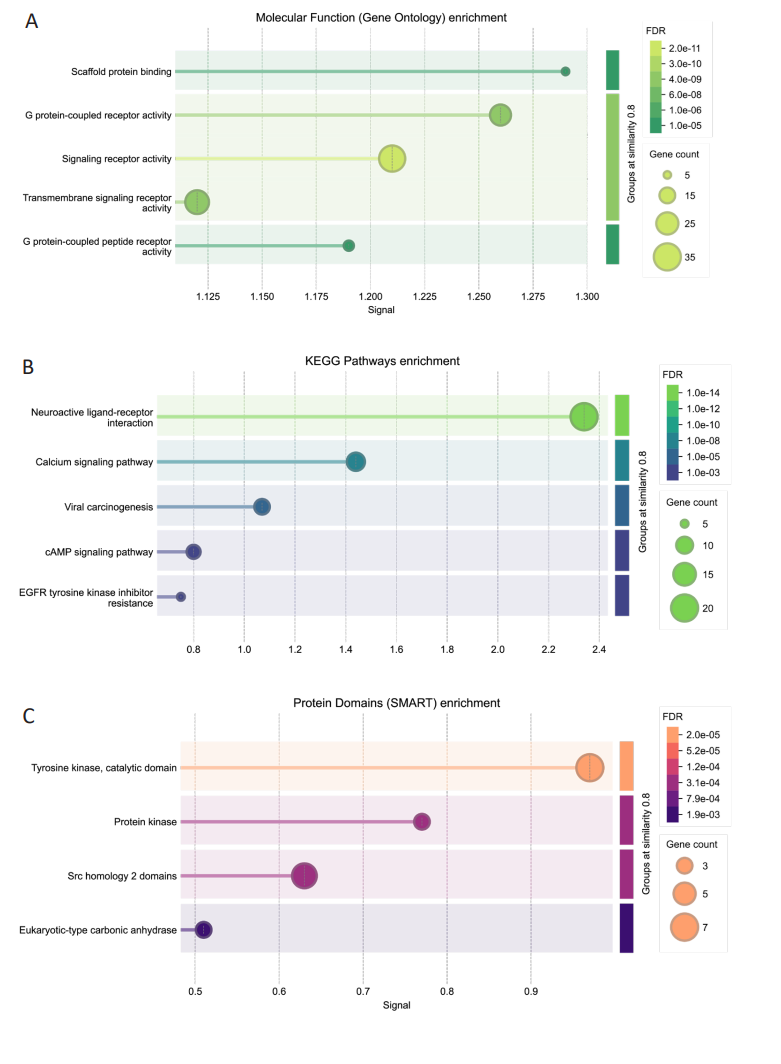
Functional enrichment analysis of the CBD target set revealed strong overrepresentation of molecular functions associated with scaffold protein binding, G protein-coupled receptor activity, signaling receptor activity, transmembrane signaling receptor activity, and G protein-coupled peptide receptor activity. These results emphasize the central role of membrane receptor-mediated signaling in CBD pharmacology and highlight GPCR pathways as key modulators of its biological effects in feline systems. KEGG pathway enrichment analysis further demonstrated significant involvement of neuroactive ligand-receptor interaction and calcium signaling pathways, both of which are critical for neuronal communication, synaptic transmission, and intracellular signal regulation. Additionally, pathways associated with viral carcinogenesis were also enriched, reflecting the involvement of shared signaling networks that regulate cell proliferation and survival. Protein domain analysis revealed a strong enrichment of tyrosine kinase catalytic domains, protein kinase domains, and Src homology 2 (SH2) domains among CBD-associated targets. This indicates that a substantial proportion of CBD-interacting proteins are involved in phosphorylation-dependent signaling cascades, receptor tyrosine kinase activity, and intracellular signal transduction processes. The integrated network pharmacology and molecular docking analyses demonstrate that CBD in domestic cats interacts with a complex, multi-layered protein network enriched in GPCR signaling, lipid mediator pathways, neuroactive ligand-receptor interactions, and kinase-mediated signaling systems. These findings collectively suggest that CBD exerts broad regulatory effects across immune, metabolic, and neurological systems in Felis catus, providing a mechanistic foundation for its observed therapeutic potential in feline medicine.
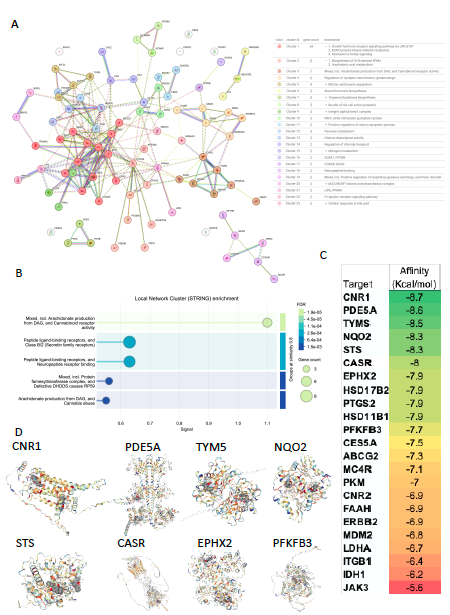
Figure 1. Integrated network pharmacology and molecular docking analysis of cannabidiol (CBD) in the domestic cat (Felis catus). (A) Protein-protein interaction (PPI) network constructed from 89 predicted feline CBD-associated targets, illustrating the overall interaction landscape and connectivity patterns within the CBD target space. (B) Local network cluster enrichment analysis highlighting major functional modules, including GPCR signaling, neuropeptide receptor activity, and lipid-mediated signaling pathways. (C) Molecular docking affinity profile of CBD against 23 key feline protein targets, showing predicted binding energies (kcal/mol) and identifying high-affinity interactions across enzymes, receptors, and signaling proteins. (D) Representative docking conformations of CBD within the active binding sites of selected target proteins, demonstrating ligand-protein interactions and binding orientations consistent with stable docking poses across key pharmacological targets.
Discussion
The present network pharmacology and molecular docking study provides a systems-level perspective on the potential mechanisms of cannabidiol (CBD) in the domestic cat (Felis catus), integrating target prediction, protein interaction networks, functional enrichment, and structural binding analysis. Collectively, the findings indicate that CBD engages a broad spectrum of biological pathways, particularly those involved in neuromodulation, immune regulation, lipid signaling, and cellular metabolism. The broad spectrum of biological pathways activated by CBD is consistent with previous reports [7]. Importantly, the docking results highlight a subset of high-affinity interactions with physiologically critical proteins, suggesting that the observed network-level effects may be underpinned by direct molecular binding events.
Among the highest-affinity targets identified, cannabinoid receptor type 1 (CNR1) showed the strongest predicted binding affinity (−8.7 kcal/mol), underscoring its central role in mediating CBD-related neurophysiological effects [17] CNR1 is highly expressed in the central nervous system and is a key regulator of synaptic transmission, pain perception, appetite, and emotional behavior. In cats, modulation of CNR1 is particularly relevant to behavioral and stress-related conditions [6], which aligns with reported anxiolytic and calming effects of CBD in this species. Although CBD is classically considered a low-affinity ligand for cannabinoid receptors compared to tetrahydrocannabinol (THC), the strong docking affinity observed here supports the possibility of indirect or allosteric modulation of CNR1 signaling in feline systems. This may contribute to the neuromodulatory, and behavioral effects observed clinically while maintaining a favorable safety profile due to the non-psychoactive nature of CBD [5,13,18] .Phosphodiesterase 5A (PDE5A), which also demonstrated strong binding affinity (−8.6 kcal/mol), plays a critical role in regulating intracellular cyclic guanosine monophosphate (cGMP) signaling [19,20]. PDE5A is involved in vascular tone regulation, smooth muscle relaxation, and inflammatory modulation. Inhibition of PDE5A can enhance nitric oxide-cGMP signaling, which is associated with vasodilation and potential anti-inflammatory effects [19,21]. The predicted interaction between CBD and PDE5A suggests a plausible mechanism by which CBD may influence vascular and inflammatory processes in cats. From a physiological perspective, this interaction may contribute to improved tissue perfusion and modulation of inflammatory responses without necessarily inducing systemic cardiovascular instability, although this remains to be experimentally validated in feline models.
Thymidylate synthase (TYMS), a high-affinity docking target of CBD (−8.5 kcal/mol), is a central enzyme in de novo thymidine synthesis and thus plays an essential role in DNA replication and cellular proliferation [22,23]. The predicted interaction between CBD and TYMS suggests a potential influence on nucleotide metabolism and cell cycle dynamics; however, this finding should be interpreted cautiously within a safety pharmacology framework. In the context of clinical administration in cats, including those with chronic gingivostomatitis where CBD has already been evaluated as an adjunct therapy [11], there is no evidence of hematological suppression, mucosal toxicity, or impaired tissue regeneration associated with CBD exposure at therapeutic doses. Instead, the interaction with TYMS is more plausibly indicative of mild regulatory modulation of proliferative activity in highly active immune and epithelial compartments, which may be relevant to controlling excessive inflammatory cell turnover observed in chronic oral inflammatory conditions. This aligns with clinical observations where CBD supplementation was associated with improved disease outcomes without adverse effects on tissue healing [2,3,12,13,18], thereby supporting a favorable safety profile and reinforcing the interpretation that TYMS binding reflects low-risk pharmacodynamic modulation rather than cytotoxic inhibition.
NAD(P)H quinone dehydrogenase 1 (NQO2), with a binding affinity of −8.3 kcal/mol, is a phase II detoxification enzyme central to oxidative stress regulation and cellular redox homeostasis [24,25]. Its predicted interaction with CBD suggests a potential role in enhancing antioxidant defenses and stabilizing redox balance, which is particularly relevant in feline inflammatory and stress-associated disorders where oxidative damage is a known contributor to disease progression. This cytoprotective interpretation is consistent with the generally favorable safety profile of CBD observed in experimental and clinical studies in cats, where no evidence of oxidative toxicity or organ stress has been reported even under repeated administration [2,12]. In parallel, steroid sulfatase (STS), which also demonstrated a strong binding affinity (−8.3 kcal/mol), is a key enzyme involved in steroid hormone metabolism through the de-sulphation of inactive steroid sulphates into biologically active forms [26,27]. In cats, phase II metabolic pathways, including sulphation and related conjugation processes, are known to exhibit species-specific limitations that can influence pharmacokinetics and drug disposition, making steroid-dependent regulatory systems particularly sensitive to enzymatic modulation [28,29]. Within this context, potential CBD-STS interactions may subtly influence local steroid availability, thereby affecting neuro-steroid balance, immune regulation, and stress responsiveness without necessarily disrupting systemic endocrine stability. Rather than indicating endocrine toxicity, this interaction reflects a mild modulatory effect on steroid homeostasis that could contribute to the immunomodulatory and behavioral benefits of CBD observed in feline patients. Importantly, despite theoretical considerations related to species-specific differences in sulphation capacity and pharmacokinetic handling, current safety evidence in cats, including those with chronic inflammatory conditions does not indicate clinically significant endocrine dysregulation, further supporting the interpretation of CBD as a cytoprotective and homeostasis-supporting compound rather than a disruptor of metabolic detoxification pathways [2,12,18].
Calcium-sensing receptor (CASR), with a binding affinity of −8.0 kcal/mol, is a critical regulator of systemic calcium homeostasis and parathyroid hormone secretion [30]. Interaction with CASR is particularly important from a safety pharmacology perspective, as dysregulation of calcium signaling can lead to neuromuscular and metabolic disturbances [31,32]. The predicted moderate-to-strong binding of CBD to CASR suggests a potential modulatory role in calcium signaling pathways. However, the absence of reported clinically significant calcium imbalance in feline CBD studies supports the interpretation that CBD likely acts as a mild modulator rather than a potent inhibitor or activator of this receptor under physiological conditions. Importantly, CASR has also been reported to be expressed in feline taste tissues [33], where it is implicated in taste perception and nutrient sensing. As cannabinoids, including CBD, are known to influence sensory perception and feeding-related behaviors, the interaction of CBD with CASR may contribute to modulation of taste perception and palatability in cats. This raises the possibility that incorporation of CBD into feline diets could potentially improve taste acceptance and feeding behavior, particularly in animals with reduced appetite or selective feeding tendencies. In addition, CASR has been associated with chronic kidney disease, mineral and bone disorder (CKD-MBD) in cats, a common clinical complication observed in feline chronic kidney disease [31]. Dysregulation of calcium-phosphorus metabolism and altered parathyroid hormone signaling are key features of this condition. Therefore, the observed interaction between CBD and CASR may indicate a potential therapeutic role for CBD in supporting calcium homeostasis and mitigating mineral and bone metabolism disturbances associated with CKD-MBD. Although these findings are preliminary and require in vivo validation, they suggest that CBD-mediated modulation of CASR could have broader implications for both nutritional and clinical applications in feline medicine.
From a safety pharmacology standpoint, the simultaneous interaction of CBD with multiple high-affinity targets raises important considerations regarding off-target effects. However, the overall pattern observed in this study suggests that CBD preferentially interacts with regulatory enzymes and signaling proteins rather than essential housekeeping proteins involved in core cellular viability. This is consistent with experimental observations in cats, where CBD administration has generally been well tolerated across acute and chronic dosing regimens without evidence of overt toxicity [2,12,13]. The presence of moderate binding affinities across metabolic and signaling proteins such as PDE5A, STS, and NQO2 suggests a profile characterized by broad physiological modulation rather than targeted cytotoxicity. Importantly, the multi-target binding profile of CBD should be interpreted within the framework of network pharmacology rather than single-receptor pharmacodynamics. In this context, CBD appears to function as a pleiotropic modulator of interconnected signaling systems, including endocannabinoid, neuroendocrine, and metabolic pathways. This aligns with the network enrichment results, which highlighted GPCR signaling, neuroactive ligand-receptor interactions, and calcium signaling as central pathways. Such systems-level modulation may explain the diverse therapeutic effects reported in feline studies, including anti-inflammatory, anxiolytic, and analgesic outcomes [2,12,13].
In conclusion, the integration of docking and network analyses suggests that CBD exerts its physiological effects in cats through a combination of direct receptor interactions and indirect pathway-level modulation. The high-affinity binding to CNR1 supports its primary role in neuromodulation, while interactions with PDE5A, TYMS, NQO2, STS, and CASR indicate broader involvement in vascular regulation, cellular metabolism, oxidative stress response, endocrine signaling, and calcium homeostasis. Despite this multi-target engagement, the existing safety profile of CBD in cats suggests that these interactions occur within a tolerable pharmacological window, supporting its continued investigation as a multi-functional therapeutic agent in feline medicine.
Acknowledgements
Research support from University College Dublin-Seed funding/Output Based Research Support Scheme (AK, R19862, 2019) and Morris Animal Foundation Veterinary Student Scholar award to AD (25CAANVS-0005) is acknowledged.
Conflict of Interest
The authors declare no conflict of interest.
Ethics Statement
This study was reviewed and determined to be exempt from formal ethics review/ethical approval requirements by the Animal Research Ethics Committee of University College Dublin, Ireland (AREC-E-25-22-Kumar).
Author contribution
Conceptualization: AD, AK; Methodology: AK; Formal analysis: AD, AK; Investigation: AD; Resources: AK; Data curation: AD, AK; Writing original draft preparation: AK; Writing, review and editing: AD, AK; Visualisation: AK; Supervision, AK; Project administration: AK. All authors have read and agreed to the published version of the manuscript.
References
2. Coltherd JC, Bednall R, Bakke AM, Ellerby Z, Newman C, Watson P, et al. Healthy cats tolerate long-term daily feeding of Cannabidiol. Front Vet Sci. 2024 Jan 24;10:1324622.
3. Corsato Alvarenga I, Panickar KS, Hess H, McGrath S. Scientific Validation of Cannabidiol for Management of Dog and Cat Diseases. Annu Rev Anim Biosci. 2023 Feb 15;11:227–46.
4. Brutlag A, Hommerding H. Toxicology of Marijuana, Synthetic Cannabinoids, and Cannabidiol in Dogs and Cats. Vet Clin North Am Small Anim Pract. 2018 Nov;48(6):1087–102.
5. Niño Cital S, Wakshlag J, Kennedy A, Tittle D, Petty M. Cats and cannabinoids: past, present and future. J Feline Med Surg. 2025 Sep;27(9):1098612X251365392.
6. Silver RJ. The Endocannabinoid System of Animals. Animals (Basel). 2019 Sep 16;9(9):686.
7. Martinez Naya N, Kelly J, Corna G, Golino M, Abbate A, Toldo S. Molecular and Cellular Mechanisms of Action of Cannabidiol. Molecules. 2023 Aug 9;28(16):5980.
8. Kumar AH. Targeting RNA lifelines-PIN domain endonucleases for broad-spectrum antitrypanosomal drug development. Ger J Microbiol. 2026;6(3):1–9.
9. Rao A, Kumar AH. Computational pharmacology analysis of lycopene to identify its targets and biological effects in humans. Applied Sciences. 2025 Jul 11;15(14):7815.
10. Deabold KA, Schwark WS, Wolf L, Wakshlag JJ. Single-Dose Pharmacokinetics and Preliminary Safety Assessment with Use of CBD-Rich Hemp Nutraceutical in Healthy Dogs and Cats. Animals (Basel). 2019 Oct 19;9(10):832.
11. Coelho JC, Duarte N, Bento da Silva A, Bronze MDR, Mestrinho LA. Placebo-Controlled Trial of Daily Oral Cannabidiol as Adjunctive Treatment for Cats with Chronic Gingivostomatitis. Animals (Basel). 2023 Aug 26;13(17):2716.
12. Kulpa JE, Paulionis LJ, Eglit GM, Vaughn DM. Safety and tolerability of escalating cannabinoid doses in healthy cats. J Feline Med Surg. 2021 Dec;23(12):1162–75.
13. Masataka, N. Possible Anxiolytic Effects of Cannabidiol (CBD) Administration on Feline Responses to a Fear Response Test. Animals 2025, 15, 1642. Animals (Basel). 2026 Jun 12;16(12):1817.
14. Sethumadhavan A, Kumar AH. Sleep Deprivation, Cytokine Dysregulation, and the Risk of Cardiac Arrhythmia in Dogs. Vet Med Sci. 2026 Sep;12(5):e71212.
15. Kumar AH, Sagar V, Ramachandra B. Evaluating the efficacy of poly-herbal powder, dermal spray, and dermal ointment in treating Lumpy Skin Disease (LSD) in Bovines. Ger J Vet Res 2026;6:16–29.
16. Brewer M, Kumar AH. The Molecular Signature of Umami Palatability in Dogs Based on Amino Acid Interactions with Canine Taste Receptors. Arch Life Sci Res. 2026;2:25–35.
17. Spinella TC, Stewart SH, Naugler J, Yakovenko I, Barrett SP. Evaluating cannabidiol (CBD) expectancy effects on acute stress and anxiety in healthy adults: a randomized crossover study. Psychopharmacology (Berl). 2021 Jul;238(7):1965–77.
18. Wanapinit K, Niyom S, Suriyawongpongsa P, Khathatip S, Tancharoen K, Roytrakul S, et al. Evaluation of Cannabidiol Oil's Effects on Sedation, Behavioral Responses to Handling, and Nociceptive Thresholds in Healthy Cats. Animals (Basel). 2025 Jul 6;15(13):1987.
19. Shan X, Margulies KB. Differential regulation of PDE5 expression in left and right ventricles of feline hypertrophy models. PLoS One. 2011;6(5):e19922.
20. Doherty PC, Bivalacqua TJ, Champion HC, Kadowitz PJ, Greenwood-Van Meerveld B, Berzetei-Gurske I, et al. Direct effects of selective type 5 phosphodiesterase inhibitors alone or with other vasodilators on the erectile response in cats. J Urol. 2001 Mar;165(3):1004–9.
21. Ueda Y, Johnson LR, Ontiveros ES, Visser LC, Gunther-Harrington CT, Stern JA. Effect of a phosphodiesterase-5A (PDE5A) gene polymorphism on response to sildenafil therapy in canine pulmonary hypertension. Sci Rep. 2019 May 3;9(1):6899.
22. Wang L, Sharif H, Saellström S, Rönnberg H, Eriksson S. Feline thymidine kinase 1: molecular characterization and evaluation of its serum form as a diagnostic biomarker. BMC Vet Res. 2021 Sep 27;17(1):316.
23. Ozer U, Barbour KW, Clinton SA, Berger FG. Oxidative Stress and Response to Thymidylate Synthase-Targeted Antimetabolites. Mol Pharmacol. 2015 Dec;88(6):970–81.
24. Preethi S, Arthiga K, Patil AB, Spandana A, Jain V. Review on NAD(P)H dehydrogenase quinone 1 (NQO1) pathway. Mol Biol Rep. 2022 Sep;49(9):8907–24.
25. Siegel D, Gustafson DL, Dehn DL, Han JY, Boonchoong P, Berliner LJ, et al. NAD(P)H:quinone oxidoreductase 1: role as a superoxide scavenger. Mol Pharmacol. 2004 May;65(5):1238–47.
26. Braun BC, Okuyama MW, Müller K, Dehnhard M, Jewgenow K. Steroidogenic enzymes, their products and sex steroid receptors during testis development and spermatogenesis in the domestic cat (Felis catus). J Steroid Biochem Mol Biol. 2018 Apr;178:135–49.
27. Ruoff BM, Daniel WL. Comparative biochemistry of mammalian arylsulfatase C and steroid sulfatase. Comp Biochem Physiol B. 1991;98(2-3):313–22.
28. Li Q, Homilius M, Achilles E, Massey LK, Convey V, Ohlsson Ået al. Metabolic abnormalities and reprogramming in cats with naturally occurring hypertrophic cardiomyopathy. ESC Heart Fail. 2025 Apr;12(2):1256–70.
29. Court MH. Feline drug metabolism and disposition: pharmacokinetic evidence for species differences and molecular mechanisms. Vet Clin North Am Small Anim Pract. 2013 Sep;43(5):1039–54.
30. Brown EM. Clinical lessons from the calcium-sensing receptor. Nat Clin Pract Endocrinol Metab. 2007 Feb;3(2):122–33.
31. Geddes RF, Jepson RE, Forcada Y, Elliott J, Syme HM. Associations between single nucleotide polymorphisms in the calcium sensing receptor and chronic kidney disease-mineral and bone disorder in cats. Vet J. 2018 May;235:34–41.
32. Magno AL, Ward BK, Ratajczak T. The calcium-sensing receptor: a molecular perspective. Endocr Rev. 2011 Feb;32(1):3–30.
33. Laffitte A, Gibbs M, Hernangomez de Alvaro C, Addison J, Lonsdale ZN, Giribaldi MG, et al. Kokumi taste perception is functional in a model carnivore, the domestic cat (Felis catus). Sci Rep. 2021 May 18;11(1):10527.