

Abstract
Artificial Intelligence (AI) as recently emerged as a pervasive element of academic research globally. Such an integration has revolutionized higher education worldwide. This transformation, however, has come with significant disparities in awareness, access, and ethical preparedness across developing contexts, particularly highlighting the challenges faced by institutions in Ghana where many stakeholders lack the necessary training and resources to effectively integrate AI into their academic practices. This review synthesizes empirical findings from two previous studies conducted in Ghana. The more recent study focused on tertiary students' awareness, usage patterns, and perceptions of AI among academic stakeholders. Data from a cross-sectional survey of 450 students showed moderate awareness of AI tools, in combination with a relatively low rate of practical use due to skills shortage, ethical concerns, and limitations of access. A parallel mixed-methods study of 300 academicians and students reported overall positive beliefs about the potentially beneficial impact of AI on research quality and efficiency, coupled to challenges in this domain associated with infrastructure, digital literacy, and ethical uncertainty. Combined, the findings indicate that while interest in AI is growing within Ghanaian academia, there is still insufficient institutional readiness and structured support. This discussion also reviews implications of these findings for educational policy, curriculum development, and responsible academic practice. The review also suggests interventions based on laid-out observations in the conclusion portion of the study upon suggestions on how to augment AI literacy, digital infrastructure, and ethical guidelines for a sustainable higher education landscape.
Keywords
Artificial Intelligence, Academic research, Tertiary students, Ghana, AI awareness, Digital literacy, Technology adoption, Ethical considerations
Introduction
Artificial Intelligence (AI) has become one of the most significant technological advancements that we have experienced in this century, in a very short span. AI had fundamentally redefined the processes of knowledge creation, analysis, and dissemination across—and outside of—the global higher education ecosystem. Considerable efforts have been made globally to incorporate AI-driven tools into academic research processes. These include tools that are used in literature retrieval, data analysis, academic writing, and decision-making. These technologies have been recognized for their potential to increase research efficiency, improve learning outcomes, and nurture innovation across universities [1,2]. However, we need to acknowledge that the positive incorporation of AI in academic scenarios is not dependent only on the technology being available. Users should be made aware of this and prepared for it as well as ethically trained.
The integration of AI in higher education is uneven across developing countries. This is due to various constraints, such as structural, institutional, and human capacity building. This phenomenon is evidenced by the work of Aker & Mbiti (2010) [3] and UNESCO (2023) [4], stating that while a number of universities are embracing digital transformation agendas, there remain barriers pertaining to meritocracy, infrastructure, digital literacy, and policy areas that inhibit impactful uses of AI technologies. These limitations are exacerbated in sub-Saharan Africa, where unequal access to the kinds of digital resources and training that produce good technology use has led to starkly heterogeneous adoption patterns. Thus, it has become imperative to evaluate AI awareness and usage among key academic stakeholders to inform effective educational planning and policy development.
On the ground, recent empirical evidence from Ghana highlights a stark divide between AI awareness and its use in academic research. A large-scale analysis of tertiary students revealed that while many respondents were aware of AI tools, less than half had used them in an active research context. Additionally, the perceived utility of use and ethical implications were allure predictors for awareness and take-up factors, reaffirming that conceptual familiarity does not inherently achieve effective usage [5]. Similar trends have been documented in international studies that show students often express interest in AI technologies but lack the skills, guidance, and institutional support necessary to use them responsibly for their academic work [6,7]. It is evident that Ghanaian tertiary students are only almost adequately prepared to take full advantage of these emerging AI-based research tools.
Supplementary research exploring expanded academic stakeholdership in Ghana provides additional context on the enablers and barriers for AI adoption in higher education. Using mixed-methods analysis with a sample of educators, researchers, and students, the study found generally positive attitudes about AI's potential to improve quality in research while reducing inefficiencies. Respondents responding also identified inhibiting infrastructure gaps, dividing digital divisions, and uncaptured ethical issues around AI adoption as dominating issues [8]. Such concerns echo findings out of other parts of Africa and more generally across the Global South, where excitement about potential promise afforded by AI is often moderated as a result of lackluster institutional readiness or governance [9].
Literature based on Artificial Intelligence in education is ever-growing, but context-specific syntheses, particularly for developing countries, are scarce. Several literature reviews emphasize the technological development and limited nature of studies on AI in various sectors of some economically low- or middle-income countries, highlighting that much scholarly attention has been focused on technologically advanced regions and may not reflect the socioeconomic, infrastructural, and cultural realities shaping AI developments such as in Ghana. Thus, the article highlights a serious need for critical analysis of the locally available empirical evidence and to make actionable recommendations that are in association with national educational priorities and institutional capabilities.
This review thus seeks to collate and critically discuss the evidence of two recent studies from Ghana on AI awareness and adoption for academic research. This review aims to establish trends and outline areas for further consideration among tertiary students, as well as the wider academic community at large, thus identifying opportunities and challenges while highlighting specific AI readiness strategic direction possibilities for Ghanaian higher education. Above all, this review seeks to inform policy development, curriculum reform, and ethical academic practice so as to encourage responsible and effective adoption.
Methodology
This study utilized a narrative review design to synthesize and critically interpret empirical evidence on awareness, adoption, and academic readiness for Artificial Intelligence (AI) in Ghanaian higher education. Feasibility for a narrative review approach was given due to the focus of this work not being one of statistical aggregation of results, but rather would be providing conceptual synthesis, theoretical interpretation and contextual consideration. Narrative reviews are especially well-suited to explore emerging fields where empirical evidence is still forming and interpretation within theory and policy is needed [10].
Drawing largely on two recent empirical studies of awareness, perceptions and academic use of AI amongst tertiary students and academic stakeholders in Ghana [5,8], the review was informed. These studies were chosen based on their methodological robustness, contextual relevance, and upon higher education infrastructure in Ghana. The first study was a cross sectional survey of 450 tertiary students from various disciplines, aimed to assess teachers’ awareness level, usage characteristics and ethical perceptions towards the use of AI. The second study used a mixed methods approach with 300 academic stakeholders, including students, educators, and researchers where quantitative survey data were supplemented with qualitative interviews to help uncover adoption patterns, institutional readiness, and perceived barriers.
So as to enhance interpretation and positioning of our findings in a broader global context, additional literature was retrieved through purposive searches of academic databases (Google Scholar, Scopus indexed journals) and grey literature (e.g. institutional reports from international organizations such as UNESCO or the World Bank). Search terms by keyword combinations included “Artificial Intelligence in higher education,” “AI adoption in academia,” “digital literacy and AI,” technology acceptance in education” and “AI readiness in developing countries.” Peer reviewed journal articles, theoretical studies and policy reports published from 2015 to 2025 were prioritized in order to account for contemporary developments relating to the integration of AI within education.
We included studies that investigated any dimension of AI awareness, adoption, perceptions, ethical considerations, digital preparedness or institutional support at higher education institutions. We excluded studies that focused on technical algorithm development but were not relevant for adoption or use by humans in education. Thematic synthesis of the literature highlighted key themes including levels of awareness, barriers to adoption, ethical issues, institutional preparedness and implications for academic practice.
This approach facilitated the combination of empirical results with existing theoretical frameworks in particular Unified Theory of Acceptance and Use of Technology as well as Diffusion of Innovations Theory Bridging the gap between evidence and theory, the review renders an evidence-based contextualized critique of AI academic readiness in Ghanaian higher education. This method also aligns with the creation of the AI Academic Readiness Framework discussed in this study.
Artificial Intelligence Adoption in Higher Education: Global and African Context
Artificial Intelligence has quickly developed to be a core part of educational research and higher education systems globally. In the regions where technology is more developed, University admission and education systems have been shaped (50) by controlling AI in their teaching-learning and research activities (>65%) but significant progress has been made only in developing countries (up to Oct. 2023). Tools that fall under the umbrella of AI are being utilized for literature synthesis, data analysis, academic writing support, plagiarism detection and personalized learning [11,12]. These trends have led to better research productivity, more efficient academic performance and promising opportunities for innovation in the higher education sector.
Asian nations, led by China, South Korea, and Singapore have become world champions in AI adoption on a campus basis. Strong government investment, national AI strategies and the incorporation of digital technologies into education systems have allowed universities in these areas to quickly rollout AI powered research tools & digital learning platforms [13]. Consequently, students and academics in these nations exhibit substantially superior metrics with respect to AI literacy, access, and usage than most developing regions.
In contrast, the uptake of Artificial Intelligence in African higher education is patchy and relatively low. Even though awareness of AI is progressively growing, its actual application is normally faced with challenges such as inadequate infrastructure, effective digital literacy and institutional support, together with lack of comprehensive policy measures [13]. All this bears enormous significance on many African universities, where unreliable internet access, limited connection to documents and tools for digital work, and lack of training formats still hinder the meaningful use of AI technologies in academic research.
Nevertheless, the African continent is witnessing increasing momentum towards Artificial Intelligence adoption. For example, certain countries have begun investing in digital education initiatives while also building out their AI capacity development programs to reinvigorate research and innovation [14]; others such as South Africa, Kenya, and Nigeria seem to be making strides. These initiatives echo an increasing awareness of AI as a strategic asset to bolster academic competitiveness and support national development.
Ghana is a particularly significant case to consider in this more general African context. While the country has made strides in developing higher education and digital infrastructure, significant gaps still exist regarding awareness, readiness and academic application of AI. The empirical findings discussed in this study show that, while Ghanaian students and academics are generally aware of the benefits of AI, its practical use is limited by ethical considerations, digital literacy gaps, and infrastructural challenges [5,8]. These patterns are in line with wider trends seen across many higher education systems in Africa.
However, international experience indicates that focused institutional investment, initiatives for structured training to facilitate the integration of AI in academic environments and unequivocal ethical governance framework can significantly enhance the adoption of AI [13,15]. Indeed, lessons learnt from countries that have successfully on boarded AI in higher education indicate pursuing coordinated policy action, institutional readiness and building the necessary capacity. The translation of these lessons in the Ghanaian context will be critical to improving AI readiness and sustenance of higher education institutions for global competitiveness.
The wider global and regional picture indicates significant differences in AI readiness and adoption among national higher education systems. Grasping these fundamental structural and contextual distinctions is a key prerequisite for meta-studies of empirical research on AI usage in academic settings. Understanding Empirical Evidence on AI in Education. Empirical evidence provides deeper insights into the ways students, educators, and institutions engage with AI technologies and helps identify the components that foster or limit their successful adoption in scholarly research.
Overview of Empirical Evidence on Artificial Intelligence in Academic Research
A body of empirical research on the role and use of Artificial Intelligence (AI) in academic research has emerged over the last few years, attesting to increased interest in how digital technologies are transforming scholarly practices. AI tools are being adopted widely to facilitate literature discovery, automate data analysis, detect plagiarism and improve the quality of academic writing according to consistently across international studies. Such applications have been demonstrated to enable efficiency increase and cognitive load related to complicated research assignments, such as in data-intensive disciplines [1,12]. But evidence also suggests that the advantages of AI are not being shared equally across institutions, or around the world.
In the world of higher education, awareness of AI tends to precede usage. Even though students and faculty around the world are aware of AI-based tools — there are studies from Europe, Asia and North America on this topic — the way both groups engage with these technologies is selective (or even skin-deep). Limited technical competence, uncertainty about academic integrity and formal institutional guidance as key constraints to wider adoption have been identified [2,16]. These results indicate that awareness is no panacea for the integration of AI into academic research practices.
Evidence from developing countries paints a more nuanced picture. Stellar AI adoption patterns within universities are starkly influenced by digital inequality, infrastructural deficits and uneven access to training as emanating from research in sub-Saharan Africa. Research suggests unreliable internet connectivity, high expenses of digital tool purchase, and lack of institutional support often hinder sustained use of advanced technologies [3,9]. Consequently, the application of AI in academic research often stays limited to resource-rich institutions or specific disciplines, especially within science and technology domains.
Recent empirical work in the Ghanaian context reveals important dynamics on these fronts. A cross-sectional survey conducted among tertiary students revealed moderate awareness levels of AI tools however, the actual use for academic research was rather low. The study also revealed that perceived usefulness is a strong antecedent of awareness, whereas ethical issues (such as fear of academic misconduct and the misuse of personal data) are significant adoption barriers [5]. These establishments mirror wider global evidence showing that trust and perceived value are central in determining technology acceptance in education [17].
Additional data from Ghana reaffirm the need to pay attention to institutional and disciplinary arrangements in AI adoption. In a mixed methods study of educators, researchers, and students, they found differences in AI usage between disciplines with "heavy use" mainly occurring in (Science, Technology, Engineering, and Mathematics) STEM and less so in the humanities and social sciences. While participants recognized that AI has great potential to boost the quality of research and reduce plagiarism, many talked about insufficient training, lack of infrastructure, and unclear policies guiding how AI can be used in academia [8]. Similar issues have been observed amongst higher education systems across Africa.
Ethical considerations form a common thread in both global and Ghana-specific studies. But perceptions of AI in academic research continue to be shaped by data privacy issues, algorithmic bias, violations of academic integrity, and questions about whether machines might take over your job. Among the concerns raised by scholars is that unless we develop appropriate agendas for governance and control (discussed in more detail below), AI could present a significant threat to trust in scholarly outputs and exacerbate inequities across existing higher education landscapes [4,18]. These concerns are especially salient in contexts where institutional oversight mechanisms remain a work in progress.
In summary, the empirical data indicates that AI has great potential to revolutionize research in academia, but its implementation varies greatly and is very context-specific. Moderate awareness remains coupled with limited practical use, as is the case in many developing countries (in Ghana). This is determined by a mélange of perceived benefits, ethical dilemmas, infrastructural realities and policy voids. Synthesizing these insights gives us an underpinning to draw upon for future steps in answering questions about specific strategies which can advance more inclusive, ethical and effective integration of AI into academic research.
Integrative Analysis of Findings
These empirical studies syntheses provide an integrated view into the current state of AI in usage by Ghanaian higher learning institutions. Although each study focused on different groups and adopted various methodological approaches, common themes across studies converge to reveal both new opportunities and persistent barriers for AI use in academic work.
The two studies reveal a common denominator: There is, indeed, a “gap” between awareness of AI and practice. Although tertiary students were widely aware of the AI tools that are available, little use was made of them for academic research [5]. And thus this gap indicates that, while conceptually acquainted with AI does not seem to excite confidence or competency in working effectively with such tools. In a similar fashion, limited engagement from the wider academic community indicated general interest in potential AI benefits as well as reported restricted engagement due to institutional, ethical and technical barriers [8]. These findings together indicate there is a readiness gap, where favorable attitudes toward AI co-exist with insufficient capacity for sustained utilization.
Ethical considerations were another unifying theme in the perceptions of AI identified common across both studies. Data privacy concerns, the misuse of personal information, and the potential for job loss were among the leading reasons cited by tertiary students as to why they were deterred from using AI [5]. This led academic staff to voice similar concerns which highlighted ambiguity around algorithmic bias, academic integrity, and the appropriate place of AI-generated content within academia [8]. Notably, the consistency of these concerns across diverse people indicates that trustworthiness and accountability are key factors to consider when adopting technology. Without more explicit structures across institutions and clearer ethical frameworks, concerns about AI will remain.
Higher education institutions' internal structural conditions, on the one hand, have a significant impact on the adoption patterns of AI. Based on a new mixed methods study, they find that limited internet connectivity and poor technological infrastructure along with insufficient training opportunities severely constrain the effective use of AI tools [8]. These hurdles at least partially explain why so many students who perceive the potential of AI to transform their domain consciously fail to enact those insights. Wherever motivation abounds, the lack of enabling institutional environments contrives against meaningful engagement with emergent technologies. This underscores the point of how usage of AI is not merely a question of competence at a personal level but also at that involving broader institutional and developmental contexts.”
Diversity of disciplines is another barrier in the integration of AI into academic research. Uptake of the tools has already been stark across the disciplines [8], with studies suggesting vastly greater proportions of engagement for AI in science and technology vs. humanities and social sciences. This imbalance suggests that the provision of AI-related materials, education, and resources differs dramatically across academic disciplines. Should they remain unaccounted for some of the inequalities present in contemporary academia will be perpetuated, with the unintended consequence that AI technologies may act to solidify or even exacerbate them, precluding progress towards truly inclusive research development.
Even with those limitations, both studies show early signs of promise that bode well for future improvement. Overall, respondents believed that AI could be a valuable resource that would help elevate the quality of writing, improve research efficiency and address plagiarism problems [8]. That provides ample opportunity for institutional efforts to expand AI literacy and promote responsible use, particularly through training programs and resources that educate students and faculty on ethical AI practices. The findings reveal that it’s not a rejection of the technology per se, but rather `Not knowing how to use it’ ethically and effectively.
It could be concluded that the integrative analysis positions Ghanaian higher education on an important transition stage relative to AI. There is greater awareness, clear excitement, and widespread agreement on the predicted benefits. Meanwhile, ethical ambiguities and infrastructures deficits along with training gaps continue to impede practical implementation. Meeting these interconnected challenges will require coordinated institutional and policy responses, ones that simultaneously strengthen technological capacity, human skills and ethical governance of academic research.
Theoretical Framework
The Unified Theory of Acceptance and Use of Technology developed by Viswanath Venkatesh et al. is the foundational framework for this research [19]. Since sub-technology acceptance model discovery, the theory has been extensively used and adapted to provide insights into what factors influence which emerging digital tools are adopted of educational purposes.
According to the Unified Theory of Acceptance and Use of Technology (UTAUT), there are four core constructs that impact an individual’s intention to use a technology, as well as their behavior in actually using it. This includes performance expectancy, effort expectancy, social influence, and facilitating conditions [19].
Performance Expectancy: The extent to which an individual believes that the use of technology will enhance his/her performance. In the academic research context, this relates to whether tertiary students think that artificial intelligence (AI) can improve more efficient research, better writing quality, assist literature search, and enhance academic productivity. The perception of how useful an educational technology is for enhancing learning has proven to be one of the strongest predictors for adoption [19,20].
Effort expectancy refers to the ease of use that individuals associate with a particular technology. Encourage students to perceive AI tools as easy to learn and use, which would make them more likely to adopt them. Technologies which can be used with minimal technical abilities and have user friendly interfaces have higher adoption rates. Indeed, ease of use has proved pivotal in acceptance of technology use [19,21] and particularly for students and new users.
Social influence: This dimension is the degree to which individuals perceive that important others (e.g., lecturers, peers and academic institutions) believe they should use a particular technology. Lecturer attitudes, institutional policies, and peer usage trends influence students within an academic environment. At the same time, students are more likely to adopt AI when it is supported or encouraged in an academic environment [19,22].
Facilitating conditions are structural supports (e.g., resources) that allow technology use. Of these are access to internet connectivity, artificial intelligence tools, training programs, and institutional support systems. Facilitating conditions are particularly critical in developing country settings like Ghana, where the state of infrastructure and scarcity of resources can have a significant impact on the adoption of technology [19].
This theory is extremely relevant to this study due to the fact that knowledge and awareness of artificial intelligence are directly affecting these four constructs. Students’ awareness of artificial intelligence and knowledge of its academic applications lead students to find it more useful, easier in use, socially acceptable, and supported by their institutions. Such views also make them more receptive and motivated to embrace AI news in academic research.
Hence, this theory serves as a strong basis to comprehend knowledge and awareness influences on AI adoption and the academic preparedness of tertiary students in Ghana.
Conceptual Framework: Artificial Intelligence Academic Readiness Framework for Higher Education in Ghana
Artificial Intelligence (AI) is transforming the way we do academic research and interact with our learning environments at an unprecedented rate, yet there are no coherent constructs describing how students can build readiness to work with these technologies in viable and ethical ways. We define AI academic readiness as the degree of awareness, technical capacity, institutional support and ethical understanding required for students to leverage AI tools in their academic work. Awareness goes well beyond simply a recognition of the issues and involves both practical, cognitive and institutional readiness to use AI responsibly within higher education.
This study presents the AI Academic Readiness Framework for Higher Education Affiliated Institutions in Ghana to elucidate this process. The framework acknowledges that technology adoption is shaped by individual perceptions, social context, and facilitating conditions, drawing from the Unified Theory of Acceptance and Use of Technology and the Diffusion of Innovations Theory. Note: These theoretical explanations imply that adopting is more than just awareness. Rather, successful integration relies on an interrelation of individual ability, perceived benefit, institutional facilitation, and ethical faith.
The suggested framework mediates the technological, one-on-one and institutional factors in translating awareness of AI into its genuine use academically among tertiary level college students. It understands that readiness for AI unfolds along a continuum in which students move from being aware of the existence of AI technologies, to assessing their usefulness, to developing adequate digital competence and having access to institutional/infrastructural support for implementing them. Ethical readiness is also a significant factor, because concerns about academic integrity, privacy and responsible use all impact students’ willingness to engage with AI tools.
The model comprises five interrelated constructs: AI literacy, perceived usefulness, digital competence, institutional support, and ethical readiness. This factors into students’ readiness for adopting AI in academic research. Awareness, perceived usefulness, and digital competence are individual readiness factors that affect students’ motivation and ability to use AI tools. Without the proper infrastructure and institutional backing, an effective adoption cannot take place. Thus, ethical readiness bolsters trust and societal responsibility, as such factors enable sustainable incorporation of AI into academic practice.
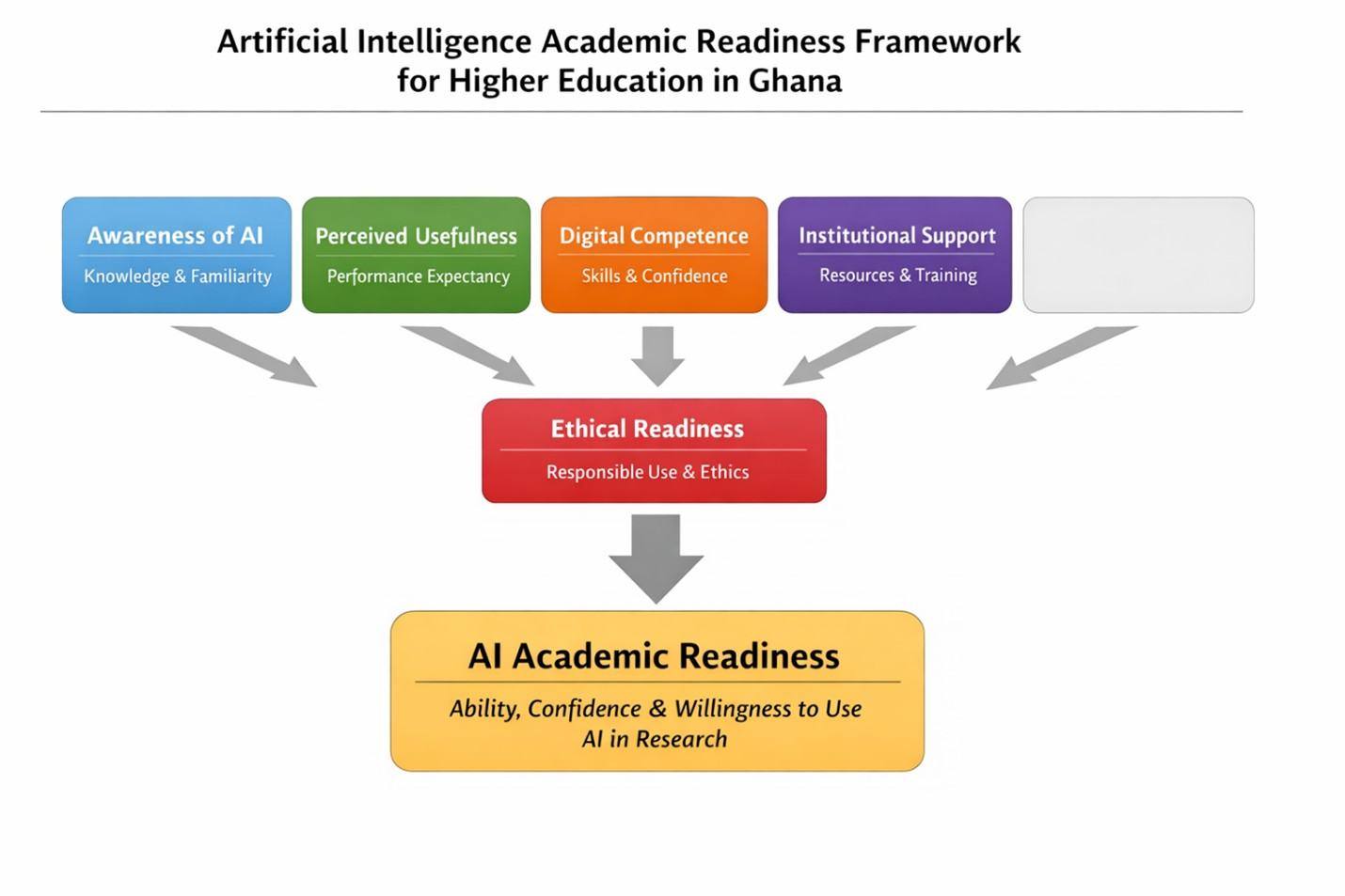
Core Components of the Framework
The proposed framework consists of five interrelated components: awareness, perceived usefulness, digital competence, institutional support, and ethical readiness. These components collectively determine the level of Artificial Intelligence (AI) academic readiness among students.
Awareness of Artificial intelligence
Awareness represents the first stage of readiness and refers to students' knowledge and familiarity with AI tools and their academic applications. According to the Diffusion of Innovations Theory, awareness is the initial stage in the adoption process, during which individuals become exposed to a new technology and begin to understand its potential functions [23]. Without awareness, students cannot progress to evaluation or adoption. Evidence from Ghanaian tertiary institutions indicate that although many students have heard about AI, their understanding of its research applications remains limited [5,8]. This suggests that awareness alone is necessary but not sufficient for meaningful adoption.
Perceived usefulness and performance expectancy
Perceived usefulness refers to the extent to which students believe that AI can improve their academic performance. The Unified Theory of Acceptance and Use of Technology identifies performance expectancy as a primary determinant of technology adoption [19]. When students perceive that AI can assist with literature searches, data analysis, and academic writing, they are more likely to develop positive attitudes toward its use. Studies have shown that students who recognize the academic benefits of AI demonstrate stronger intentions to use these tools in research activities [12,24]. This highlights the importance of demonstrating practical academic value in promoting adoption.
Digital competence and skills readiness
Digital competence refers to the technical ability and confidence required to use AI tools effectively. Even when awareness and perceived usefulness are high, students may fail to adopt AI if they lack the necessary digital skills. The Unified Theory of Acceptance and Use of Technology emphasizes effort expectancy, which refers to the ease with which users can learn and apply a technology [19]. Students with higher levels of digital literacy are more likely to experiment with AI tools and integrate them into their academic work. In contrast, limited technical skills act as a significant barrier, particularly in developing country contexts where digital training opportunities may be insufficient [13].
Institutional support and facilitating conditions
Institutional support refers to the availability of infrastructure, training, and academic guidance that enables students to use AI effectively. Facilitating conditions, as described in the Unified Theory of Acceptance and Use of Technology, include access to internet connectivity, technological resources, and institutional assistance [19]. Universities play a critical role in providing training programs, digital infrastructure, and policy guidance that promote responsible AI use. Research has shown that students are more likely to adopt educational technologies when they receive adequate institutional support and technical assistance [25]. In Ghanaian universities, infrastructural limitations and lack of structured training have been identified as key barriers to AI adoption [8].
Ethical readiness
Ethical readiness refers to students' understanding of the responsible use of AI, including issues related to academic integrity, privacy, and intellectual ownership. Ethical concerns have emerged as one of the most important factors influencing AI adoption in academic environments [4]. Students who are uncertain about the ethical implications of AI may avoid using it or use it improperly. Providing clear ethical guidelines and training can help students develop confidence in using AI responsibly.
Outcome Variable: Artificial Intelligence Academic Readiness
Artificial Intelligence (AI) academic readiness represents the outcome of the interaction between awareness, perceived usefulness, digital competence, institutional support, and ethical readiness. When these factors are present, students are more likely to adopt AI tools and integrate them into academic research. The Diffusion of Innovations Theory explains that adoption occurs when individuals move from awareness to evaluation and eventually to implementation [23]. Similarly, the Unified Theory of Acceptance and Use of Technology explains that behavioral intention and facilitating conditions lead to actual technology use [19].
In the Ghanaian context, AI academic readiness remains at a developing stage. While awareness is increasing, actual academic use is constrained by limited skills, infrastructural challenges, and ethical uncertainties [5,8]. The proposed framework provides a structured explanation of these relationships and offers a theoretical basis for understanding AI adoption in higher education.
Relevance of the Framework to the Present Study
This framework provides a conceptual foundation for interpreting the findings of this review. It explains why awareness does not automatically lead to adoption and highlights the importance of institutional support, digital competence, and ethical preparedness. By integrating established technology adoption theories with empirical evidence from Ghana, the framework offers a context relevant model for understanding Artificial Intelligence (AI) readiness in higher education.
The Artificial Intelligence Academic Readiness Framework for Higher Education in Ghana also provides guidance for policy development, curriculum design, and institutional planning. It emphasizes that successful integration of AI in academic research requires not only awareness but also skills development, institutional investment, and ethical governance.
Key Challenges and Barriers to Artificial Intelligence Adoption in Ghanaian Academia
We must also examine the barriers that prevent Artificial Intelligence (AI) academic readiness within Ghanaian higher education, drawing on the conceptual framework presented in this review. While the framework identifies important factors essential for successful AI adoption, the empirical evidence indicates that many structural, institutional and individual barriers still limit their development. Gaining an understanding of these dissemination barriers provides important insight as to why awareness is not consistently followed by practical use and can highlight areas where targeted interventions are needed.
YET, even with increasing awareness and mostly favorable perceptions of AI, there are some interconnected challenges hampering effective uptake within higher education in Ghana. These include significant individual, institutional, and systemic barriers to understanding and interacting with AI in academic research.
Indisputably, one of the biggest challenges is the lack of data infrastructure. Access to reliable internet connectivity, computing resources and licensed software is still uneven across many Ghanaian universities. In reality, empirical findings show that technological limitations are often experienced by both students and academic staff alike resulting in their inability to engage with AI tools over extended periods of time [8]. The same trends have been prevalent across sub-Saharan Africa where infrastructural-institutional deficits are often described as key constraints to digital innovation in higher education [9]. Without the essential digital infrastructure, the ability of AI to make academic research better is largely speculative.
Limited digital literacy and technical training exacerbate infrastructure impediments. While many students can articulate an awareness of AI tools, few possess the pragmatic skills necessary to implement and integrate these technologies into research workflows [5], which can hinder their ability to enhance the quality and efficiency of their academic research. Academic staff have similar challenges, especially those outside STEM fields without much prior exposure to computational tools. Indeed, some of the evidence indicates that lack of training can lead to anxiety about using AI technologies in academic contexts and misuse or complete avoidance of the tools [2]. This skills gap highlights the vital role that structured capacity-building initiatives should have in universities and other professional settings.
Certainly, ethical ambiguity is another significant roadblock to AI adoption. Across both the Ghanaian studies, concerns concerning data privacy, academic integrity, algorithmic bias and authorship attribution featured significantly [5,8]. So too these concerns reflect global discussions about the ethical implications of AI in education wherein scholars fear that poorly regulated uses of AI will damage trust in scholarly outputs and reinforce existing inequalities [18]. Lack of clear institutional policies and enforcement mechanisms create uncertainty in ethical boundaries, thereby dissuading users from confidently using AI responsibly in academic research.
There are institutional policy gaps that make it even harder to effectively integrate AI. AI in research is an underexplored area since many higher education institutions in Ghana do not have a formal regulation for what constitutes acceptable use of AI. This absence of policy leads to uncertainty for both students and faculty regarding the threat of repercussions or reputational costs resulting from AI use. At the international level, experience shows that those organizations that have implemented specific AI governance frameworks are more successful in providing for responsible experimentation and innovation [4]. In the absence of such frameworks, adoption tends to be fragmented and informal, leading to inconsistent practices and potential ethical concerns across different academic disciplines.
Disciplinary disparities continue to be an enduring challenge, as well. Data till October 2023 shows that there is far more adoption of AI in science and technology oriented fields as opposed to the humanities and social sciences [8]. This disparity highlights variations in curricular considerations, resource investments and perceived applicability of AI tools across academic fields. Consequently, AI enables deep asymmetrical access to its benefits, stoking equity concerns across academic research ecosystems. However, this may require exploration of discipline sensitive approaches to AI that illustrates the implementation relevance beyond technical realms.
Finally, socioeconomic factors play an important role in AI adoption in academia. Funder constraints, institutional priorities, and digital development differences across the nation pressure at what speed universities adopt emerging technologies. Without sustained investment by the public sector and better coordination of policies, higher education institutions in developing worlds are unable to catch up with global technology trends [3], which hinders their ability to effectively integrate AI into their research and educational practices. These structural realities underscore the necessity of aligning AI strategies in higher education institutions with national development agendas.
Therefore, it can be inferred from the challenges outlined above that the sluggish implementation of AI in Ghanaian academic research is not a reflection of innovative rigidity, but rather due to systemic factors and unaddressed ethical concerns. This calls for collaborative efforts across supply infrastructure, human capacity development and ethical governance including gendered institutional policies. These efforts are needed to liberate Ghanaian higher education from the vibrant potentialities of AI, through a responsible and sustainable approach.
Implications for Policy
The implications of these findings that have been synthesized in this review are significant for educational policy decision making and long-term strategic planning in the context of Ghanaian higher education. The ongoing chasm observed between awareness and adoption of AI at an institutional level highlights the reality that both students and academic staff will not sustainably embrace AI-related technologies in a meaningful enough way to ensure organic or non-regulated adoption is all we need. What it requires instead is concerted coordination and planned policy interventions to create an enabling environment for the responsible and effective use of AI in academic research.
One of the main policy priorities should be to deliver strong national and institutional frameworks on Artificial Intelligence that provides clear guidance about the appropriate use of Artificial Intelligence at higher education institutions. Ethical concerns represent a significant barrier to adoption and respondents are uncertain about data privacy, academic integrity, authorship issues, and the broader social considerations of AI technologies [5,8]. This lack of guidance leads to students and researchers navigating complex ethical issues on their own, often with hesitation or inconsistency, or avoiding AI tools entirely. Given these concerns, higher education authorities and university administrations need to implement transparent policies that clarify acceptable use, safeguard intellectual standards and promote responsible innovation.
Another policy intervention that emerges is to integrate Artificial Intelligence literacy in academic curricula. Despite the widespread knowledge of these tools, low usage among students suggests that established educational programs cannot adequately prepare students to use AI in research [5]. To bridge this gap between theory and practice, we need structured training modules, research methodology courses that integrate AI applications alongside digital skills at the institutional level. Yes, these initiatives should not be limited to technical domains, but should also encompass the humanities and social sciences that ensure broad access to AI literacies across the academic spectrum.
Investment in digital infrastructure is also fundamental to successful adoption of AI. A mixed methods study presented in this paper shows that poor internet connectivity, inadequate technological resources, and lack of institutional support still inhibit the extent to which AI is used effectively within Ghanaian higher education institutions [8]. Without robust digital systems and state-of-the-art research facilities, even meticulously planned training interventions will not deliver sustainable results, as they are essential for supporting the effective implementation and utilization of AI technologies in educational settings. National education policies should therefore seek to fund increased internet access, campus-based technology hubs and affordable access to licensed AI tools. Second, we must strengthen digital infrastructure—this is a necessary condition to convert AI awareness into tangible academic capability.
Policy interventions also need to tackle disparities in AI adoption within the discipline. These levels of greater science and engineering engagement compared to the humanities reflect inequitable access to resources, training, and institutional buy-in [8]. Educational policies designed to democratize AI adoption must facilitate interdisciplinary learning, promote context-specific applications of AI in non-technical fields and encourage cross-faculty collaboration. Such measures can help safeguard against the risk of AI technology simply reinforcing existing disadvantage, instead helping to ensure balanced and inclusive academic development by providing equitable opportunities for all students to engage with AI, regardless of their field of study.
All in all, if we do not bring this under legal framework it will be like a wild beast that is impossible to tame, thus reforming ethical governance mechanisms and formalizing them becomes essential from the perspective of academic research. Universities need to create ethics committees, data protection policies, and controls that supervise the academic use of AI technologies. By addressing valid issues of plagiarism, bias, and misuse of data whilst promoting trust between students and academic staff, these structures can help. Explicit ethical governance is crucial to ensure that AI adoption enhances academic integrity and supports larger social responsibility.
In short, the analysis of empirical evidence presented in this paper makes the case for concerted preemptive policy action. To be able to move AI in relation to Ghanaian better institutions of learning, we have to better understand the nature of existing need for AI literacy with education level ethics and regulation, this is a major issue that up till date was came from few months back as specific optimization which existed. The impact of AI on academic research won't be harnessed unless we take careful steps to channel it, such as developing targeted training programs for faculty and students to enhance their understanding of AI tools and ethical considerations in research.
Implications for Academic Practice
While changes to national and institutional policies are vital, factors identified in the studies that underpin academic performance have implications for everyday, practice within Ghanaian universities. Policy frameworks can only set direction, as real change is ultimately determined by how a Technology such as Artificial Intelligence (AI) will feature in Teaching, Learning and Research at Institutional level down to classroom.
Our universities have led in the global adoption of AI for use by academia, particularly in many Asian regions. China, South Korea, Singapore and India are integrating AI into research workflows, curriculum design, learning analytics and academic writing support systems. These developments are under pinned by continued investment in digital infrastructure, government backed AI strategies and widespread AI literacy initiatives in higher education [1,4]. In contrast, much of Africa (Ghana included) is in earlier stages of adoption that is marked more by awareness than practical integration. This makes the gap between current practice and the potential of AI in academia very evident, suggesting that African universities need to move away from exploratory engagement towards structured and intentional integration of AI into academic practice.
One- Practical implications immediately affect the structured training programs necessary to intensify students’ coherence in the world of AI. In response, evidence emerging from our student focused study suggests that many learners are aware of AI tools but lack the practical know how to apply them effectively in academic research [5]. Universities should thus initiate regular workshops, short courses and practical training sessions on responsible AI use in literature searching, data analysis, academic writing and research management. Such initiatives will enable students to progress beyond introductory familiarity toward a confident and ethical application of AI technologies.
Academic faculty development is also imperative. A mixed methods study found that while most educators appreciate the potential value of AI, such as ChatGPT and Bard, they feel unprepared to guide student use of it [8]. While many Asian institutes have formal faculty trainings on educational technologies, professional development opportunities for AI in African universities are scant. Thus, Ghana's institutions must not only encourage these human looking AI programs but set up ongoing professional development schemes that equip lecturers and researchers with the skills to deploy practical AI in their teaching, supervisions, marking and designing research. When academic staff are confident users of AI, they can better support students and model responsible scholarly behavior.
This effort may extend into university libraries and information technology units at such institutions where innovative approaches will be required to support the advancement of AI adoption. The campus library has become a digital center of innovation supporting data science, AI assisted research and open access scholarship across much of Asia’s universities. Similar models can be adopted by universities in Ghana when libraries and IT units are positioned as hubs for AI literacy training, software access and technical support. These would provide students and researchers with real support while also alleviating uncertainty about AI use through the establishment of help desks, repositories for resources, linearly guided access to approved tools.
Another important implication for academic practice relates to research methodology and academic integrity. Ethical issues were mentioned in both Ghanaian studies and reflected anxiety surrounding plagiarism, data privacy, or misuse of AI generated content [5,8]. Universities are thus in the position of needing to give clear, discipline specific guidance on what constitutes acceptable and unacceptable uses of AI supported academic work. Creating departmental guidelines on how to cite AI mediated movements, accounts of methodology, and data privacy will help institutionalize appropriate use of AI. Instead of presenting AI as a threat to academic integrity, institutions should recognize it as a tool that we must use wisely and ethically.
Moreover, practices related to assessment needs revisions as access to AI becomes more widely available. Traditional assessment formats dependent largely on written submissions are becoming increasingly susceptible to unconsidered AI use, which can undermine the authenticity of student work and challenge the integrity of the evaluation process. In Asia, there has been a growing trend for universities to replace rote learning with critical thinking and originality through assignments which are reflective, oral defenses, project based assessments, and process oriented evaluations. These approaches can be sought after by Ghanaian institutions to maintain meaningful learning outcomes in the context of an AI enabled academic environment.
Finally, working together and from one another provides concrete avenues for cultivating the responsible use of AI. The literature indicates that social influence plays a significant role in shaping people's attitudes and behaviors toward technology adoption [8]. This presents an opportunity for universities through student innovation clubs, interdisciplinary research teams and communities of practice around AI in academia. That can lead to reducing fear, misinformation, and resistance while supporting shared learning and experimentation, by creating more supportive and collaborative learning environments.
However, in practical terms, the successful integration of AI into Ghanaian academic practice will depend on more than access to technology. It requires persistent training, institutional support systems, ethical clarity, and responsive pedagogical practices. By analyzing experiences in regions like Asia while acting on the ground realities, universities in Ghana can eventually translate AI from a cudgel of uncertainty into a potent tool for enhancing the quality of research output, teaching efficaciousness, and academic productivity.
Recent Developments and Emerging Trends
The two empirical studies discussed in this paper were completed some time ago, and the field of Artificial Intelligence (AI) in higher education continues to develop exponentially. The creation, evaluation, and dissemination of academic work have undergone rapid changes thanks to generative AI systems and automated research tools. The findings from the Ghanaian context are indeed timely as universities across the world are increasingly grappling with the opportunities and disruptions unleashed by these technologies.
There is one major trend — the ease of access to user friendly AI applications designed for academic work. Students and researchers around the world now commonly use tools that support literature discovery, reference management, data analysis, text generation and academic writing. Research has shown that these tools can improve research speed and save time on repetitive academic work [1,16]. But scholars also warn that easy access creates greater potential for uncritical use, particularly in settings where formal training and institutional scaffolding are lacking, which can lead to issues such as plagiarism and a decline in academic integrity. These concerns closely mirror the ethical anxieties expressed by students and scholars in Ghana about inappropriate use, plagiarism, and academic integrity [5,8].
So, another trending thing is the global attention towards responsible and ethical AI for education. International organizations and academic bodies have urged governance frameworks centered on transparency, accountability, and human oversight in the execution of AI assisted academic work [4,18]. Across Europe and Asia, many universities are now implementing formal AI policies that govern the use of generative tools in teaching, research and assessment. The ethical ambiguities raised in the Ghanaian study argue for a lack of similar frameworks in many African institutions leaving students and researchers at potential risk of idiosyncratic decisions, misuse or disengagement.
The growth of digital and blended learning environments is another major emerging trend. The rising use of online education portals and virtual research collaboration has opened the door for integrating AI in academic support systems through machine learning analytics & customized feedback systems. Evidence points to a positive correlation between strong digital ecosystems and institutional capacity to leverage AI for academic innovation [12]. However, the adoption of digital variants is still influenced by existing patterns of digital divides across regions.' While in sub-Saharan Africa, infrastructural limitations and inequity of access to digital resources continue be challenges that some countries face given the nature of that mixed methods study from Ghana [8,9].
In the age of generative AI, recent global conversations have also brought to light the shortcomings of conventional academic assessment. Even as AI generated text gets better, universities are reconsidering dependence on traditional written assignments and plagiarism-detection software. Scholars advocate for assessment formats that focus on critical reflection, documentation of process and oral defense as more valid indicators of learning outcomes in AI-augmented settings [26]. These conversations speak to concerns raised by academics in Ghana around issues of academic integrity and responsible AI use, particularly regarding how AI tools may impact the authenticity of student work and the need for new frameworks to ensure ethical practices in education.
Moreover, there is a growing consensus that AI literacy should be considered an academic competence in the same vein as reading and writing, rather than just a technical skill. Formal courses on AI ethics, data literacy, and digital research methods are being introduced at universities worldwide as part of broader approaches to education transformation [4,27]. These initiatives directly resonate with the recommendations outlined in the Ghanaian context, where inadequate training and skills development emerged as significant obstacles to harnessing AI effectively [5].
In short, challenges identified in the Ghanaian studies would only multiply into thousand folds just as recent developments indicate. As AI progressively remakes research practices in higher education institutions around the world, there is a pressing need for Ghanaian universities to respond proactively. Staying updated on changes in AI and making quick adjustments to policies and practices will be essential for Ghanaian universities to remain relevant and competitive in an academic world increasingly influenced by AI technologies.
Future Research Directions
Although the studies reviewed in this review provide important insights into Artificial Intelligence (AI) awareness and usage within Ghanaian higher education, they also reveal significant gaps that warrant further scholarly investigation. As AI technologies continue to advance rapidly, future research must evolve beyond descriptive analyses to support evidence-based policy making and academic practice.
One important direction for future research involves longitudinal investigations that track changes in AI awareness, attitudes, and usage over time. Most existing studies in the Ghanaian and broader African context rely on cross-sectional designs that capture perceptions at a single point. Longitudinal research would allow scholars to assess how exposure to institutional policies, training initiatives, and infrastructural improvements influences sustained AI adoption and research outcomes. International evidence suggests that technology acceptance evolves as users gain experience and institutional support, making time sensitive analysis particularly valuable [17].
Future studies should also broaden the range of stakeholders examined. While students and academic staff are central to AI adoption, university administrators, librarians, instructional designers, and policy makers play a decisive role in shaping institutional responses to emerging technologies. Research exploring how these actors perceive AI related risks, costs, and benefits would provide a more comprehensive understanding of governance and implementation challenges. Such multi stakeholder approaches have been recommended in global studies on educational technology adoption [12].
Comparative research represents another critical avenue for future inquiry. Comparative studies across African countries could help identify shared structural constraints and region specific opportunities in AI adoption within higher education. In addition, cross regional comparisons between African institutions and universities in Asia or Europe would offer valuable insights into how differences in funding models, regulatory environments, and institutional capacity influence AI integration. Comparative perspectives are essential for developing context sensitive strategies rather than adopting models designed for vastly different educational systems [27].
Further research is also needed to explore disciplinary differences in greater depth. Existing evidence suggests higher AI engagement in science and technology fields, yet limited attention has been given to the potential of AI within the humanities, social sciences, and creative disciplines. Future studies could examine discipline specific use cases, pedagogical strategies, and ethical concerns, thereby supporting more inclusive and balanced integration of AI across academic domains. Such work would align with global calls to move beyond narrowly technical interpretations of AI literacy [4].
Ethical dimensions of AI use in academic research represent another priority area for future investigation. Reports on ethical concerns are widespread, but we know less about how students and researchers interpret ethical guidelines in practice or how institutional policies influence behavior. Qualitative research methods, including interviews, focus groups, and case studies, could provide deeper insight into decision making processes surrounding acceptable AI use. Scholars have emphasized that understanding ethical reasoning is essential for designing effective governance frameworks [18].
Finally, applied and intervention based research is urgently needed to evaluate the effectiveness of specific strategies aimed at improving AI literacy and responsible use. Experimental and quasi experimental studies could assess the impact of targeted training programs, curriculum reforms, or institutional policy changes on research quality, academic integrity, and student learning outcomes. Evidence from such studies would offer practical guidance to universities seeking to implement AI initiatives in a systematic and accountable manner [1].
In summary, future research on Artificial Intelligence in Ghanaian higher education should move toward longitudinal, comparative, and intervention focused designs that capture both technological and human dimensions of AI adoption. Building a robust and context sensitive evidence base will be essential for informing sustainable policy, effective academic practice, and ethical integration of Artificial Intelligence into research and learning environments.
Conclusion
This review examined the state of Artificial Intelligence (AI) awareness and use in academic research within Ghanaian higher education by synthesizing evidence from two recent empirical studies and situating their findings within broader global developments. While students and academic staff are steadily increasing their awareness of AI tools, their meaningful and consistent application in research remains limited, as the analysis demonstrates. This gap reflects a combination of ethical uncertainty, infrastructural constraints, uneven digital literacy, and the absence of clear institutional guidance, which collectively hinder the effective integration of AI tools in research practices.
The reviewed evidence highlights that Ghanaian tertiary students and academics generally recognize the potential of AI to enhance research quality, improve efficiency, and support academic productivity. At the same time, concerns related to academic integrity, data privacy, algorithmic bias, and job displacement continue to shape cautious attitudes toward AI adoption. Contextual factors such as limited digital infrastructure and unequal access to training opportunities amplify these concerns, which are not unique to Ghana.
By integrating insights from student populations and broader academic stakeholders, this review points out that there are coordinated responses that address both technological and human dimensions of AI integration. Policy level interventions must be complemented by practical strategies within universities, including curriculum reform, staff development, ethical governance, and investment in digital infrastructure. Without such alignment, the transformative potential of AI in academic research is unlikely to be fully realized.
The review also highlights the importance of learning from global experiences, particularly from regions such as Asia where AI has been more systematically embedded within higher education. At the same time, it emphasizes that effective adoption in Ghana requires context sensitive approaches that reflect local realities rather than the direct transfer of external models. Responsible integration of AI must therefore balance innovation with ethical accountability and inclusivity, ensuring that the unique cultural, social, and economic contexts of Ghana are taken into account in the implementation process.
In conclusion, Ghanaian higher education stands at a critical juncture in its engagement with AI. Growing awareness and positive perceptions provide a strong foundation for progress, yet sustained effort is required to translate this momentum into practice. Through strategic policy action, institutional commitment, and continuous research, AI can evolve from a source of uncertainty into a powerful tool for strengthening academic research, teaching, and knowledge production in Ghana.
References
2. Holmes W, Persson J, Chounta IA, Wasson B, Dimitrova V. Artificial intelligence and education: A critical view through the lens of human rights, democracy and the rule of law. Council of Europe Publishing; 2022.
3. Aker JC, Mbiti IM. Mobile phones and economic development in Africa. Journal of economic Perspectives. 2010 Aug 1;24(3):207–32.
4. Holmes W, Miao F. Guidance for generative AI in education and research. Unesco Publishing; 2023.
5. Elliason EK, Khajuria A, Monday S, Kamanda JS. Assessing knowledge and awareness of artificial intelligence in academic research among tertiary students in Ghana. Current Trends in Information Technology. 2025;15(03):19–25.
6. Ng DTK, Wu W, Leung JKL, Chiu TKF, Chu SKW. Design and validation of the AI literacy questionnaire: The affective, behavioural, cognitive and ethical approach. British Journal of Educational Technology. 2024;55(3):1082–104.
7. Biagini G, Cuomo S, Ranieri M. Developing and validating a multidimensional AI literacy questionnaire: Operationalizing AI literacy for higher education. Proceedings of the First International Workshop on HighPerformance Artificial Intelligence Systems in Education; 2024.
8. Elliason EK, Khajuria A. Artificial intelligence in academic research in Ghana: Opportunities, challenges, and policy implications. Journal of International Social Science Research and Review. 2025;1(1):05.
9. World Bank. Digital transformation and inclusive growth in Africa. World Bank Publications; 2022.
10. Grant MJ, Booth A. A typology of reviews: an analysis of 14 review types and associated methodologies. Health Information & libraries journal. 2009 Jun; 26(2):91–108.
11. Luckin R, Holmes W, Forcier LB. An argument for AI in education. UCL Knowledge Lab. 2018.
12. Zawacki-Richter O, Marín VI, Bond M, Gouverneur F. Systematic review of research on artificial intelligence applications in higher education–where are the educators?. International journal of educational technology in higher education. 2019 Oct 28; 16(1):39.
13. Miao F, Holmes W. AI and education: A guidance for policymakers. Unesco Publishing; 2021.
14. Begazo T, Blimpo M, Dutz M. Digital Africa: Technological transformation for jobs. World Bank Publications; 2023.
15. Holmes W, Bialik M, Fadel C. Artificial intelligence in education promises and implications for teaching and learning. Center for Curriculum Redesign; 2019.
16. Lund BD, Wang T. Chatting about ChatGPT: How AI and GPT models are shaping academic research. Journal of the Association for Information Science and Technology. 2023;74(9):1027–33.
17. Venkatesh V, Thong JY, Xu X. Consumer acceptance and use of information technology: Extending the Unified Theory of Acceptance and Use of Technology1. MIS quarterly. 2012 Mar 1;36(1):157–78.
18. Floridi L, Cowls J, Beltrametti M, Chatila R, Chazerand P, Dignum V, et al. AI4People—An ethical framework for a good AI society: Opportunities, risks, principles, and recommendations. Minds and machines. 2018 Dec;28(4):689–707.
19. Venkatesh V, Morris MG, Davis GB, Davis FD. User acceptance of information technology: Toward a unified view1. MIS quarterly. 2003 Sep 1;27(3):425–78.
20. Dwivedi YK, Rana NP, Jeyaraj A, Clement M, Williams MD. Re-examining the Unified Theory of Acceptance and Use of Technology (UTAUT): Towards a Revised Theoretical Model. Inf Syst Front. 2019;21:719–34.
21. Marikyan D, Papagiannidis S. Technology Acceptance Model: A Review. TheoryHub Book; 2023.
22. Williams MD, Rana NP, Dwivedi YK. The unified theory of acceptance and use of technology (UTAUT): a literature review. Journal of Enterprise Information Management. 2015 Apr 13;28(3):443–88.
23. Rogers EM. Diffusion of Innovations (5th edn). Free Press; 2003.
24. Kasneci E, Seßler K, Küchemann S, Bannert M, Dementieva D, Fischer F, et al. ChatGPT for good? On opportunities and challenges of large language models for education. Learning and Individual Differences. 2023 Apr 1;103:102274.
25. Bond M, Bedenlier S, Buntins K, Kerres M, Zawacki-Richter O. Facilitating student engagement in higher education through educational technology: A narrative systematic review in the field of education. Contemporary Issues in Technology and Teacher Education. 2020;20(2):315–68.
26. Perkins M, Roe J, Postma D, McGaughran J, Hickerson D. Detection of GPT-4 Generated Text in Higher Education: Combining Academic Judgement and Software to Identify Generative AI Tool Misuse. Journal of Academic Ethics. 2024;22(1):89–113.
27. OECD. OECD digital education outlook 2021: Pushing the frontiers with AI, blockchain and robots. OECD Publishing; 2021. Available from: https://doi.org/10.1787/589b283f-en.