

Introduction
The rapid expansion of immune checkpoint inhibitors, immune effector-cell and T-cell-engaging therapies, Antibody-Drug Conjugates (ADCs), and molecularly targeted agents has transformed both clinical research and standard oncology care. These advances have improved survival across many malignancies, yet they have also introduced a heterogeneous spectrum of adverse events that may be inflammatory, on-target, off-tumor, payload-related, or pharmacologic. Toxicities vary in onset and urgency, may emerge after therapy has stopped, and can affect virtually any organ system [1]. Safe treatment therefore increasingly depends on coordinated expertise that extends beyond the traditional scope of medical oncology.
Clinical practice guidelines have evolved in parallel. Recommendations from the American Society of Clinical Oncology (ASCO), National Comprehensive Cancer Network (NCCN), Society for Immunotherapy of Cancer (SITC), and European Society for Medical Oncology (ESMO) define toxicity grading, diagnostic evaluation, treatment holds, immunosuppression, and specialist consultation for many syndromes [2–6]. Cellular-therapy guidance similarly standardizes Cytokine Release Syndrome (CRS) and Immune Effector Cell-Associated Neurotoxicity Syndrome (ICANS) grading and management [7–9]. These documents establish what clinicians should do; they generally do not define who receives the first call, how quickly a specialist responds, who owns follow-up across care settings, or how an institution measures whether the recommended care was delivered. That operational gap is the focus of the framework described here.
The initiative covers the treatment strategies and representative agents shown in Table 1. The list is intentionally selective rather than exhaustive: the operational requirement is to map every newly adopted therapy to its sentinel toxicities, baseline and interval monitoring, red-flag symptoms, first-contact owner, and specialty escalation route before routine deployment.
|
Treatment strategy |
Representative agents |
Sentinel serious toxicities / organs |
Priority triage and co-management |
|
Immune checkpoint inhibitors |
PD-1/PD-L1: pembrolizumab, nivolumab, atezolizumab, durvalumab; CTLA-4: ipilimumab; LAG-3: relatlimab. |
Inflammatory toxicity can involve skin, colon, liver, lung, endocrine glands, kidney, joints/muscle, heart, nervous system, blood, and eye. Grade 3+ events in I-CHECKIT most often involved liver, GI tract, skin, and lung [2–6,10]. |
Early danger screen; distinguish infection/progression; organ-specific workup; coordinated immunosuppression; delayed-event and rechallenge follow-up. |
|
Immune effector-cell and T-cell-engaging therapy |
CD19/BCMA CAR T cells (axi-cel, liso-cel, tisa-cel, ide-cel, cilta-cel); bispecific antibodies (teclistamab, epcoritamab). |
CRS, ICANS, cytopenias, infection, coagulopathy, hypogammaglobulinemia, and immune effector cell-associated hemophagocytic syndrome-like toxicity [5,7–9]. |
Protocolized fever/hypotension/hypoxia and neurologic assessment; immediate hematology/cellular-therapy contact; critical care, neurology, infectious disease, and pharmacy readiness. |
|
Antibody-drug conjugates |
Trastuzumab deruxtecan, enfortumab vedotin, sacituzumab govitecan, tisotumab vedotin, mirvetuximab soravtansine. |
Agent/payload-specific ILD/pneumonitis, ocular-surface or corneal toxicity, severe rash, neuropathy, cytopenia, diarrhea, nausea, bleeding, and hyperglycemia [11,12]. |
Drug-specific surveillance; urgent pulmonary evaluation for new cough/dyspnea; planned ophthalmic access for symptomatic or protocol-mandated examinations. |
|
VEGF-pathway inhibition |
Bevacizumab; axitinib, cabozantinib, lenvatinib, pazopanib, sunitinib, tivozanib. |
Hypertension, proteinuria, thrombotic microangiopathy, and acute kidney injury [13]. Other agent-specific risks include thrombosis/bleeding, heart failure, wound-healing complications, diarrhea, and hand-foot toxicity. |
Home BP and urine-protein monitoring; urgent evaluation of hypertensive emergency/PRES, nephrotic-range proteinuria, suspected TMA, thrombosis, bleeding, or cardiac dysfunction; onco-nephrology/cardio-oncology input. |
|
MAPK-pathway inhibition |
BRAF/MEK combinations such as dabrafenib/trametinib, encorafenib/binimetinib, vemurafenib/cobimetinib. |
Pyrexia/dehydration, hepatotoxicity, cardiomyopathy, QT effects, and severe skin reactions; ocular effects include uveitis, retinal vein occlusion, and MEK-inhibitor-associated retinopathy [14]. |
Same-day assessment for persistent fever or visual symptoms; ophthalmology for vision change; dermatology and cardio-oncology for severe cutaneous or cardiac findings. |
|
Other molecularly targeted agents |
EGFR inhibitors (osimertinib, cetuximab); HIF-2alpha inhibitor (belzutifan); PARP and CDK4/6 inhibitors. |
Examples include EGFR-related rash/diarrhea/ILD/cardiotoxicity; belzutifan-related anemia and hypoxia [15]; and class-specific cytopenic, hepatic, thrombotic, or pulmonary toxicity. |
Pair agent-specific monitoring with rapid access to dermatology, pulmonology, cardiology, hematology, or transfusion support; avoid attributing dyspnea or cytopenia to cancer without evaluating treatment toxicity and competing causes. |
|
Abbreviations: ADC: Antibody-Drug Conjugate; CAR T: Chimeric Antigen Receptor T cell; CTCAE: Common Terminology Criteria for Adverse Events; GI: Gastrointestinal; ICANS: Immune effector Cell-Associated Neurotoxicity Syndrome; ILD: Interstitial Lung Disease; PRES: Posterior Reversible Encephalopathy Syndrome; TMA: Thrombotic Microangiopathy. This selective table supports triage and does not replace current prescribing information or organ-specific guidance. |
|||
Serious treatment toxicity often begins with nonspecific findings such as fatigue, rash, diarrhea, dyspnea, visual disturbance, weakness, hypotension, or an isolated laboratory abnormality. The same presentation may reflect infection, cancer progression, thrombosis, metabolic derangement, a concomitant medication, or treatment toxicity; empiric immunosuppression may be lifesaving in some syndromes but harmful when infection has not been considered. Combination regimens further complicate attribution: for example, checkpoint inhibitor plus VEGF-pathway inhibition can produce overlapping gastrointestinal, hepatic, endocrine, renal, cardiovascular, dermatologic, and fatigue syndromes. The system must therefore support simultaneous danger recognition, exclusion of mimics, agent-specific management, and early organ-specialist involvement rather than sequential ad hoc consultation.
An Operational Framework at the University of Kansas
At the University of Kansas Medical Center and the University of Kansas Cancer Center, these challenges prompted development of a multidisciplinary serious-adverse-event initiative. The initial clinical network integrates oncology with endocrinology, dermatology, and ophthalmology and is expanding through named pathways in neurology, pulmonology, gastroenterology, cardiology, rheumatology, nephrology, infectious diseases, and critical care. The program is not intended to replace the treating oncologist or organ-specific guidelines. It supplies an accountable operating layer: a common entry point, urgency rules, designated specialty champions, explicit handoffs, shared documentation, and a learning system that connects clinical care, education, and research.
Five linked components define the initiative. First, standardized triage scripts identify red-flag presentations and route patients to emergency, same-day, or expedited outpatient assessment. Second, named inpatient and outpatient owners preserve continuity through admission, steroid taper, specialty follow-up, and treatment-rechallenge decisions. Third, institution-specific pathways translate national and product-specific recommendations into order sets, referral instructions, and response-time expectations. Fourth, difficult, overlapping, refractory, recurrent, and rechallenge cases are reviewed in a multidisciplinary forum. Fifth, a structured registry captures treatments, organ systems, diagnostic certainty, management, and outcomes so that pathway performance can be audited and refined.
A Practical Front Door for Suspected Toxicity
Figure 1 provides a therapy-agnostic front door for suspected toxicity. It is not a substitute for organ-specific management. Its purpose is to prevent delay while the diagnosis remains uncertain: danger is assessed first, the anticancer exposure and timing are reconciled, CTCAE grade and a working syndrome are assigned, mimics are evaluated in parallel, and a named clinician owns the next reassessment.
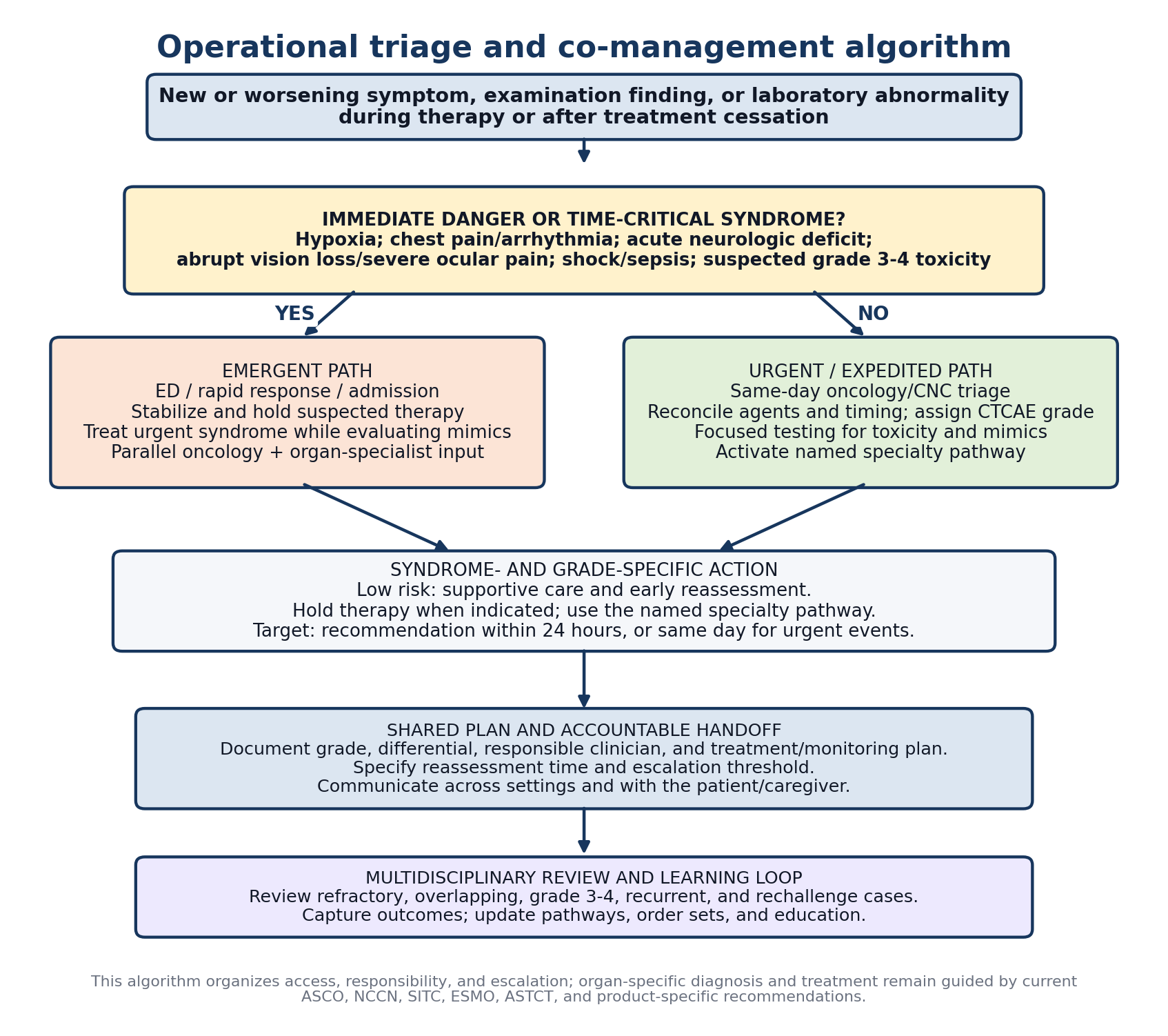
Figure 1. Operational triage and co-management algorithm for suspected treatment-related toxicity. The workflow organizes access, danger screening, diagnostic evaluation, accountable follow-up, and feedback; organ-specific clinical care remains governed by current guidelines and product-specific recommendations [2–10].
This initiative is supported by an institutional environment that integrates clinical care, translational research, and early-phase drug development. The University of Kansas Cancer Center is an NCI-designated comprehensive cancer center operating as a matrix organization across multiple campuses and partner institutions [16]. Rapid adoption of novel therapies creates both the need and the opportunity to develop reusable toxicity pathways, connect community sites to subspecialty expertise, and study uncommon events across the cancer center network.
Prospective toxicity investigation is a central pillar. SWOG S2013 (I-CHECKIT; NCT04871542), available at our institution, is a multicenter observational study of patients receiving standard-of-care immune checkpoint inhibitor therapy [10,17]. In the completed checkpoint-inhibitor cohort reported in 2026, 2,020 eligible patients were evaluated: 13.3% experienced a grade 3 or higher nonhematologic immune-related Adverse Event (irAE) within one year, with a higher incidence after combination checkpoint blockade than single-agent therapy (27.4% vs 10.5%). Among grade 3 or higher events, hepatitis (21.2%), gastrointestinal disorders (19.3%), skin toxicity (11.9%), and respiratory toxicity (10.0%) were most frequent [10]. These prospective data underscore both the multisystem scope and the need to anticipate higher-risk regimens.
The institutional registry is designed to complement trial data by capturing real-world events across therapeutic classes, disease settings, and care locations. A minimum dataset includes anticancer agents and exposure dates; suspected organ system and CTCAE grade; alternative diagnoses considered; diagnostic tests and specialty input; treatment interruption, corticosteroid exposure, second-line immunosuppression, and supportive care; emergency department use, hospitalization, intensive care, readmission, time to improvement, persistent organ dysfunction, and treatment rechallenge. Standardized terminology and adjudication rules are needed because administrative codes alone may misclassify both toxicity and competing diagnoses [6].
Institutional experience with cellular therapy provides a mature model for this approach. Standardized CRS and ICANS grading, scheduled neurologic assessment, 24-hour escalation capability, pharmacy access to tocilizumab and other syndrome-directed therapy, infectious evaluation, and coordinated inpatient/outpatient follow-up define roles before a patient deteriorates [7–9]. The same design principles—predefined triggers, named responders, shared order sets, and prospective surveillance—can be adapted to checkpoint inhibitors, T-cell-engaging bispecific antibodies, ADCs, and targeted therapies without assuming that their mechanisms or treatments are interchangeable.
Evidence Supporting Multidisciplinary Models
Although comparative evidence remains limited, published institutional programs demonstrate feasibility and signal potential benefit. A Johns Hopkins virtual multidisciplinary irAE team received 117 referrals involving 102 patients over 8 months; recommendations were delivered within 24 hours for all referrals, all surveyed referring clinicians used the recommendations, and 74% reported changing management [18]. An irAE tumor board model has similarly been used to streamline complex cases and identify recurrent service and educational needs [19].
At Massachusetts General Hospital, implementation of the multidisciplinary Severe Immunotherapy Complications Service was associated in a before-after analysis with lower irAE readmission (14.8% after vs 25.9% before; adjusted odds ratio 0.46, 95% CI 0.22–0.95) and a one-day reduction in median readmission length of stay; mortality, immunosuppressive use, and treatment discontinuation did not significantly differ [20]. These observational findings support evaluation but do not establish causality because secular changes and case-mix differences may remain.
MD Anderson's IOTOX initiative integrates standardized clinical practice, education, and clinical/translational research [21]. In a 126-patient pre/post study of hospitalized immune-mediated diarrhea and colitis, implementation of an inpatient algorithm and focused GI service increased GI consultation, shortened median time to clinical remission from 10 to 4 days, and was associated with fewer readmissions and recurrences [22]. Together, these programs provide benchmarks for response time, clinician adoption, readmission, length of stay, and organ-specific disease control.
Education, Symposium, and Shared Learning
Structured education is being consolidated into a recurring multidisciplinary symposium on serious adverse events from modern anticancer therapy. The program will combine new-agent and guideline updates with case-based sessions, organ-specific breakout discussions, nursing and Clinical Nurse Coordinator (CNC) triage training, simulation of time-critical syndromes, patient/caregiver perspectives, and review of institutional performance data. Shorter case conferences and faculty updates between symposia will translate lessons into revised scripts and pathways. This model parallels the educational and operational integration of the MD Anderson IOTOX initiative while remaining tailored to local resources and referral geography [21].
The ophthalmology pathway illustrates how a general framework becomes an actionable local process. KU Ophthalmology designated two triage technicians to receive acute oncology messages through a single telephone route (913-588-6600, option 3). Oncology teams leave a structured message identifying the anticancer agent, timing, symptoms, visual acuity when available, and callback contact; messages received during business hours are reviewed before 4 PM. Abrupt vision loss, severe ocular pain, photophobia with marked vision change, field loss, or suspected retinal, optic-nerve, or orbital emergency bypasses the routine queue for emergency assessment. This pathway is relevant to checkpoint-inhibitor uveitis and neuro-ophthalmic events, ADC-associated ocular-surface and corneal toxicity, and MEK-inhibitor retinopathy, for which prompt ophthalmic characterization may prevent unnecessary treatment discontinuation or irreversible injury [12,14].
Prospective Evaluation and Measurable Outcomes
The KU initiative is in an implementation and prospective-evaluation phase. We do not yet have a mature, analytically validated institutional cohort that can support a claim of improved outcomes; anecdotal feedback is therefore not presented as evidence of effectiveness. Evaluation will distinguish implementation outcomes from clinical outcomes and use prespecified definitions (Table 2) [23].
|
Measurement domain |
Operational definition / examples |
Purpose and analytic approach |
|
Reach and case mix |
Number/proportion of treated patients entering the pathway; therapy class, organ system, severity, site of care, and referral source. |
Defines denominator, case mix, pathway reach, and equity of access; stratify by campus, rurality, race/ethnicity, language, and insurance when feasible. |
|
Timeliness |
Symptom report to first clinical contact; contact to CTCAE grading; contact to diagnostic testing, specialist recommendation, corticosteroid/syndrome-directed treatment, ED transfer, or admission. |
Primary operational target: same-day triage and specialist recommendation within 24 hours for urgent nonemergent cases; shorter syndrome-specific targets for cardiac, neurologic, respiratory, and vision-threatening events. |
|
Pathway fidelity |
Proportion with documented agent/timing, grade, differential diagnosis, responsible clinician, follow-up interval, escalation threshold, and guideline-concordant hold/treatment decision. |
Identifies where the system fails even when the final clinical outcome is favorable. |
|
Clinical outcomes |
Time to grade 1 or lower/resolution; ED, hospital, and ICU use; length of stay; 30/60-day readmission; additional immunosuppression; infection; permanent organ injury; toxicity-related mortality. |
Risk-adjusted comparison with baseline or contemporaneous care by agent, combination, cancer, comorbidity, performance status, toxicity type, and grade. |
|
Oncology continuity |
Steroid exposure and taper duration; time to anticancer treatment resumption; permanent discontinuation; rechallenge rate and recurrent toxicity; trial protocol deviation. |
Tests whether toxicity is controlled without unnecessary loss of effective anticancer treatment. |
|
Experience, cost, and balancing measures |
Patient/caregiver understanding and confidence; provider usefulness/acceptability; specialist workload; false-positive referrals; delayed diagnosis of infection/progression; total acute-care utilization and implementation cost. |
Prevents a narrow focus on speed from obscuring diagnostic harm, inequitable access, workload, or unsustainable resource use. |
A pragmatic evaluation can begin with a 12-month pre-implementation baseline followed by prospective surveillance and segmented interrupted-time-series or risk-adjusted pre/post analysis. Rare fatal syndromes should be reported descriptively and pooled across sites when possible. Pathway changes, data definitions, and contextual factors should be documented in accordance with SQUIRE 2.0 principles so that positive and negative findings are interpretable [24]. Electronic patient-reported symptom monitoring may supplement, but should not replace, clear human review and escalation [25].
Implementation and service outcomes should be reported separately from clinical outcomes. Syndrome-specific definitions and response-time targets should be version controlled as guidance evolves.
Implementation Challenges
Implementation barriers are predictable. Specialty capacity is finite; a new centralized service may create referrals without reducing work elsewhere. Diagnostic uncertainty can produce both delayed treatment and over-immunosuppression. Guidelines and product labels evolve faster than static order sets. Inpatient and outpatient teams may disagree about ownership, and community clinicians may lack direct access to tertiary subspecialists. Finally, documentation burden and rare-event denominators make outcome measurement difficult.
Mitigation requires tiered urgency criteria, named alternates for specialty champions, concise EHR templates, pharmacy and nursing participation, scheduled pathway review, and protected administrative/data support. Infectious disease and critical-care input should be incorporated when immunosuppression or organ failure is likely. Governance should specify who may activate a pathway, who can recommend treatment interruption, how disagreement is resolved, and when a case returns to the treating oncologist.
Limitations
Important limitations remain. This article describes a single-center framework at an early stage, and the workflow has not yet been shown to improve KU patient outcomes. The external studies cited are largely observational and focused on checkpoint-inhibitor toxicity; their findings may not transfer to ADCs, cellular therapy, bispecific antibodies, or targeted agents. The representative drug/toxicity table cannot replace current prescribing information. Resource needs, reimbursement, and referral geography will vary, and faster specialist access could increase low-value consultation if triage criteria are not audited.
Conclusion
As anticancer therapy becomes more mechanistically diverse, safe delivery will depend not only on drug efficacy and published toxicity recommendations but also on reliable systems for recognition, escalation, co-management, and learning. The proposed KU framework converts guidance into an operational model with a common triage architecture, therapy-and organ-specific pathways, accountable handoffs, multidisciplinary education, and prospective measurement. Its effectiveness remains to be established locally; publishing prespecified implementation and clinical outcomes, including negative findings and balancing measures, will be essential. Transferability to other settings should not be inferred until the model has been evaluated prospectively and its resource requirements and contextual dependencies are described.
References
2. Schneider BJ, Naidoo J, Santomasso BD, Lacchetti C, Adkins S, Anadkat M, et al. Management of Immune-Related Adverse Events in Patients Treated With Immune Checkpoint Inhibitor Therapy: ASCO Guideline Update. J Clin Oncol. 2021 Dec 20;39(36):4073–126.
3. Haanen J, Obeid M, Spain L, Carbonnel F, Wang Y, Robert C, et al. ESMO Guidelines Committee. Management of toxicities from immunotherapy: ESMO Clinical Practice Guideline for diagnosis, treatment and follow-up. Ann Oncol. 2022 Dec;33(12):1217–38.
4. Brahmer JR, Abu-Sbeih H, Ascierto PA, Brufsky J, Cappelli LC, Cortazar FB, et al. Society for Immunotherapy of Cancer (SITC) clinical practice guideline on immune checkpoint inhibitor-related adverse events. J Immunother Cancer. 2021 Jun;9(6):e002435.
5. Thompson JA, Schneider BJ, Brahmer J, Zaid MA, Achufusi A, Armand P, et al. NCCN Guidelines® Insights: Management of Immunotherapy-Related Toxicities, Version 2.2024. J Natl Compr Canc Netw. 2024 Nov;22(9):582–92.
6. Naidoo J, Murphy C, Atkins MB, Brahmer JR, Champiat S, Feltquate D, et al. Society for Immunotherapy of Cancer (SITC) consensus definitions for immune checkpoint inhibitor-associated immune-related adverse events (irAEs) terminology. J Immunother Cancer. 2023 Mar;11(3):e006398.
7. Lee DW, Santomasso BD, Locke FL, Ghobadi A, Turtle CJ, Brudno JN, et al. ASTCT Consensus Grading for Cytokine Release Syndrome and Neurologic Toxicity Associated with Immune Effector Cells. Biol Blood Marrow Transplant. 2019 Apr;25(4):625–38.
8. Santomasso BD, Nastoupil LJ, Adkins S, Lacchetti C, Schneider BJ, Anadkat M, et al. Management of Immune-Related Adverse Events in Patients Treated With Chimeric Antigen Receptor T-Cell Therapy: ASCO Guideline. J Clin Oncol. 2021 Dec 10;39(35):3978–92.
9. Hayden PJ, Roddie C, Bader P, Basak GW, Bonig H, Bonini C, et al. Management of adults and children receiving CAR T-cell therapy: 2021 best practice recommendations of the European Society for Blood and Marrow Transplantation (EBMT) and the Joint Accreditation Committee of ISCT and EBMT (JACIE) and the European Haematology Association (EHA). Ann Oncol. 2022 Mar;33(3):259–75.
10. Gunturu KS, Unger JM, Hershman DL, Darke AK, Wei AZ, Hu-Lieskovan S, et al. Immune checkpoint inhibitor (ICI) toxicity in a large prospective cohort of patients with solid tumors: The I-CHECKIT study (SWOG S2013). J Clin Oncol. 2026;44(16 suppl):2640.
11. Tan HN, Morcillo MA, Lopez J, Minchom A, Sharp A, Paschalis A, et al. Treatment-related adverse events of antibody drug-conjugates in clinical trials. J Hematol Oncol. 2025 Jul 3;18(1):71.
12. Dy GK, Farooq AV, Kang JJ. Ocular adverse events associated with antibody-drug conjugates for cancer: evidence and management strategies. Oncologist. 2024 Nov 4;29(11):e1435–51.
13. Rashidi A, Wanchoo R, Izzedine H. How I Manage Hypertension and Proteinuria Associated with VEGF Inhibitor. Clin J Am Soc Nephrol. 2023 Jan 1;18(1):121–3.
14. Jeng-Miller KW, Miller MA, Heier JS. Ocular Effects of MEK Inhibitor Therapy: Literature Review, Clinical Presentation, and Best Practices for Mitigation. Oncologist. 2024 May 3;29(5):e616–21.
15. Kucharczyk J, Bhatt A, Bauer L, Economides M. Belzutifan-Associated Hypoxia: A Review of the Novel Therapeutic, Proposed Mechanisms of Hypoxia, and Management Recommendations. Int J Mol Sci. 2025 Jul 23;26(15):7094.
16. Sun W, Streeter N, McGuirk J, Jensen R. The University of Kansas Cancer Center (KUCC), an NCI designated comprehensive cancer center. Mol Cancer. 2023 Nov 28;22(1):188.
17. SWOG Cancer Research Network. S2013: Immune Checkpoint Inhibitor Toxicity (I-CHECKIT): a prospective observational study. United States: SWOG Cancer Research Network; 2021 [cited 2026 Aug 24]. Available from: https://www.swog.org/clinical-trials/s2013
18. Naidoo J, Zhang J, Lipson EJ, Forde PM, Suresh K, Moseley KF, et al. A Multidisciplinary Toxicity Team for Cancer Immunotherapy-Related Adverse Events. J Natl Compr Canc Netw. 2019 Jun 1;17(6):712–20.
19. Kennedy LC, Wong KM, Kamat NV, Khaki AR, Bhatia S, Thompson JA, et al. Untangling the Multidisciplinary Care Web: Streamlining Care Through an Immune-Related Adverse Events (IRAE) Tumor Board. Target Oncol. 2020 Aug;15(4):541–8.
20. Zubiri L, Molina GE, Mooradian MJ, Cohen J, Durbin SM, Petrillo L, et al. Effect of a multidisciplinary Severe Immunotherapy Complications Service on outcomes for patients receiving immune checkpoint inhibitor therapy for cancer. J Immunother Cancer. 2021 Sep;9(9):e002886.
21. Fayle SE, Palaskas NL, Siddiqui BA, McQuade JL, Lin JS, Subudhi SK, et al. Development of a Strategic Initiative at MD Anderson Cancer Center to Improve Outcomes in Immune-Related Adverse Events. J Natl Compr Canc Netw. 2024 Jan 8;22(5):e237119.
22. Saji A, Chopra M, Jacob J, Altan M, Alhalabi O, Shah AY, Qiao W, Wang Y, Thomas A. Implementing an immunotherapy toxicity (IOTOX) GI service improves outcomes in patients with immune-mediated diarrhea and colitis. J Cancer Res Clin Oncol. 2023 Aug;149(9):5841–52.
23. Proctor E, Silmere H, Raghavan R, Hovmand P, Aarons G, Bunger A, et al. Outcomes for implementation research: conceptual distinctions, measurement challenges, and research agenda. Adm Policy Ment Health. 2011 Mar;38(2):65–76.
24. Ogrinc G, Davies L, Goodman D, Batalden P, Davidoff F, Stevens D. SQUIRE 2.0 (Standards for QUality Improvement Reporting Excellence): revised publication guidelines from a detailed consensus process. BMJ Qual Saf. 2016 Dec;25(12):986–92.
25. Basch E, Deal AM, Kris MG, Scher HI, Hudis CA, Sabbatini P, et al. Symptom Monitoring With Patient-Reported Outcomes During Routine Cancer Treatment: A Randomized Controlled Trial. J Clin Oncol. 2016 Feb 20;34(6):557–65.