

Abstract
Background: Sodium-Glucose Cotransporter 2 (SGLT2) inhibitors are now a cornerstone therapy for Heart Failure with reduced Ejection Fraction (HFrEF), with demonstrated benefits in survival and hospitalization reduction. However, most evidence is limited to 12–18 months of follow-up.
Methods: We conducted a retrospective cohort study using electronic health record data from 11,113 patients with HFrEF (LVEF ≤ 40%) between 2014 and 2024. Patients were stratified based on SGLT2 inhibitor use and matched 1:1 using propensity scores on demographics, comorbidities, and guideline-directed medical therapy. Primary outcomes included all-cause mortality and hospitalizations for Heart Failure (HF), Acute Coronary Syndrome (ACS), Acute Kidney Injury (AKI), and Urinary Tract Infection (UTI). Cox proportional hazards and Fine-Gray competing risk models were used for analysis.
Results: Over three years, SGLT2 inhibitor use was associated with a 35% reduction in all-cause mortality (Hazard Ratio (HR) 0.65, 95% CI 0.52–0.80; p < 0.001). SGLT2 inhibitors were also linked to lower risks of heart failure hospitalization (SHR 0.61, 95% CI 0.47–0.80; p<0.001), ACS admissions (SHR 0.22, 95% CI 0.13–0.37; p<0.001), AKI admissions (SHR 0.36, 95% CI 0.25–0.54; p<0.001), and UTI admissions (SHR 0.13, 95% CI 0.03–0.58; p=0.007).
Conclusions: Sodium-glucose cotransporter 2 inhibitor use in heart failure with reduced ejection fraction was associated with significantly improved long-term survival and a substantial reduction in heart failure and acute coronary syndrome hospitalizations, without increased risk of AKI or UTI.
Keywords
HFrEF, SGLT2 inhibitor, ACS, Mortality
Abbreviations
ACEi: Angiotensin-Converting Enzyme Inhibitor; ACS: Acute Coronary Syndrome; AKI: Acute Kidney Injury; ARB: Angiotensin Receptor Blocker; ARNI: Angiotensin Receptor-Neprilysin Inhibitor; CI: Confidence Interval; HF: Heart Failure; HFrEF: Heart Failure with Reduced Ejection Fraction; LVEF: Left Ventricular Ejection Fraction; MRA: Mineralocorticoid Receptor Antagonist; SGLT2: Sodium-glucose cotransporter 2; SHR: Sub-distribution Hazard Ratio; UTI: Urinary Tract Infection.
Highlights
- SGLT2 inhibitors reduced 3-year all-cause mortality in patients with HFrEF
- SGLT2 inhibitor use significantly lowered the risk of HF and ACS hospitalizations
- SGLT2 inhibitors were associated with fewer AKI and UTI admissions, suggesting renal and urologic protection
Introduction
Heart Failure with reduced Ejection Fraction (HFrEF) is a cardiovascular disease marked by an ejection fraction of under or equal to 40% causing the heart’s inability to circulate enough blood to meet the body’s metabolic demands or accommodate venous return. It affects just over 3 million adults in the United States and remains a leading cause of morbidity, mortality, and healthcare utilization. With an aging population and rising cardiovascular risk factors, the prevalence of HFrEF is expected to climb significantly, reaching an estimated 3.8 million adults by 2030 [1,2].
Despite strides in improving outcomes, HFrEF continues to be associated with high morbidity and mortality. Previously, Angiotensin-Converting Enzyme Inhibitors/Angiotensin Receptor Blockers/Angiotensin Receptor-Neprilysin Inhibitors (ACEis/ARBs/ARNIs), beta-blockers, and Mineralocorticoid Receptor Antagonists (MRAs) were the mainstay of management. Since 2019, emerging evidence has highlighted the clinical benefits of Sodium Glucose Cotransporter 2 (SGLT2) inhibitors in HFrEF management. The addition of SGLT2 inhibitor therapy has been added to the guideline directed medical therapy (GDMT) as of 2022, yielding positive clinical outcomes [3–5].
Originally developed for type 2 diabetes mellitus, SGLT2 inhibitors work by inhibiting the sodium-glucose co-transporter 2 at the proximal renal tubule, reducing glucose reabsorption and promoting its excretion. This improves glycemic control, reduces renal workload, and decreases preload and afterload. Additionally, the drug has been shown to enhance natriuresis/ diuresis, metabolic efficiency, and oxygen supply as well as reduced oxidative stress, fibrosis, and epicardial fat [6].
Emerging evidence over the past decade has demonstrated SGLT2 inhibitors provide significant cardiovascular benefits in patients with HFrEF. These benefits include reductions in heart failure hospitalizations, cardiovascular mortality, and all-cause mortality [7]. In addition to their cardiac effects, SGLT2 inhibitors have shown renal protective properties, with studies reporting lower rates of acute kidney injury and a reduced risk of adverse renal outcomes in both HFrEF and non-HFrEF patients [8,9].
While SGLT2 inhibitors have improved multiple outcomes, their effect on atherosclerotic events such as Acute Coronary Syndrome (ACS) appears minimal. There is a lack of evidence regarding SGLT2 inhibitors and ACS in HFrEF patients. However, in patients with diabetes, SGLT2 inhibitors have not been associated with differences in ACS [10]. The safety profile of SGLT2 inhibitors is mixed, with some studies reporting no consistent increase in Urinary Tract Infections (UTIs), but others reporting certain agents may carry a slight risk [11,12].
While there is consensus that SGLT2 inhibitors improve outcomes in patients with HFrEF, most supporting studies have relatively short follow-up durations of 6 to 18 months. Our study aims to build on this foundation by evaluating longer-term outcomes of three years and exploring less well-established effects, overall contributing to a broader understanding of the full clinical impact of SGLT2 inhibitors.
Methods
Data collection
This retrospective cohort study was reviewed and approved by the University of Pittsburgh Medical Center Internal Review Board. Data were obtained from the University of Pittsburgh Medical Center analytics department. Microsoft SQL Server Management Studio was used to identify echocardiographic studies, and Oracle SQL Developer was used to extract clinical data, including demographics, office visits, medication exposure, comorbidities, readmissions, and mortality.
Eligible patients with HFrEF were identified between January 2014 and January 2024 (study enrollment period) based on having a left ventricular ejection fraction (LVEF) <40% with at least two consecutive echocardiograms obtained at least six months apart. Exclusion criteria included age under 18 years, less than three years of available follow-up after the index echocardiogram, and receipt of palliative inotropic therapy (milrinone or dobutamine). After applying these criteria, 11,113 patients were eligible for the study. Echocardiograms obtained with each patient ranged from January 2010 to January 2024. Histories for each patient were abstracted within three months of each echocardiogram. Clinical outcomes were ascertained using ICD-9 and ICD-10 diagnostic codes derived from provider-coded electronic health record data. Patients were considered part of the SGLT2 inhibitor group if they were actively prescribed an SGLT2 inhibitor at the time of any echocardiogram. The index date was defined as each patient's first eligible echocardiogram during the study enrollment period (2014–2024).
Patients were then followed for a fixed duration of three years from their individual index date, regardless of when they entered the cohort. Patients who discontinued therapy were still analyzed within the SGLT2 inhibitor group. A total of 992 patients had documentation of SGLT2 inhibitor use during follow-up, while 10,121 patients did not. Clinical and demographic characteristics were compared between groups.
One-to-one propensity score matching was performed using a nearest-neighbor algorithm to balance groups by age, race, sex, hypertension, Coronary Artery Disease (CAD), Chronic Kidney Disease (CKD), End-Stage Renal Disease (ESRD), diabetes, hyperlipidemia, Charlson Comorbidity Index (CCI), beta-blocker use, a composite of ACE inhibitor/ARB/ARNI use, and MRA use (Figure 1). Matched patients were followed for up to three years from index date, and outcomes assessed included cardiac-related admissions (HF and ACS), non-cardiac admissions (AKI and UTI), and all-cause mortality.
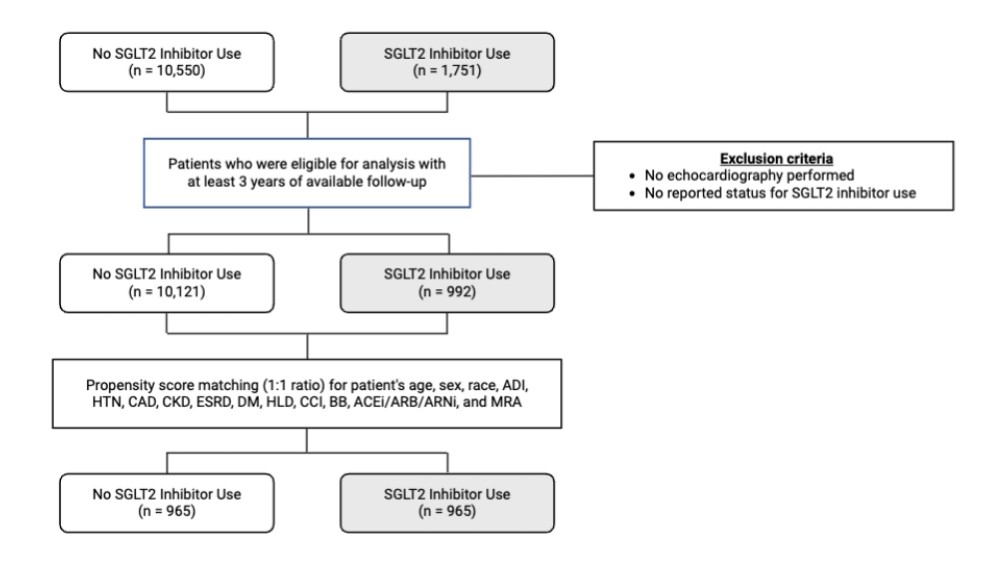
Figure 1. Flowchart illustrating patient selection and 1:1 propensity score matching based on SGLT2 Inhibitor use. Abbreviations: ACEi: Angiotensin-Converting Enzyme Inhibitor; ACS: Acute Coronary Syndrome; ADI: Area of Deprivation Index; AKI: Acute Kidney Injury; ARB: Angiotensin Receptor Blocker; ARNI: Angiotensin Receptor-Neprilysin Inhibitor; BB: Beta-Blocker; CAD: Coronary Artery Disease; CCI: Charlson Comorbidity Index; CKD: Chronic Kidney Disease; DM: Diabetes Mellitus; ESRD: End Stage Renal Disease; HLD: Hyperlipidemia; HTN: Hypertension; MRA: Mineralocorticoid Receptor Antagonist; SGLT2: Sodium-Glucose Cotransporter 2.
Statistical analyses
Baseline characteristics of the matched cohort were summarized with means and standard deviations for continuous variables and frequencies with percentages for categorical variables. Group comparisons were made using Wilcoxon rank sum tests for continuous variables and Fisher’s exact or Pearson’s chi-squared tests for categorical variables, as appropriate. All-cause mortality was analyzed using a Cox proportional hazards model. Kaplan-Meier survival curves were generated to compare time-to-death between the SGLT2 inhibitor and non-SGLT2 inhibitor groups, and the log-rank test was used to assess for statistical differences in survival. The concordance statistic was calculated to assess the discriminatory performance of the Cox modeling. Fine and Gray subdistribution hazard models were used to assess the association between SGLT2 inhibitor use and the risk of hospitalizations for HF, ACS, AKI, and UTI, accounting for the competing risk of death. Time to first event within a three-year follow-up period was analyzed for each outcome. A two-sided p-value <0.05 was considered to be statistically significant. All statistical analyses were performed using R (Version 2024.12.1+563).
Results
Patient demographics prior to propensity matching
In the unmatched cohort, patients prescribed SGLT2 inhibitors were significantly younger (mean age 65 vs. 70 years, p<0.001) and more likely to have diabetes (50% vs. 31%, p<0.001) and hyperlipidemia (72% vs. 60%, p<0.001) compared to those not on SGLT2 inhibitors. There were no significant differences in sex, area deprivation index, or rates of hypertension, and coronary artery disease. ESRD was more common in the non-SGLT2i cohort at 2.2% vs. 0.7%, p=0.02) The SGLT2i group had a higher mean CCI score (3.47 vs. 2.60, p<0.001), suggesting a greater burden of comorbid conditions. Use of guideline-directed medical therapy was more prevalent in the SGLT2i group, with significantly higher rates of beta-blocker (99% vs. 84%), ACE/ARB/ARNI (97% vs. 76%), and MRA use (73% vs. 32%) (p<0.001). Baseline LVEF was slightly higher in the SGLT2i group (27% vs. 26%), though this did not reach statistical significance (p=0.8) (Table 1).
|
Characteristic |
No SGLT2 Inhibitor1 n = 10,121 |
SGLT2 Inhibitor1 n = 992 |
p-value2 |
|
Age (years) |
70 (13) |
65 (12) |
<0.001 |
|
Race Black/African American Other White Unknown |
1,251 (13%) 96 (1.0%) 7,947 (86%) 827 |
145 (15%) 18 (1.8%) 828 (84%) 1 |
0.044 |
|
Sex Male Female |
7,242 (72%) 2,879 (28%) |
707 (71%) 285 (29%) |
0.8 |
|
Area Deprivation Index Unknown |
61 (24) 1,156 |
62 (24) 27 |
0.080 |
|
Hypertension Unknown |
4,977 (62%) 2,122 |
713 (72%) 0 |
<0.001 |
|
CAD Unknown |
4,643 (58%) 2,122 |
651 (66%) 0 |
<0.001 |
|
CKD Unknown |
964 (12%) 2,122 |
145 (15%) 0 |
0.020 |
|
ESRD Unknown |
174 (2.2%) 2,122 |
7 (0.7%) 0 |
0.002 |
|
Diabetes Unknown |
2,490 (31%) 2,122 |
498 (50%) 0 |
<0.001 |
|
Hyperlipidemia Unknown |
4,815 (60%) 2,122 |
711 (72%) 0 |
<0.001 |
|
CCI Score Unknown |
2.60 (1.93) 2,122 |
3.47 (2.00) 0 |
<0.001 |
|
Beta-blocker |
8,547 (84%) |
980 (99%) |
<0.001 |
|
ACE/ARB/ARNI |
7,664 (76%) |
967 (97%) |
<0.001 |
|
MRA |
3,250 (32%) |
723 (73%) |
<0.001 |
|
Baseline LVEF |
26 (7) |
27 (10) |
0.8 |
|
1Mean (SD); n (%) 2Wilcoxon rank sum test; Fisher’s exact test; Pearson’s Chi-squared test Abbreviations: ACE: Angiotensin-Converting Enzyme; ARB: Angiotensin Receptor Blocker; ARNI: Angiotensin Receptor-Neprilysin Inhibitor; CAD: Coronary Artery Disease; CCI: Charlson Comorbidity Index; CKD: Chronic Kidney Disease; ESRD: End Stage Renal Disease; LVEF: Left Ventricular Ejection Fraction; MRA: Mineralocorticoid Receptor Antagonist; SGLT2: Sodium-Glucose Cotransporter 2 |
|||
Patient demographics after propensity matching
After propensity score matching, the demographic characteristics between the SGLT2 inhibitor group and the non-SGLT2 group were well balanced (965 patients each). The mean age was similar between the SGLT2 and non-SGLT2 groups (65 vs. 65 years, p = 0.5). The majority of patients identified as White in both groups (84% vs. 84%), followed by Black (15% vs. 14%) and other races (1.8% vs. 1.9%, p>0.9). The proportion of male patients was nearly identical (71% in the SGLT2 group vs. 74% in the non-SGLT2 group, p=0.11). The Area Deprivation Index did not significantly differ between the groups (62% vs. 63%, p=0.6). Comorbidities were also balanced between SGLT2 group and non-SGLT2 group (Table 2). Out of the 965 patients prescribed SGLT2 inhibitors, 170 (17.6%) were deprescribed during the three years of follow up.
|
Characteristic |
No SGLT2 Inhibitor1 n = 965 |
SGLT2 Inhibitor1 n = 965 |
p-value2 |
|
Age (years) |
65 (13) |
65 (12) |
0.5 |
|
Race Black/African American Other White |
139 (14%) 18 (1.9%) 808 (84%) |
142 (15%) 17 (1.8%) 806 (84%) |
>0.9 |
|
Sex Male Female |
717 (74%) 248 (26%) |
686 (71%) 279 (29%) |
0.11 |
|
Area Deprivation Index |
63 (23) |
62 (24) |
0.6 |
|
Hypertension |
693 (72%) |
696 (72%) |
0.9 |
|
Coronary Artery Disease |
631 (65%) |
631 (65%) |
>0.9 |
|
CKD |
112 (12%) |
144 (15%) |
0.032 |
|
ESRD |
6 (0.6%) |
7 (0.7%) |
0.8 |
|
Diabetes |
466 (48%) |
489 (51%) |
0.3 |
|
Hyperlipidemia |
710 (74%) |
692 (72%) |
0.4 |
|
CCI Score |
3.39 (2.07) |
3.50 (2.00) |
0.082 |
|
Beta-blocker |
959 (99%) |
955 (99%) |
0.3 |
|
ACE/ARB/ARNI |
947 (98%) |
941 (98%) |
0.3 |
|
MRA |
706 (73%) |
699 (72%) |
0.7 |
|
Baseline LVEF |
25 (8) |
27 (10) |
0.008 |
|
1Mean (SD); n (%) 2Wilcoxon rank sum test; Fisher’s exact test; Pearson’s Chi-squared test Abbreviations: ACEi: Angiotensin-Converting Enzyme Inhibitor; ARB: Angiotensin Receptor Blocker; ARNI: Angiotensin Receptor-Neprilysin Inhibitor; BB: Beta-Blocker; CAD: Coronary Artery Disease; CCI: Charlson Comorbidity Index; CKD: Chronic Kidney Disease; ESRD: End Stage Renal Disease; LVEF: Left Ventricular Ejection Fraction; MRA: Mineralocorticoid Receptor Antagonist; SGLT2: Sodium-Glucose Cotransporter 2 |
|||
All-cause mortality
Over a three-year period, patients treated with SGLT2 inhibitors demonstrated significantly lower mortality compared to those not treated with SGLT2 inhibitors (13.9% vs. 20.6%, log-rank p<0.0001), with consistently greater survival observed throughout the follow-up period (Table 3). In the Cox proportional hazards model, SGLT2 inhibitor use was associated with a 35% reduction in the risk of all-cause mortality (Hazard Ratio [HR] 0.65; 95% Confidence Interval [CI], 0.52–0.80; p<0.001). The model’s concordance statistic was (C=0.555) (Figure 2).
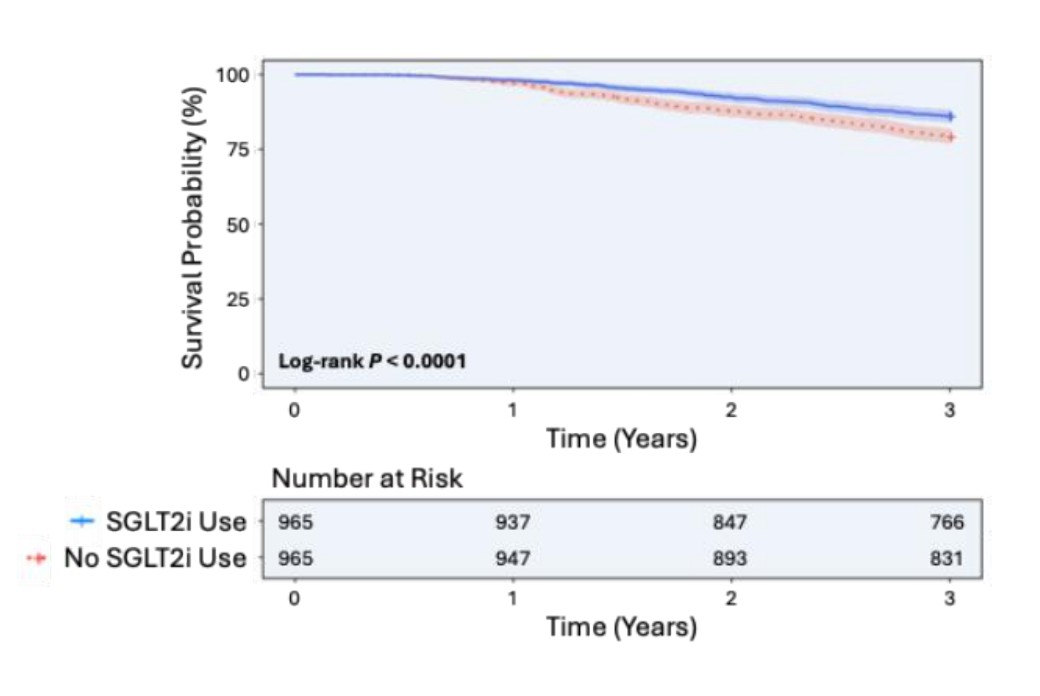
Figure 2. Kaplan-Meier survival curve comparing all-cause mortality in SGLT2i vs. non-SGLT2i groups over three years. Abbreviations: SGLT2i: Sodium-Glucose Cotransporter 2 Inhibitors.
Heart failure hospitalizations
A lower proportion of patients experienced at least one heart failure admission in the SGLT2 inhibitor group compared with the non–SGLT2 inhibitor group (41.9% vs. 56.1%) (Table 3), the competing risks regression demonstrated a significant association between SGLT2 inhibitor use and reduced risk of heart failure hospitalization. The Subdistribution Hazard Ratio (SHR) was 0.61 (95% CI, 0.47–0.80; p<0.001). The overall model was statistically significant, with a pseudo likelihood ratio test statistic of 14 (Figure 3A).
ACS admissions
SGLT2 inhibitor use was significantly associated with a lower risk of hospitalization for ACS over three years (10.9% vs. 19.7%, p<0.001) (Table 3). In the competing risks regression model accounting for the competing risk of death, SHR was 0.22 (95% CI, 0.13–0.37; p<0.001), corresponding to an approximately 78% reduction in the cumulative incidence of ACS admissions among SGLT2 inhibitor users compared with non-users during the three-year follow-up period. The model demonstrated strong statistical significance, with a pseudo likelihood ratio test statistic of 42.1 on 1 degree of freedom (Figure 3B).
AKI admissions
SGLT2 inhibitor use was associated with a lower risk of hospitalization for AKI over the three-year follow-up period (21.9% vs. 32.1%) (Table 3). In the competing risks regression model accounting for the competing risk of death, SHR was 0.36 (95% CI, 0.25–0.54; p<0.001), corresponding to an approximately 64% reduction in the cumulative incidence of AKI admissions among SGLT2i users compared with non-users. The model demonstrated strong statistical significance, with a pseudo likelihood ratio test statistic of 28.7 on 1 degree of freedom (Figure 3C).
UTI admissions
SGLT2 inhibitor use was associated with a lower risk of hospitalization for UTI over the three-year follow-up period (1.1% vs. 4.4%) (Table 3). In the competing risks regression model accounting for the competing risk of death, SHR was 0.13 (95% CI, 0.03–0.58; p=0.007), corresponding to an approximately 87% reduction in the cumulative incidence of UTI admissions among SGLT2i users compared with non-users. The model demonstrated statistical significance, with a pseudo likelihood ratio test statistic of 11.3 on 1 degree of freedom (Figure 3D).
|
Outcome |
No SGLT2 Inhibitor1 n = 965 |
SGLT2 Inhibitor1 n = 965 |
P-value3 |
|
Deaths/Mortality |
199 (20.6%) |
134 (13.9%) |
<0.001 |
|
Any HF Admissions |
541 (56.1%) |
404 (41.9%) |
<0.001 |
|
HF Admission Count2 |
2.63 ± 1.60 |
3.27 ± 2.22 |
|
|
Any ACS Admissions |
190 (19.7%) |
105 (10.9%) |
<0.001 |
|
ACS Admission Count2 |
2.16 ± 1.26 |
3.77 ± 2.67 |
|
|
Any AKI Admissions |
310 (32.1%) |
211 (21.9%) |
<0.001 |
|
AKI Admission Count2 |
2.58 ± 1.69 |
4.00 ± 2.80 |
|
|
Any UTI Admissions |
42 (4.4%) |
11 (1.1%) |
0.007 |
|
UTI Admission Count2 |
2.29 ± 1.49 |
5.36 ± 4.06 |
|
|
1n (%) 2Mean ± SD for patients with at least one event 3Cox PH modeling for deaths/mortality and fine and gray testing for other variables Abbreviations: ACS: Acute Coronary Syndrome; AKI: Acute Kidney Injury; HF: Heart Failure; SGLT2i: Sodium-Glucose Cotransporter 2 inhibitors; UTI: Urinary Tract Infection |
|||
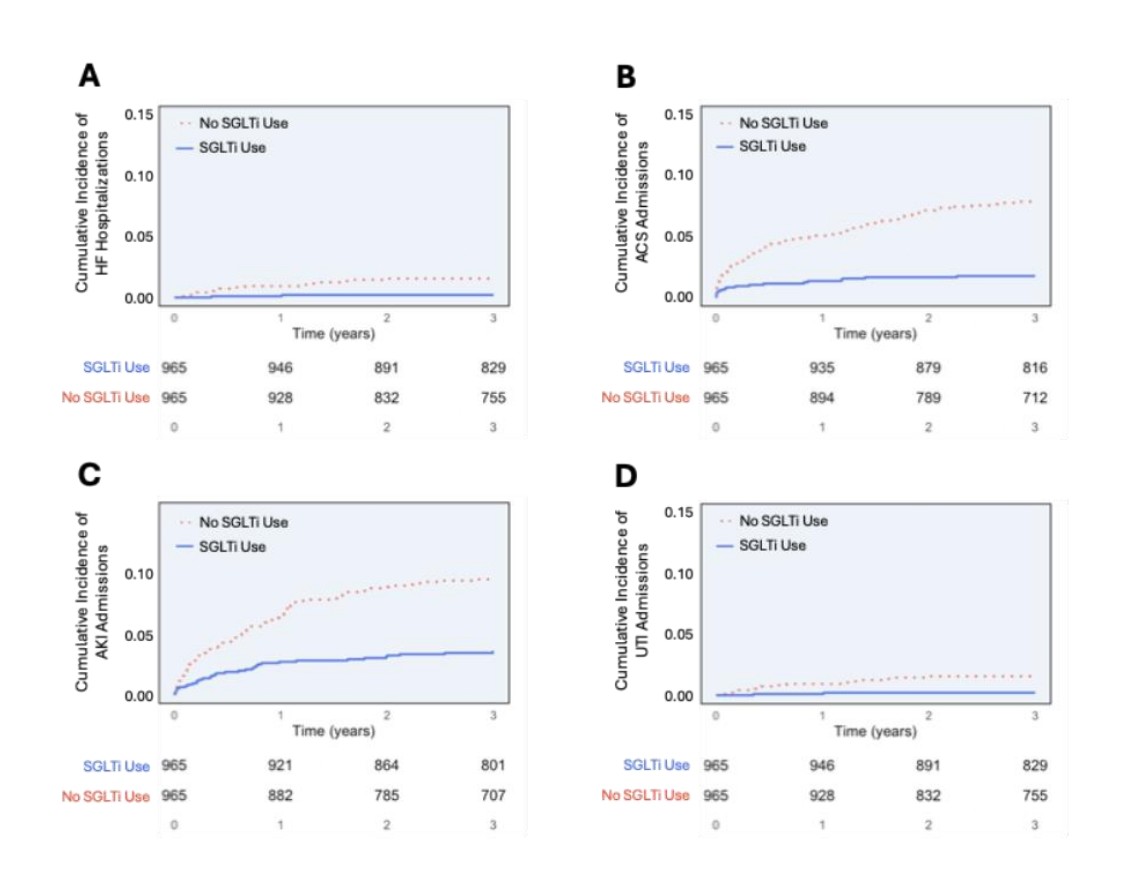
Figure 3. Cumulative incidence curve for heart failure. (A), Acute Coronary Syndrome (B), Acute Kidney Injury, (C) Urinary Tract Infection, and (D) Hospitalizations with and without SGLT2 inhibitor use. Abbreviations: ACS: Acute Coronary Syndrome; AKI: Acute Kidney Injury; HF: Heart Failure; SGLT2i: Sodium-Glucose Cotransporter 2 Inhibitors; UTI: Urinary Tract Infection.
Discussion
All-cause mortality
Consistent with findings from previous trials and meta-analyses, our study demonstrated an association with reduction in all-cause mortality among patients treated with SGLT2 inhibitors. Over a three-year period, survival probability remained consistently higher in the SGLT2 inhibitor group, with an association of statistically significant 35% reduction all-cause of death.
In comparison, the meta-analysis of the DAPA-HF and EMPEROR-Reduced trials that demonstrated SGLT2 inhibitors was associated with a 13% reduction in all-cause mortality in patients with HFrEF [7]. However, this study had a follow-up period of just over 16-18 months, whereas our analysis captures outcomes over a follow-up of three years. SGLT2 inhibitors likely reduce all-cause mortality through a combination of mechanisms, including improved glycemic control, blood pressure reduction, osmotic diuresis, and renal protection—factors that collectively contribute to sustained cardiovascular and survival benefits. That being said, the mortality model showed limited discriminative performance, likely reflecting unmeasured clinical and socioeconomic factors not included in the analysis.
Extending previous findings over a three-year timeframe, our longitudinal data may reveal a persistent and widening gap in survival outcomes over time. These findings highlight both the importance of early initiation and sustained use of SGLT2 inhibitors in patients with HFrEF.
HF admissions
SGLT2 inhibitor use was associated with a significantly lower risk of heart failure hospitalization over three years (SHR 0.61, 95% CI [0.47–0.80]; p<0.001), corresponding to an approximate 39% relative reduction in cumulative incidence. The overall model was statistically significant (pseudo likelihood ratio test statistic = 14), supporting a meaningful reduction in HF-related morbidity with SGLT2 inhibitor therapy.
Our results are concordant with prior landmark randomized controlled trials. The DAPA-HF and EMPEROR-Reduced trials demonstrated approximately 25–30% reductions in heart failure hospitalizations among patients with HFrEF treated with SGLT2 inhibitors [7]. Similarly, among patients with type 2 diabetes, the EMPA-REG OUTCOME trial reported a 35% reduction in HF hospitalization with empagliflozin [13], with comparable findings observed in the CANVAS and CREDENCE trials evaluating canagliflozin [14]. However, the duration of follow-up in these studies typically ranged from 18 months and only rarely extended to 48 months.
Notably, our study extends these observations into a real-world cohort over a three-year follow-up period, suggesting that the benefits of SGLT2 inhibitors on HF hospitalization persist beyond the timeframes evaluated in many clinical trials. The magnitude of effect observed in our cohort is consistent with, and in some cases slightly greater than, prior studies, which may reflect differences in population characteristics, baseline risk, and real-world treatment patterns. These findings reinforce the role of SGLT2 inhibitors as a cornerstone therapy for reducing HF-related hospitalizations in patients with HFrEF.
ACS Admissions
Our study also demonstrated a significant reduction in ACS admissions of 78% among patients receiving SGLT2 inhibitors, a finding that contrasts with earlier data suggesting a more neutral effect. While prior data from Liu et al. suggests a nonsignificant difference with SGLT2 inhibitors, the population was specifically patients with diabetes, not HFrEF, and follow-up was limited to one year [10]. Our analysis suggests that SGLT2 inhibitors may have an underrecognized cardioprotective effect against ischemic events over multiple years rather than months. This may be mediated through several proposed mechanisms, including improved endothelial function, reduction in oxidative stress and inflammation, enhanced myocardial energetics via ketone utilization, and potential effects on plaque stability. Additionally, this effect may be greater in nondiabetics or attenuated in diabetics, and it is also possible that improved glycemic and metabolic control collectively reduce the burden of ischemic events over time [17]. Conversely, the magnitude of effect observed in our study may reflect residual confounding, differences in baseline ischemic risk, or unmeasured treatment selection biases inherent to retrospective analyses. Considering our diagnoses are from ICD codes from physicians, ACS events may have included type II myocardial infarctions related to heart failure exacerbations or other demand-mediated etiologies, which could have contributed to outcome misclassification. These findings warrant further investigation, particularly in prospective studies designed to assess ACS-specific outcomes.
AKI admissions
While prior studies have demonstrated renal benefits with SGLT2 inhibitors, our study similarly found a significantly lower risk of AKI-related hospitalizations over three years (21.9% vs. 32.1%).
Prior pooled analyses from the DAPA-HF and EMPEROR-Reduced Trials have reported a 38% reduction in adverse renal outcomes with SGLT2 inhibitor use [7], and some meta-analyses have shown a lower incidence of AKI among HFrEF patients on these agents, with rates as low as 1.9% compared to 2.8% in placebo groups [8]. Moreover, although beyond the scope of just patients with HFrEF, emerging evidence has even suggested that the renal benefit of SGLT2 inhibitors may extend to patients with advanced kidney disease, including CKD stage V [9]. However, the duration of these studies typically ranged from 6 to 18 months.
Potential mechanisms include reduction in intraglomerular pressure via restoration of tubuloglomerular feedback, along with improved volume regulation and attenuation of renal inflammation [17]. Although the effect size observed in our cohort appears greater than that reported in clinical trials, this may reflect differences in baseline risk and real-world populations.
UTI admissions
Our study demonstrated a significantly lower risk of UTI-related hospitalizations among patients treated with SGLT2 inhibitors over three years (1.1% vs. 4.4%).
Prior research suggests a variable safety profile for SGLT2 inhibitors regarding UTIs with some studies claiming increased risk versus others finding no difference. A 2024 systematic review and meta-analysis by Pozzi et al. found no significant increase in UTI risk among HFrEF patients treated with SGLT2 inhibitors compared to placebo, supporting their general urologic safety [11]. Conversely, a 2025 comparative effectiveness study by Shin et al. observed a modestly higher risk of severe UTIs in patients initiating canagliflozin compared to those starting empagliflozin, indicating that UTI risk may vary across specific agents within the class [12]. Increased urinary flow from osmotic diuresis may counterbalance the glucose rich environment, thereby decreasing UTI risk despite the glycosuria [19]. Our dataset did not differentiate between specific SGLT2 inhibitors, which may have varying safety profiles; this limitation could influence our findings regarding UTI admissions.
Study limitations
This study has several important limitations. Our cohort was limited to patients who underwent serial echocardiograms and maintained regular follow-up within our health system, potentially excluding individuals with limited access to care or those followed elsewhere. Medication adherence could not be verified, and some patients may have discontinued or inconsistently taken SGLT2 inhibitors during the study period. Reliance on ICD-9 and ICD-10 codes for outcome ascertainment may have introduced potential misclassification bias. Additionally, residual confounding may persist due to unmeasured factors such as severity of illness, frailty, provider prescribing behavior, medication adherence, and longitudinal dosing or optimization of guideline-directed medical therapy.
Patients deprescribed SGLT2 inhibitors were also kept in the SGLT2 inhibitor cohort, which could also skew results over time with deprescriptions. Additionally, we did not distinguish between individual SGLT2 inhibitor agents, which may differ in their efficacy and safety profiles. Furthermore, we included only patients with a full three years of follow-up data, which may introduce selection bias by excluding individuals with shorter survival or incomplete records, thereby limiting generalizability to the broader HFrEF population. Additionally, potential immortal time bias may be present due to the exposure definition, as patients were required to survive to treatment initiation and subsequent classification, which may have introduced bias favoring the treatment group and potentially overestimating effect estimates. Finally, hospitalizations and mortality events that occurred outside our system may not have been captured, potentially underestimating the incidence of key outcomes.
Conclusion
In this real-world, longitudinal study of patients with HFrEF, SGLT2 inhibitor use was associated with a significant reduction in all-cause mortality over three years, reinforcing the long-term survival benefit observed in prior trials. Additionally, we observed a significant reduction in heart failure and ACS hospitalizations, suggesting a potential long-term cardioprotective effect that merits further investigation. We found a decreased risk of AKI and UTI-related hospitalizations, supporting the overall safety of SGLT2 inhibitors in this population. These findings highlight the potential of SGLT2 inhibitors to improve long-term outcomes while also underscoring the importance of addressing adherence and structural barriers in routine care.
References
2. White-Williams C, Rossi LP, Bittner VA, Driscoll A, Durant RW, Granger BB, et al. Addressing Social Determinants of Health in the Care of Patients With Heart Failure: A Scientific Statement From the American Heart Association. Circulation. 2020 Jun 2;141(22):e841–63.
3. Kalyani RR. Glucose-Lowering Drugs to Reduce Cardiovascular Risk in Type 2 Diabetes. N Engl J Med. 2021 Apr 1;384(13):1248–60.
4. Heidenreich PA, Bozkurt B, Aguilar D, Allen LA, Byun JJ, Colvin MM, et al. 2022 AHA/ACC/HFSA Guideline for the Management of Heart Failure: A Report of the American College of Cardiology/American Heart Association Joint Committee on Clinical Practice Guidelines. J Am Coll Cardiol. 2022 May 3;79(17):e263–421.
5. Heerspink HJ, Perkins BA, Fitchett DH, Husain M, Cherney DZ. Sodium Glucose Cotransporter 2 Inhibitors in the Treatment of Diabetes Mellitus: Cardiovascular and Kidney Effects, Potential Mechanisms, and Clinical Applications. Circulation. 2016 Sep 6;134(10):752–72.
6. Cowie MR, Fisher M. SGLT2 inhibitors: mechanisms of cardiovascular benefit beyond glycaemic control. Nat Rev Cardiol. 2020 Dec;17(12):761–72.
7. Zannad F, Ferreira JP, Pocock SJ, Anker SD, Butler J, Filippatos G, et al. SGLT2 inhibitors in patients with heart failure with reduced ejection fraction: a meta-analysis of the EMPEROR-Reduced and DAPA-HF trials. Lancet. 2020 Sep 19;396(10254):819–29.
8. Vukadinović D, Abdin A, Anker SD, Rosano GMC, Mahfoud F, Packer M, et al. Side effects and treatment initiation barriers of sodium-glucose cotransporter 2 inhibitors in heart failure: a systematic review and meta-analysis. Eur J Heart Fail. 2022 Sep;24(9):1625–32.
9. Yen FS, Hwu CM, Liu JS, Wu YL, Chong K, Hsu CC. Sodium-Glucose Cotransporter-2 Inhibitors and the Risk for Dialysis and Cardiovascular Disease in Patients With Stage 5 Chronic Kidney Disease. Ann Intern Med. 2024 Jun;177(6):693–700.
10. Liu T, Fan Z, Xiao B, He C, Wang S. Association of sodium-glucose cotransporter 2 inhibitors with risk of major adverse cardiovascular events in type 2 diabetes patients with acute coronary syndrome: a propensity score‑matched analysis. Cardiovasc Diabetol. 2024 Mar 25;23(1):106.
11. Pozzi A, Cirelli C, Merlo A, Rea F, Scangiuzzi C, Tavano E, et al. Adverse effects of sodium-glucose cotransporter-2 inhibitors in patients with heart failure: a systematic review and meta-analysis. Heart Fail Rev. 2024 Jan;29(1):207–17.
12. Shin H, Paik JM, Everett BM, DiCesare E, Alix C, Glynn RJ, et al. Comparative Effectiveness of Individual Sodium-Glucose Cotransporter 2 Inhibitors. JAMA Intern Med. 2025 Mar 1;185(3):302–13.
13. Zinman B, Wanner C, Lachin JM, Fitchett D, Bluhmki E, Hantel S, et al. Empagliflozin, Cardiovascular Outcomes, and Mortality in Type 2 Diabetes. N Engl J Med. 2015 Nov 26;373(22):2117–28.
14. Neal B, Perkovic V, Mahaffey KW, de Zeeuw D, Fulcher G, Erondu N, et al. Canagliflozin and Cardiovascular and Renal Events in Type 2 Diabetes. N Engl J Med. 2017 Aug 17;377(7):644–57.
15. Das SR, Everett BM, Birtcher KK, Brown JM, Januzzi JL Jr, Kalyani RR, et al. 2020 Expert Consensus Decision Pathway on Novel Therapies for Cardiovascular Risk Reduction in Patients With Type 2 Diabetes: A Report of the American College of Cardiology Solution Set Oversight Committee. J Am Coll Cardiol. 2020 Sep 1;76(9):1117–45.
16. Dunlay SM, Givertz MM, Aguilar D, Allen LA, Chan M, Desai AS, et al. Type 2 Diabetes Mellitus and Heart Failure: A Scientific Statement From the American Heart Association and the Heart Failure Society of America: This statement does not represent an update of the 2017 ACC/AHA/HFSA heart failure guideline update. Circulation. 2019 Aug 13;140(7):e294–324.
17. Braunwald E. Gliflozins in the Management of Cardiovascular Disease. N Engl J Med. 2022 May 26;386(21):2024–34.
18. Kittipibul V, Cox ZL, Chesdachai S, Fiuzat M, Lindenfeld J, Mentz RJ. Genitourinary Tract Infections in Patients Taking SGLT2 Inhibitors: JACC Review Topic of the Week. J Am Coll Cardiol. 2024 Apr 23;83(16):1568–78.