

Abstract
Background: Early mobilization following hip hemiarthroplasty for neck of femur (NOF) fractures is critical to reducing morbidity and mortality in elderly patients. Objective tools to predict short-term walking recovery are lacking.
Objectives: To develop and internally validate a clinical prediction model for 90-day postoperative walking recovery in elderly patients following hip hemiarthroplasty for neck of femur fracture in Nigeria.
Methods: This retrospective cohort study evaluated elderly patients with NOF fractures treated via hemiarthroplasty (January 2018–December 2022). Patients with unstable intertrochanteric or pathologic fractures, incomplete records, or 90-day mortality were excluded. Predictor variables were screened using univariable logistic regression. Factors with p<0.1 entered a multivariable model using backward stepwise elimination (p<0.05 for retention). Model performance was rigorously evaluated via discrimination (Area Under the ROC Curve [AUC]) and calibration (decile plot and Hosmer-Lemeshow test). Internal validation was performed via 1,000 bootstrap resamples and model utility was assessed using Decision Curve Analysis (DCA).
Results: Out of 286 screened cases, 162 patients were included. Four independent predictors of non-ambulatory outcomes were retained: residual limb weakness-LW (OR=8.68, p<0.001), cognitive impairment-Cog (OR=1.90, p=0.009), pre-injury walking status-pW (OR=1.30, p=0.042), and Charlson Comorbidity Index- CCI (OR=1.17, p=0.018). The model demonstrated strong discrimination (AUC=0.79; 95% CI: [0.70, 0.88]; p<0.001) and good calibration (Hosmer-Lemeshow p=0.664). DCA confirmed substantial clinical net benefit across a 15–75% threshold range. The final prognostic formula is: Log-Odds = 0.203 + (0.265 × pW) + (2.161 × LW) + (0.160 × CCI) + (0.644 × Cog).
Conclusion: This internally validated four-item clinical model effectively predicts 90-day walking recovery following hemiarthroplasty in Nigerian geriatric patients. It serves as a practical bedside tool to enhance preoperative risk stratification, counseling, and personalized postoperative rehabilitation care.
Keywords
Clinical prediction model, Ambulation, Hemiarthroplasty, Geriatrics, Neck of femur fracture, Multivariate analysis, Nigeria
Introduction
Neck of femur (NOF) fractures are regarded as a public health issue among elderly patients and could have a psychosocial impact on the family and caregivers. These individuals are at higher risk of fragility hip fractures due to lower bone-mineral density, increased incidence of falls from cognitive dysfunction, imbalance, and visual impairment [1]. Hemiarthroplasty is one of the surgical treatments of geriatric intracapsular neck of femur fractures with the aim of early return to pre-injury ambulatory status and probably improving survival. Unfortunately, some of these patients do not return to their pre-injury walking status and consequently may die from problems of prolonged immobilization.
Walking recovery after hip fracture surgery can be evaluated based on different parameters which consider if the individual can walk or not, the level of independence or confidence while indoors and/or outdoors; and the type of walking aid required for support. Some authors used a five-item scale to categorize the ambulatory status of hip fracture patients into non-ambulator; non-functional ambulator (i.e., patient with a minimum level of mobility); household ambulator; community ambulator with accompaniment; and independent group [2,3]. Short Physical Performance Battery (SPPB) which combines balance, gait speed and ability to rise from a chair multiple times is a vital assessment tool [4]. It could be used to determine the risk of repeat fall, impairment and nursing home admission among the elderly with hip fractures. The timed Up and Go (TUG) test has also been used to assess functional mobility. It was regarded as an early clinical indicator of future physical function in patients with a hip fracture treated with hemiarthroplasty [5].
While several prognostic scoring systems exist for elderly patients with hip fracture, most focus heavily on mortality rather than walking recovery [6–8]. Multivariate prediction models offer an holistic approach by integrating diverse patient characteristics into a singular, quantifiable estimate of individual risk. However, to be clinically reliable and reproducible, models must be built and reported under strict, transparent frameworks [9]. There are paucity of predictive models that forecast the probability of regaining pre-injury ambulation after geriatric neck of femur fracture. Most of these models generally emphasize the pathology (such as hip fracture); and not the outcome of surgical intervention (such as hip hemiarthroplasty in this instance) [2–4]. Some scoring systems exist with predictive factors such as pre-operative cognitive status, patient’s age, duration of hospital stay, medical co-morbidity and serum albumin level were documented in the literature to influence post-operative ambulation [10–12]. Muscle atrophy was the most significant variable that predicted walking recovery in post-hemiarthroplasty patients with NOF fractures [13,14]. Apart from the patient’s risk factors, the frequency and intensity of rehabilitation after hemiarthroplasty is a strong factor that determines the recovery of pre-injury walking status and return to activity of daily living (ADL) [15].
The predictive factors of walking recovery after hemiarthroplasty in elderly patients with NOF in Nigeria are poorly documented. The objective of this study was to develop and internally validate a novel, objective clinical prediction model that forecast the individual probability of 90-day postoperative walking recovery in elderly patients undergoing hip hemiarthroplasty in Nigeria. By providing a mathematical formula, this study aims to deliver a practical tool to risk-stratify patients and optimize personalized postoperative rehabilitation protocols in tertiary orthopedic setting in Nigeria.
Materials and Methods
Study design and setting
This was a retrospective cohort study conducted at a single tertiary orthopedic center. Data were collected from the records of elderly patients who underwent hip hemiarthroplasty following a neck of femur fracture between January 2018 and December 2022. The study adhered strictly to the Transparent Reporting of a multivariable prediction model for Individual Prognosis Or Diagnosis (TRIPOD) guidelines for Type 1 model development.
Ethical approval and data source
The study received formal ethical clearance and protocol approval from the Institutional Ethical Committee (Approval Number: NOH/HREC/01/23; Protocol Number: 20/23). Following ethical approval, the retrieval of completely anonymized patients’ data from the hospital’s health records department commenced.
Participant selection and eligibility criteria
To accurately target the intended clinical population, strict inclusion and exclusion parameters were implemented.
Inclusion criteria
Elderly patients aged 65 years and older presenting with an isolated, non-pathologic femoral neck fracture who were treated primarily with hip hemiarthroplasty.
Exclusion criteria
Patients treated with a Total Hip Replacement (THR) for their fracture, patients with an intertrochanteric fracture extension or a concomitant femur shaft fracture, patients presenting with a pathologic hip fracture (e.g., secondary to malignancy), patients who were documented as non-ambulators prior to sustaining the fracture, patients with incomplete medical or surgical records, patients who died within 90 days of surgery (excluded to eliminate mortality as a competing survival risk for walking recovery).
Predictor variables and clinical evaluation
Predictor variables were selected based on clinical plausibility, past literature, and availability within the health records. A total of 12 candidate variables were screened for the multivariable analysis.
Baseline data extracted from medical records encompassed socio-demographics, time from injury to presentation, mechanism of injury, fracture laterality, pre-injury walking status, Garden’s fracture classification, medical comorbidities, pre-existing residual weakness of the injured limb, visual impairment, pre-operative cognitive function, history of previous osteoporotic fractures, and American Society of Anesthesiologists (ASA) physical status grade. Surgical and perioperative variables included the Dorr type of proximal femur, surgical approach, duration of surgery, estimated intraoperative blood loss, type of prosthesis utilized, ambulation timeline, and overall length of hospital stay.
The pre-operative medical burden was standardized using the Charlson Comorbidity Index (CCI), cognitive status was retrieved from routine admissions charts; a mini-Mental State Examination (mMSE) score of less than 24 was categorized as cognitive impairment. Pre-injury Mobility status was classified using the Koval et al. Criteria [2], which categorizes patients as: non-ambulator, home ambulator, community ambulator with support (e.g., walking frame, tripod, axillary crutch, or cane), or independent outdoor/full ambulator. Functional hip scores (e.g., Harris Hip Score) were not routinely calculated and were omitted.
Surgical technique and postoperative rehabilitation
All surgeries were executed in a standardized fashion by trained orthopedic surgeons. Anesthesia modality was selected at the discretion of the attending anesthetist. Surgical exposures were completed via one of three standard approaches based on surgeon training: posterior, direct lateral, or anterolateral. All patients received routine postoperative pharmacological anticoagulation.
Postoperative rehabilitation followed a structured institutional pathway, including hip and trunk muscle strengthening, passive and active range of motion exercises, and early progressive weight-bearing walking training utilizing assistive devices (such as walking frames or tripods) during both acute admission and post-discharge follow-up.
Post-operative mobility was classified as ambulatory (i.e., assisted with or without a device such as a walking frame or tripod) and non-ambulatory (i.e., with the help of another person or wheelchair ambulation). Koval et al. criteria was also used to determine the percentage of patients that regained their pre-injury walking status.
Outcome measures
The primary dependent variable was 90-day postoperative walking recovery, assessed exactly 90 days following hip hemiarthroplasty. Functional outcome was dichotomized into two distinct clinical groups:
- Ambulatory (Favorable Outcome): Patients who successfully regained functional mobility, defined as walking independently or assisted solely by a device (e.g., walking frame, tripod, or cane).
- Non-Ambulatory (Unfavorable Outcome): Patients bound to a wheelchair or requiring physical human assistance to move.
Sample size justification
While no single universal standard exists for sample size calculations in prediction modeling, this study adopted the widely accepted rule of thumb requiring a minimum of 10 events per variable (EPV) to prevent model overfitting during derivation [9]. Given our intention to screen a maximum of 12 variables in the initial regression steps, a minimum target sample of 120 patients was established to provide adequate statistical power for the multivariable logistic regression.
Statistical analysis & model development strategy
Statistical analyses were executed using IBM SPSS Version 22.0 (IBM Corp., Armonk, NY, USA). Continuous demographic and clinical variables were summarized as means and standard deviations, while categorical data were outlined as frequencies and percentages.
A two-step regression approach was utilized for model development:
- Univariable Screening: Individual candidate predictors (including Age, Gender, ASA class, time-to-surgery, cognitive status, visual impairment, pre-injury walking status, residual weakness on the injured limb, radiographic fracture type, CCI, surgical approach, and duration of surgery) were matched against the binary 90-day walking recovery outcome using univariate logistic regression to generate crude odds ratios (OR).
- Multivariable Modeling: All predictive variables displaying a liberal significance threshold of p<0.1 in the univariate phase were entered as independent factors into a multivariable logistic regression block. Backward stepwise elimination was applied to derive independent predictors of walking recovery. Significant predictor variables that were included in the final model were pre-injury walking status (pW), residual limb weakness (LW), Charlson co-morbidity index (CCI), and cognitive impairment (Cog). Individual variable effects within the finalized model were expressed using unstandardized regression coefficients (β), adjusted odds ratios (aOR), and corresponding 95% confidence intervals (CI). Statistical significance for the final model entries was set at p<0.05.
Model performance and validation
In strict compliance with TRIPOD recommendations, the performance of the derived model was rigorously tested across three dimensions using the entire development dataset:
Discrimination
The model's capacity to differentiate between patients who would achieve walking recovery and those who would not was quantified using the C-statistic via the Area Under the Receiver Operating Characteristic (ROC) Curve (AUC).
Calibration
Agreement between the model's predicted probabilities and actual observed outcomes was evaluated visually using a decile-grouped calibration scatter plot (predicted vs. observed probabilities), supplemented by a formal Hosmer-Lemeshow goodness-of-fit test (where p>0.05 implies acceptable calibration).
Clinical utility
The clinical net benefit of deploying the prognostic model was mapped against default clinical strategies ("treat all" vs. "treat none") across a continuous spectrum of threshold probabilities using Decision Curve Analysis (DCA). The complete, unscaled regression mathematical formula was provided to allow full reproducibility and clinical application.
To correct internal optimism and validate the stability of the final multivariable regression model, internal validation was performed using bootstrapping with 1,000 resamples. Bias-corrected and accelerated (BCa) 95% confidence intervals (CI) and bootstrapped two-tailed p-values were calculated for each regression coefficient (β). This resampling approach accounts for overfitting during the initial model derivation phase and ensures the robust estimation of standard errors, satisfying TRIPOD guidelines for Type 1 internal model validation.
Results
Of 286 hip hemiarthroplasties, 162 patients who met the inclusion criteria were included in the study (Figure 1). The mean age of patients was 77.85±8.12 years (range 65–103 years) and there was a female preponderance (58.6%). Domestic fall was the most common mechanism of injury, the right hip was commonly fractured and transcervical type was the most common. According to Koval et al. criteria, most of our patients were community ambulators before the injury.
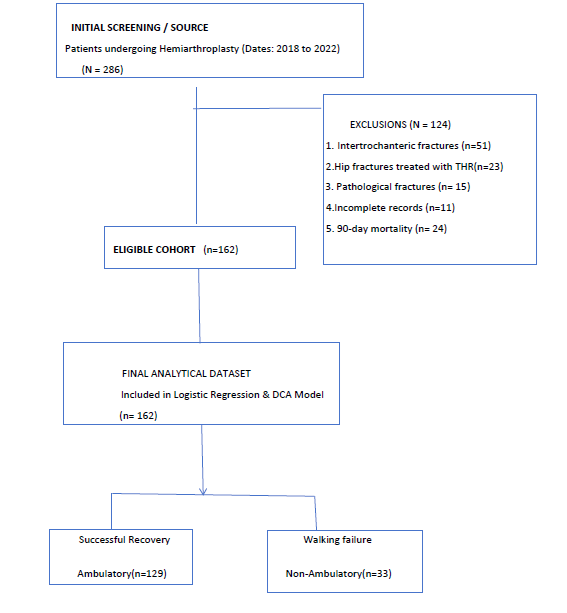
Figure 1. Flow chart of the study population.
Most of the patients (72.8%) presented to our facility beyond 72 hours of injury with a median time to presentation of 7 days (Table 1). The median injury to surgery time was 20 days and the hospital stay varied between 3 and 58 days with a mean of 21.01±10.8 days.
|
Variables |
N=162 patients (100%) |
|
Age (years) Mean (±S. D) Range 65–79 years 80–99 years 100 years and above |
77.85±8.12 65–103 103 (63.6%) 57 (35.2%) 2 (1.2%) |
|
Gender Male Female |
67 (41.4%) 95 (58.6%) |
|
Laterality Right Left |
89 (54.9%) 73 (45.1%) |
|
Time of injury to Presentation <24 hrs 24–72 hrs >72 hrs |
16 (9.9%) 28 (17.3%) 118 (72.8%) |
|
Anatomic Class Subcapital Transcervical Basicervical |
69 (42.6%) 70 (43.2%) 23 (14.2%) |
|
Pre-injury ambulation Home ambulator Community ambulator Independent or full ambulator |
47 (29.0%) 90 (55.6%) 25 (15.4%) |
|
Mechanism of injury Domestic fall Road traffic Crash |
148 (91.4%) 14 (8.6%) |
|
Ipsilateral weakness from previous history of cerebrovascular disease Yes No |
13 (8.0%) 149 (92.0%) |
|
ASA score 1 2 3 |
17 (10.5%) 99 (61.1%) 46 (28.4%) |
|
Charlson Comorbidity Index (CCI) Mean (±S.D) Range |
3.88 (±1.26) 2–8 |
|
Dorr Class (of proximal femur morphology) A B C |
2 (1.2%) 55 (34.0%) 105 (64.8%) |
|
Surgical Approach Anterolateral Direct Lateral Posterior |
17 (10.5%) 110 (67.9%) 35 (21.6%) |
At the time of discharge, 20.4% of the patients were confined to a wheelchair, as they could not walk (non-ambulatory group) while the remaining 79.6% walked with or without assistive devices such as a walking frame or tripod stand (ambulatory group) (Table 2). At 90-day post-operative period, the pre-operative walking status was restored in about 50% of the patients. Of note is that all patients who had residual limb weakness in the ipsilateral injured hip were confined to a wheelchair after the surgery and were unable to ambulate after 90 days of follow-up. There was a significant difference between the two groups concerning CCI, pre-injury walking status, residual weakness, injury time to surgery and cognitive impairment. The presence or absence of residual weakness was the most important factor that determined post-operative walking ability. However, there was no correlation between the increasing age of the patient and walking ability post-hemiarthroplasty (p=0.11).
|
Variables |
Ambulatory group n=129 (79.6%) |
Non-ambulatory n= 33 (20.4%) |
P value |
|
Median age (IQR) |
76 (11) |
79 (13) |
0.11a |
|
Mean age(±SD) years 65–79 80–99 100 and above |
77.3 (±7.9) 86 42 1 |
79.8 (8.8) 18 14 1 |
0.30 |
|
Gender Male Female |
51(39.5%) 78(60.5%) |
16(48.5%) 17(51.5%) |
0.35b |
|
Median CCI (IQR) CCI 1-2 3-4 ≥5 |
4 (1)
20 (15.5%) 83 (64.3%) 26 (20.2%) |
4 (1)
2 (6.1%) 14 (42.4%) 17 (51.5%) |
0.02c
0.001b |
|
Anatomic fracture type (%) Subcapital Transcervical Basal cervical |
55 (42.6%) 56 (43.4%) 18 (14.0%) |
14 (42.4%) 14 (42.4%) 5 (15.2%) |
0.98b |
|
Pre-injury walking status Home ambulator Community ambulator Independent or full ambulator |
30 (23.3%) 78 (60.4%) 21 (16.3%) |
17 (51.5%) 12 (36.4%) 4 (12.1%) |
0.006b
|
|
Residual limb weakness Yes No |
0 (0%) 129 (100%) |
9 (27.3%) 24 (72.7%) |
<0.001b |
|
Visual Impairment Yes No |
17 (13.2%) 112 (86.8%) |
6 (18.2%) 27 (81.8%) |
0.46b |
|
ASA Class: n (%) 1 2 3 |
16 (12.4%) 81 (62.8%) 32 (24.8%) |
1 (3.0%) 18 (54.6%) 14 (42.4%) |
0.25b |
|
Median injury to surgery time (IQR) ≤ 7days >7days |
20 (20) 18 (14.0%) 111 (86.0%) |
26 (43) 1 (3.0%) 32 (97.0%) |
0.49C 0.08b |
|
Approach: n (%) Posterior Direct lateral Anterolateral |
24 (18.6%) 89 (69.0%) 16 (12.4%) |
11 (33.3%) 21 (63.6%) 1 (3.0%) |
0.29b |
|
Median operative duration (IQR) minutes ≤ 90 mins >90 mins |
85 (37) 81 (62.8%) 48 (37.2%) |
90 (47)
14 (42.4%) |
0.42d
|
|
Cognitive impairment Yes No |
13 116 |
9 24 |
0.01b |
|
Abbreviations: IQR: Interquartile Range; SD: Standard Deviation; CCI: Charlson Comorbidity Index. a: Independent t-test; b: Chi squared test; c: Sign test of median; d: Wilconxon Signed ranks test. Significant level was at <0.1 |
|||
As detailed in Figure 2 and Table 3a, residual limb weakness (LW) was the strongest independent predictor of recovery, with an over eightfold increase in the likelihood of the outcome (β)=2.161, OR=8.68, p<.001). Cognitive impairment (Cog) was also highly predictive, nearly doubling the likelihood of the outcome (OR=1.90, p=0.009). Both pre-injury walking status (pW) (OR=1.30, p =0.042) and the Charlson co-morbidity index (CCI) (OR=1.17, p=0.018) maintained smaller but statistically significant independent associations with postoperative walking recovery at 90 days post hemiarthroplasty surgery for geriatric neck of femur fracture.
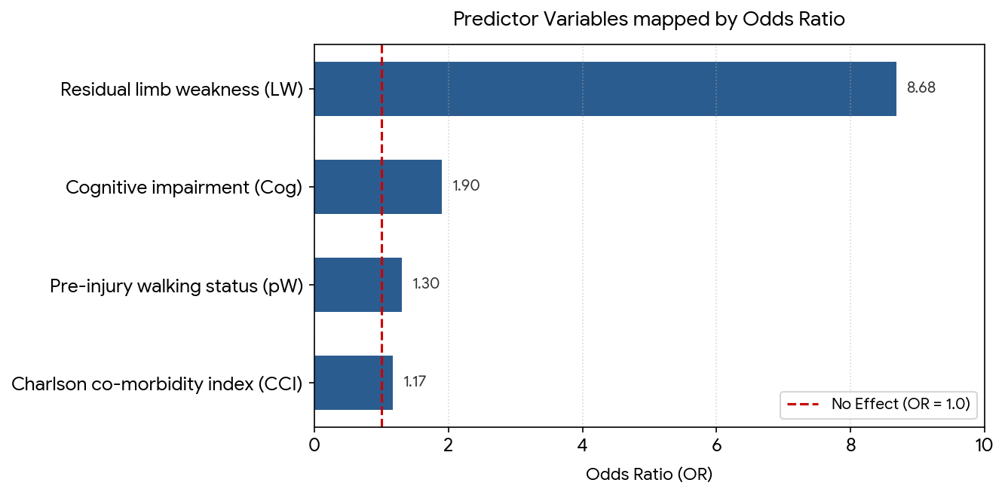
Figure 2. Odds Ratio of the predicting non-ambulatory status 90 days after hemiarthroplasty in elderly patients with neck of femur fracture. The prognostic model formula is Log-Odds = 0.203 + (0.265 x{pW}) + (2.161x{LW}) + (0.160x{CCI}) + (0.644 x{Cog}).
|
Predictor Variables |
Unstandardized BETA (ß) |
95% CI for ß |
OR |
t-Test |
P value |
|
(Constant) |
0.203 |
[-0.476, 0.883] |
|
0.591 |
0.555 |
|
Pre-injury walking status (pW) |
0.265 |
[0.009, 0.520] |
1.30 |
2.049 |
0.042 |
|
Residual limb weakness (LW) |
2.161 |
[1.485, 2.837] |
8.68 |
6.316 |
<0.001 |
|
Charlson Co-morbidity Index (CCI) |
0.160 |
[0.027, 0.293] |
1.17 |
2.385 |
0.018 |
|
Cognitive impairment (Cog) |
0.644 |
[0.161, 1.127] |
1.90 |
2.636 |
0.009 |
|
dependent variable (constant): Post-operative walking recovery; p <0-05 is significant |
|||||
|
Predictor Variable |
Original Coefficient (β) |
Bootstrap Bias |
Bootstrap Std. Error |
Bootstrapped p-value |
Bootstrapped BCa 95% CI (flipped) |
|
Residual Limb Weakness (LW) |
3.759 |
2.639 |
6.545 |
0.001 |
[2.758, 22.775] |
|
Charlson Comorbidity Index (CCI) |
0.499 |
0.040 |
0.208 |
0.006 |
[0.211, 0.911] |
|
Pre-Injury Walking Status (pW) |
1.154 |
0.097 |
0.512 |
0.007 |
[0.508, 2.120] |
|
Cognitive Impairment (Cog) |
1.597 |
0.030 |
0.610 |
0.005 |
[0.498, 2.796] |
|
Constant (Model Intercept) |
-6.611 |
- 0.487 |
1.515 |
0.001 |
[-11.977, -3.941]
|
The multivariate logistic regression model demonstrated robust performance. Visual inspection of the model calibration curve revealed close adherence to the 45-degree line of perfect calibration across all risk deciles, indicating a strong agreement between predicted probabilities and actual observed recovery rates. This was supported mathematically by the Hosmer-Lemeshow test, which yielded a non-significant result (χ2)=4.97, df=7, p=0.664), confirming that the model did not significantly deviate from a perfect fit (Figure 3). The model demonstrated strong discriminative power, yielding an Area Under the ROC Curve (AUC) of 0.79, (95% CI: [0.70, 0.88]; p<0.001) as displayed in Figure 4. This confirms a high degree of mathematical accuracy in separating individuals who achieved postoperative walking recovery from those who did not.
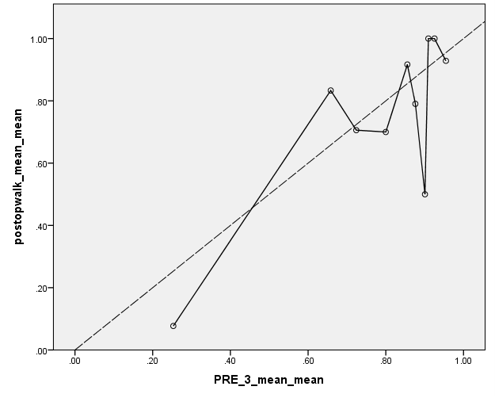
Figure 3. Calibration curve of the logistic regression model predicting postoperative walking recovery (postopwalk). The diagonal 45-degree interrupted line represents perfect calibration (y=x), where predicted probabilities exactly match observed recovery proportions. The interpolation line tracks the actual model performance across patient deciles.
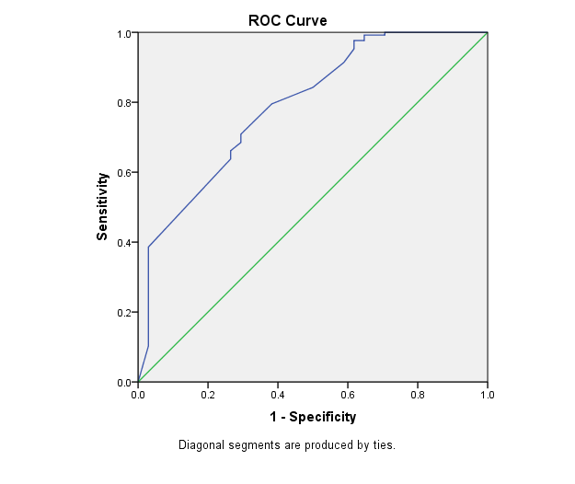
Figure 4. Area Under the ROC Curve for the significant predictive variables of post-operative walking recovery in geriatric patients with neck of femur fracture treated with hemiarthroplasty.
The decision curve demonstrated that utilizing the multivariate prognostic model to guide clinical decision-making yielded a positive net benefit compared to both the 'Treat All' and 'Treat None' strategies. This net benefit advantage was consistently maintained across a broad, clinically relevant threshold window of 15%–75% (Figure 5). Following internal validation via 1,000 bootstrap resamples, all four clinical predictors retained strong, independent statistical significance in forecasting 90-day non-ambulatory outcome with residual limb weakness emerged as the most critical factor (β=+3.759, BCa 95% CI: [+2.758, +22.775], p=0.001). Poorer pre-injury walking status (β = +1.154, BCa 95% CI: [+0.508, +2.120], p=0.007) and the presence of cognitive impairment/delirium (β = +1.597, BCa 95% CI: [+0.498, +2.796], p=0.005) were both independently associated with a failure to recover mobility. Furthermore, an increasing Charlson Comorbidity Index score significantly increased the log-odds of functional recovery (β=0.499, BCa 95% CI: [+0.211, +0.911], p=0.006). The model's baseline intercept (Constant) was adjusted via bootstrapping to -6.611(BCa 95% CI: [-11.977, -3.941], p=0.001) (Table 3b). The final prognostic model formula of walking failure was established as Log-Odds = 0.203 + (0.265 x{pW}) + (2.161x{LW}) + (0.160x{CCI}) + (0.644 x{Cog}).
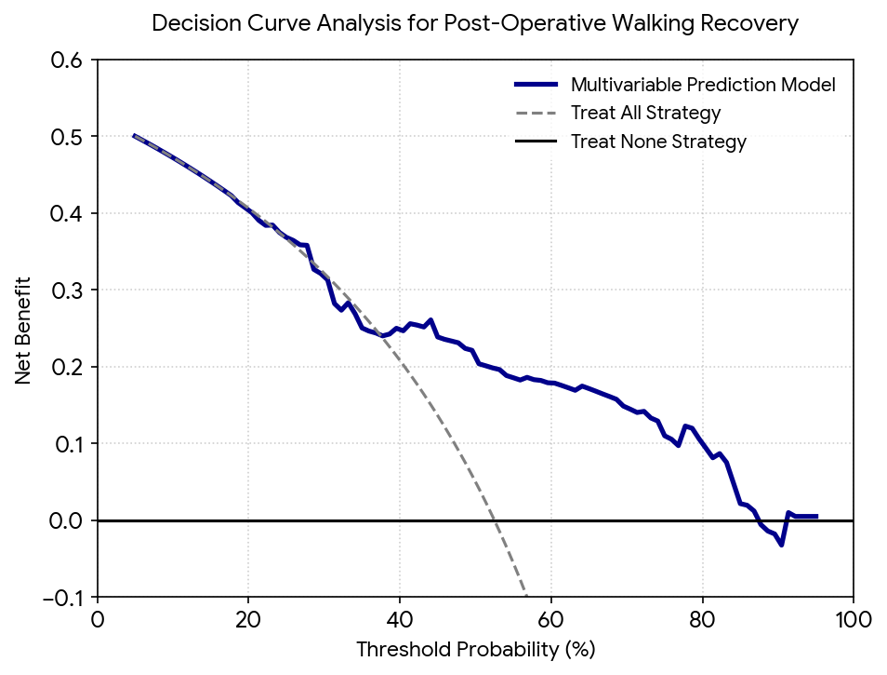
Figure 5. Decision Curve Analysis for post-operative walking recovery in elderly patients with neck of femur fracture treated with hemiarthroplasty.
To translate our model into an easily accessible bedside tool, a clinical point-scoring system was developed by scaling the unstandardized regression coefficients (β) against the smallest baseline continuous predictor (Charlson Co-morbidity Index, β=0.160=1 point). Points for the remaining variables were calculated by dividing their respective β coefficients by 0.160 and rounding to the nearest whole integer. This yielded 1 point per unit increase in CCI, 2 points per unit increase in pre-injury walking score, 4 points for the presence of cognitive impairment, and 14 points for the presence of residual limb weakness (Table 4). The higher the score, likelihood of non-ambulatory status.
|
Clinical Predictors |
Clinical Value |
Assigned Points |
|
Charlson Comorbidity Index |
Per integer increase in score |
1 point per index unit |
|
Pre-injury walking status |
Community ambulatory Home ambulatory Non-ambulatory |
0 points 2 points 4 points |
|
Cognitive impairment |
No (mMSE ≥24) Yes (mMSE <24) |
0 points 4 points |
|
Residual Limb Weakness |
No Yes |
0 points 14 points |
|
Total Risk score range |
Sum of all applicable points |
0–22+points |
|
The clinical scoring system is calculated by summing the assigned points across all four domains at the time of admission or immediate post-operative evaluation. A higher cumulative score directly indicates a higher likelihood of non-ambulatory status (failure to achieve walking recovery) at 90 days. Low Risk of Failure (Score 0 to 3): Patients with good pre-injury baseline function and low systemic comorbidities. These patients are highly likely to recover independent mobility and can follow standard, fast-track rehabilitation pathways. Moderate Risk of Failure (Score 4 to 13): Patients with cognitive impairment or elevated systemic frailty. These individuals require structured, multidisciplinary orthogeriatric care to prevent worsening delirium and optimize functional recovery. High Risk of Failure (Score≥14): Any patient presenting with ipsilateral residual limb weakness instantly enters this critical category. These patients face severe limitations in achieving 90-day recovery and must be prioritized for immediate, intensive neuromuscular physical therapy, early assistive device training (walking frames/tripods), and long-term institutional social support. |
||
Discussion
The recovery of walking ability following hemiarthroplasty for geriatric neck of femur fractures remains a critical determinant of functional independence and overall prognosis. This is usually a concern for the family, orthopedic surgeon and the entire health caregivers. The goal of hemiarthroplasty in elderly patients with neck of femur fracture is to allow for early ambulation, restore independent living, and prevent mortality.
This study constructed and internally validated a multivariate prognostic model to forecast independent determinants of postoperative walking recovery in a geriatric cohort following hemiarthroplasty for displaced femoral neck fractures. The most important finding was that approximately one-fifth of patients were unable to ambulate at discharge, and only half regained their pre-injury walking status at 90 days. These findings are consistent with previous reports indicating that 25–50% of elderly hip fracture patients fail to return to their baseline mobility and would likely require full nursing care [13,16,17], highlighting the persistent burden of functional decline in this population. Ho and colleagues reported that 32.1% of elderly patients regained pre-injury walking status and 28.6% were confined to the wheelchair 1 year after hip arthroplasty [18].
Residual limb weakness, particularly in patients with prior neurological deficits such as cerebrovascular accidents emerged as the most powerful driver of walking failure, adding 14 points to a patient’s risk score and increasing the odds of poor walking recovery by more than eight-fold ({OR}=8.68, p<0.001). This underscores the critical role of pre-existing neuromuscular integrity in functional recovery and suggests that muscle strength and motor control may outweigh other demographic factors. Similar findings have been reported in previous studies, where muscle atrophy and neuromuscular impairment were strongly associated with poor postoperative mobility [13,14]. Clinically, patients presenting with pre-operative limb weakness should not follow the standard discharge pathway. Instead, they should have aggressive rehabilitation programs to aid walking recovery and functional dependency.
Pre-injury ambulatory status was also a significant predictor of postoperative walking ability (OR=1.30, 95%CI: [1.01,1.68], P=0.042). Patients who were independent or community ambulators prior to fracture were significantly more likely to regain mobility compared to those who were home-bound, highlighting the clinical necessity of factoring pre-admission mobility metrics into postoperative rehabilitation programs. There is no consensus on the rehabilitation protocol that improves muscle strength and accelerates the return to pre-injury walking status and functional recovery. However, Zhang and colleagues [15] concluded that an intensive coordinated in-patient rehabilitation program is superior to other methods and should be preferred in elderly patients with hip fractures. Despite intense physical therapy, some patients do not return to their pre-injury walking status and a few others may be confined to a wheelchair or succumb to death. The protocol in our hospital is such that attempt at mobilization with an assistive device is commenced on the next day of surgery and gradually intensified based on patient’s ability.
Although surgical delay was a significant factor in univariate analysis. It did not remain an independent predictor of poor walking recovery after adjusting for other factors in the final multivariate logistic regression model. In this study cohort, the median time to surgery was considerably prolonged, reflecting systemic challenges such as delayed presentation, financial constraints, and limited theatre space [19]. Early surgical intervention is widely known to reduce complications associated with prolonged immobilization, including pressure sore, muscle wasting, thromboembolism, and post-operative delirium. The American Academy of Orthopedic Surgeon (AAOS) guidelines recommend hip surgery within 48 hours of injury [20], while the National Institute of Healthcare and Excellence (NICE) guidelines recommend surgery within 36 hours [21]. However, the loss of statistical significance for surgical delay in our multivariate analysis indicates that its impact on mobility is likely confounded by baseline patient frailty and comorbidities. Consequently, while prompt surgical scheduling remains vital for patient safety, 90-day mobility recovery in our setting should focus heavily on pre-injury walking status and post-operative residual limb weakness.
The Charlson Comorbidity Index (CCI) was identified as a significant predictor (OR=1.17, p=0.018), indicating that the burden of comorbid conditions negatively impacts recovery. Patients with higher CCI scores are more likely to experience complications, prolonged hospitalization, and reduced participation in rehabilitation. This supports the concept that overall physiological resilience, rather than age alone, is a more relevant determinant of postoperative outcomes. Indeed, age and gender were not significant predictors in this study, suggesting that biological health status may be more important than chronological age. The influence of age and gender on walking ability after hip fracture surgery remains controversial in the literature. In contrary to our findings, studies from Asia reported age and gender as significant predictors of walking capability after hip fracture treatment [18,22,23]. The advanced age with selected medical conditions as depicted by the CCI score was observed to be a significant predictor in our study. This is consistent with findings of Lee and colleagues [22] who observed that combined medical disease and pre-fracture ambulatory capacity were also predictors of walking capability after hip fracture. Hagino and colleagues [24] identified age, dementia, pre-injury residence, anemia, electrolyte abnormality, lung function abnormality, and chronic systemic diseases as important factors that affect the ability to walk at the time of hospital discharge. However, they alluded to the fact that it was difficult to predict prognosis with these factors independently because some patients with advanced age and medical conditions such as anemia and dementia were able to walk and had good outcomes.
In our study, cognitive impairment severely limited functional potential, presenting an independent hurdle to mobility (OR=1.90, p=0.009). This finding is consistent with prior studies demonstrating that cognitive impairment is a key determinant of postoperative functional decline [10,25–27]. Patients with cognitive impairment or perioperative delirium may struggle with motor relearning, gait retraining, co-ordination and strictly adhering to hip precautions, which negatively affect walking recovery. Rehabilitation of elderly patient with cognitive impairment is usually challenging and requires intensive effort to restore pre-operative walking status.
In a study conducted by Hagino and colleagues to formulate a predictive score for walking ability, a logistic regression analysis narrowed the predictors to only three which were anemia, dementia, and abnormal lung function [28]. In a study conducted by Fu and colleagues [29] in Asian geriatric population with NOF, preoperative walking ability showed the biggest impact on the prediction of walking ability 1 year after arthroplasty. Other independent variable tested were surgical procedure, anesthesia procedure, smoking history, gender, CCI score, age, serum Albumin, and chest radiograph findings. The predictive scoring system developed in our study provides a simple and clinically applicable tool at the bed side for estimating postoperative walking recovery. By incorporating readily available preoperative variables, it will assist surgeons in risk stratification, counseling, and tailoring rehabilitation based on the score generated.
Our model achieved strong internal validity and by utilizing a robust multivariable framework backed by 1,000 bootstrap resamples, we minimized the risks of overfitting commonly associated with single-center datasets. The resulting model yields an Area Under the ROC Curve (AUC) of 0.79, indicating strong discriminative capability, alongside an excellent calibration profile (p=0.664 via the Hosmer-Lemeshow test). Furthermore, our Decision Curve Analysis (DCA) proves that applying this scoring tool to guide clinical care offers a superior net benefit over default "treat all" or "treat none" rehabilitation strategies.
Limitations
Despite these findings, the study has several limitations. First, the retrospective, single-center design introduces potential selection and information bias. Second, the modest sample size (n=162) and exclusion of patients who died within 90 days limits the generalizability of the results and may underestimate the true burden of poor outcomes. Although 1,000-sample BCa bootstrapping confirmed excellent internal stability and optimism correction, true model generalizability can only be proven through future external validation on an independent cohort of hip fracture patients from another region. Third, only NOF patients who had hemiarthroplasty were enrolled in the present study. Hence, caution must be taken when applying our scoring system in patients who underwent total hip arthroplasty or other treatment modalities. Additionally, important variables such as nutritional status, intensity of rehabilitation, and functional outcome scores were not assessed.
Recommendations
Future studies should focus on prospective, multicenter designs with larger sample sizes to externally validate our predictive model (Type 3 Validation). The follow up duration should be extended beyond 90 days by future researchers, to ascertain whether some patients with cognitive impairment or neuromuscular deficits eventually regained their pre-injury ambulatory status. Furthermore, future prognostic models should utilize competing risk regression analysis (such as Fine-Gray modeling) to mathematically account for patients who die within 90 days, rather than excluding them, to completely eliminate survival bias.
Conclusion
A 4-item, internally validated clinical prediction model demonstrated strong performance (AUC 0.79) in forecasting 90-day post-operative walking recovery for elderly hip hemiarthroplasty patients in Nigeria, highlighting that residual limb weakness, comorbidities, pre-injury walking status, and cognitive function are key predictors. Among these, residual limb weakness was the strongest determinant of postoperative walking recovery. The model showed substantial clinical net benefit across a 15% to 75% threshold range of walking failure, and implementing our scoring system will enable surgeons to proactively identify high-risk individuals, plan individualized rehabilitation strategies, and manage patient expectations.
Conflict of Interest
The authors declare that they have no conflict of interest
Funding Statement
There was no funding from any group or organization.
References
2. Koval KJ, Skovron ML, Aharonoff GB, Meadows SE, Zuckerman JD. Ambulatory ability after hip fracture. A prospective study in geriatric patients. Clin Orthop Relat Res. 1995 Jan;(310):150–9.
3. Mariconda M, Costa GG, Cerbasi S, Recano P, Orabona G, Gambacorta M, et al. Factors Predicting Mobility and the Change in Activities of Daily Living After Hip Fracture: A 1-Year Prospective Cohort Study. J Orthop Trauma. 2016 Feb;30(2):71–7.
4. Taraldsen K, Polhemus A, Engdal M, Jansen CP, Becker C, Brenner N, et al. Evaluation of mobility recovery after hip fracture: a scoping review of randomized controlled studies. Osteoporos Int. 2024 Feb; 35(2):203–15.
5. Laflamme GY, Rouleau DM, Leduc S, Roy L, Beaumont E. The Timed Up and Go test is an early predictor of functional outcome after hemiarthroplasty for femoral neck fracture. JBJS. 2012 Jul 3;94(13):1175–9.
6. Liu Y, Wang Z, Xiao W. Risk factors for mortality in elderly patients with hip fractures: a meta-analysis of 18 studies. Aging Clin Exp Res. 2018 Apr;30(4):323–30.
7. Forni C, Gazineo D, D’Alessandro F, Fiorani A, Morri M, Sabattini T, et al. Predictive factors for thirty day mortality in geriatric patients with hip fractures: a prospective study. Int Orthop. 2019;43: 275–81.
8. Xu BY, Yan S, Low LL, Vasanwala FF, Low SG. Predictors of poor functional outcomes and mortality in patients with hip fracture: a systematic review. BMC Musculoskelet Disord. 2019 Nov 27;20(1):568.
9. Moons KG, Altman DG, Reitsma JB, Ioannidis JP, Macaskill P, Steyerberg EW, et al. Transparent Reporting of a multivariable prediction model for Individual Prognosis or Diagnosis (TRIPOD): explanation and elaboration. Ann Intern Med. 2015 Jan 6;162(1):W1–73.
10. Mukka S, Knutsson B, Krupic F, Sayed-Noor AS. The influence of cognitive status on outcome and walking ability after hemiarthroplasty for femoral neck fracture: a prospective cohort study. Eur J Orthop Surg Traumatol. 2017 Jul;27(5):653–8.
11. Hommel A, Ulander K, Bjorkelund KB, Norrman PO, Wingstrand H, Thorngren KG. Influence of optimised treatment of people with hip fracture on time to operation, length of hospital stay, reoperations and mortality within 1 year. Injury. 2008 Oct;39(10):1164–74.
12. Oba T, Makita H, Inaba Y, Yamana H, Saito T. New scoring system at admission to predict walking ability at discharge for patients with hip fracture. Orthop Traumatol Surg Res. 2018 Dec;104(8):1189–92.
13. Sakti M, Saleh R, Yudha K, Akbar T. Predicting factors for walking ability of postoperative patients with hemiarthroplasty at Wahidin Sudirohusodo Hospital in Makassar. Bali Medical Journal. 2021 Apr 30;10:2256.
14. Choe H, Yoneda T, Oba M, Abe K, Ike H, Kumagai K, et al. Muscle Atrophy Around the Hip Joint in Patients with Femoral Neck Fracture is Associated with Postoperative Walking Ability. Geriatr Orthop Surg Rehabil. 2025 Apr 23;16:21514593251336626.
15. Zhang J, Ang ML, Kwek EB. Who Will Walk Again? Effects of Rehabilitation on the Ambulatory Status in Elderly Patients Undergoing Hemiarthroplasty for Femoral Neck Fracture. Geriatr Orthop Surg Rehabil. 2015 Sep;6(3):168–72.
16. Ko Y. Pre- and Perioperative Risk Factors of Post Hip Fracture Surgery Walking Failure in the Elderly. Geriatr Orthop Surg Rehabil. 2019 Jun 4;10:2151459319853463.
17. Vochteloo AJ, Moerman S, Tuinebreijer WE, Maier AB, de Vries MR, Bloem RM, et al. More than half of hip fracture patients do not regain mobility in the first postoperative year. Geriatr Gerontol Int. 2013 Apr;13(2):334–41.
18. Ho JPY, Wong AYF, Ong LH, Rutel A, Abdullah S, Jaffar MSA, et al. Mobility and Hip Function Among Geriatric Patients With Displaced Neck of Femur Fractures Treated With Arthroplasty. Geriatr Orthop Surg Rehabil. 2023 Mar 10;14:21514593231164245.
19. Lawal WO, Alatishe KA, Ugbeye ME, Usuanlele A, Moshood OD, Amodu OA. Impact of delayed presentation on the outcome of hemiarthroplasty in elderly patients with fractured neck of the femur in a low-resource setting. Nigerian Journal of Medicine. 2025 Jan 1;34(1):60–5.
20. Brox WT, Roberts KC, Taksali S, Wright DG, Wixted JJ, Tubb CC,r et al. The American Academy of Orthopaedic Surgeons Evidence-Based Guideline on Management of Hip Fractures in the Elderly. J Bone Joint Surg Am. 2015 Jul 15;97(14):1196–9.
21. Ftouh S, Morga A, Swift C; Guideline Development Group. Management of hip fracture in adults: summary of NICE guidance. BMJ. 2011 Jun 21;342:d3304.
22. Lee D, Jo JY, Jung JS, Kim SJ. Prognostic Factors Predicting Early Recovery of Pre-fracture Functional Mobility in Elderly Patients With Hip Fracture. Ann Rehabil Med. 2014 Dec;38(6):827–35.
23. Kim JL, Jung JS, Kim SJ. Prediction of ambulatory status after hip fracture surgery in patients over 60 years old. Ann Rehabil Med. 2016 Aug 24;40(4):666–74.
24. Hagino T, Sato E, Tonotsuka H, Ochiai S, Tokai M, Hamada Y. Prediction of ambulation prognosis in the elderly after hip fracture. Int Orthop. 2006 Oct;30(5):315–9.
25. Chammout G, Kelly-Pettersson P, Hedbeck CJ, Bodén H, Stark A, Mukka S, Sköldenberg O. Primary hemiarthroplasty for the elderly patient with cognitive dysfunction and a displaced femoral neck fracture: a prospective, observational cohort study. Aging Clinical and Experimental Research. 2021 May;33(5):1275–83.
26. Linder PDGB, Religa DD, Gustavsson F, Eriksdotter M, Hedström M, Hägg S. Impact of dementia on post-hip fracture walking ability: a stratified analysis based on pre-fracture mobility in Swedish cohorts of older adults. BMC Geriatr. 2024 Nov 26;24(1):970.
27. Martinez-Carranza N, Lindqvist K, Modig K, Hedström M. Factors associated with non-walking 4 months after hip fracture. A prospective study of 23,759 fractures. Injury. 2022 Jun;53(6):2180–83.
28. Hagino T, Ochiai S, Wako M, Sato E, Maekawa S, Senga S, et al. A simple scoring system to predict ambulation prognosis after hip fracture in the elderly. Arch Orthop Trauma Surg. 2007 Sep;127(7):603–6.
29. Fu G, Li M, Xue Y, Wang H, Zhang R, Ma Y, et al. Rapid preoperative predicting tools for 1-year mortality and walking ability of Asian elderly femoral neck fracture patients who planned for hip arthroplasty. J Orthop Surg Res. 2021 Jul 16;16(1):455.