Loading


Archives of Obstetrics and Gynaecology
ISSN: 2692-787X
Most Cited Articles
Intrauterine Device Embedment Resulting in Its Fracture: A Case Series
Carlos M. Fernandez, Elliot M. Levine, Marie Cabiya, Imaan Ansari, Leah Delfinado
Purpose: As long-acting reversible contraceptive choices are becoming more popular among young women, proper informed consent over potential complications should be addressed when such decisions are made. A local case series was analyzed to consider the risk of intrauterine device (IUD) fracture. Materials and Methods: A retrospective review of provider experience with the intrauterine device over a seven-year period was undertaken, to specifically analyze the incidence of IUD embedment and fracture in the studied population.
Arch Obstet Gynecol, 2021, Volume 2, Issue 1, p1-4 | DOI: 10.33696/Gynaecology.2.009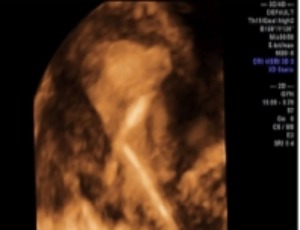
Recommendation of Tetanus Toxoid Vaccination for Pregnant Females in a Country that Achieved Elimination of Maternal and Neonatal Tetanus. A commentary on the Study: Knowledge and Health Beliefs of Reproductive-age Women in Alexandria about Tetanus Toxoid Immunization
Azza A. Mehanna
The study “knowledge and health beliefs of reproductive-age women in Alexandria about tetanus toxoid immunization” has shed a new light on the attitude of obstetricians in Alexandria (Egypt) towards recommending tetanus toxoid vaccination to pregnant females. According to the study, the use of tetanus toxoid vaccine among females in child-bearing age in Alexandria was low.
Arch Obstet Gynecol, 2021, Volume 2, Issue 1, p5-8 | DOI: 10.33696/Gynaecology.2.010
Family Planning Laboratory Review of Factors Affecting the Choice of Contraceptive Methods in Three Teenagers' Populations in Thrace, Greece
Panagiotis Tsikouras, Georgios Galazios, Xanthoula Anthoulaki, Anna Chalkidou, Anastasia Bothou, Theodora Deuteraiou, Michael Koutsogiannis, Irini Babageorgaka, Fotini Gaitatzi, Konstantinos Nikolettos, Stefanos Zervoudis, Nikolaos Nikolettos
Contraception encompasses the concept of avoiding a pregnancy, and is aimed at women of reproductive age who, although are sexually active, do not want to achieve any pregnancy at their option fertility preservation and family planning. It should be underlined that no method of contraception is 100% guaranteed because its success depends on many factors such as patient’s compliance to gynecologists instructions, woman’s age, the advantages and disadvantages of each method, the frequency of sexual intercourse and of course the type of contraception.
Arch Obstet Gynecol, 2020, Volume 1, Issue 1, p13-22 | DOI: 10.33696/Gynaecology.1.003
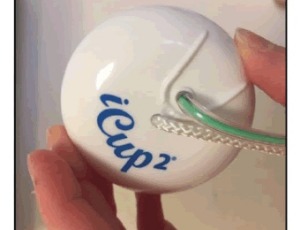
Preliminary Study Assessing the Efficiency of a New Singleuse Obstetrical Vacuum Device: Icup2®
D’Antona A, Mottet N, Lenoir P, Toubin C, Bourtembourg A, Ramanah R, Riethmuller D
A national perinatal survey in France in 2016 showed that 12.2% of women have instrumentally assisted vaginal births with vacuum extraction used in 49.8% of cases, making it the most frequently used form of obstetrical assistance. The 2006 initial concept of the Icup® vacuum extractor was based on the development of a single-use device with a partially deformable cup to avoid any fetal scalp injury.
Arch Obstet Gynecol, 2020, Volume 1, Issue 2, p45-51 | DOI: 10.33696/Gynaecology.1.008