

Loading
Archives of Pharmacology and Therapeutics
ISSN: 2688-9609
Volume 3, Issue 2, p29-65
Articles published in this issue are Open Access and licensed under Creative Commons Attribution License (CC BY NC) where the readers can reuse, download, distribute the article in whole or part by mentioning proper credits to the authors.
Remdesivir in COVID-19 Patients with End Stage Renal Disease on Hemodialysis
To date, only glucocorticoids have been shown to reduce mortality in COVID-19. Use of remdesivir was associated with reduced length of stay in hospitalized COVID-19 patients. A deadly second wave in Asian countries has caused increased demand and usage of remdesivir in these countries. However, there is limited data about its efficacy in patients with severe renal dysfunction or end-stage renal disease on dialysis.
Arch Pharmacol Ther, 2021, Volume 3, Issue 2, p29-31 | DOI: 10.33696/Pharmacol.3.024
Statins and the Diabetic Kidney
Diabetes mellitus is one of the most common chronic diseases that affect people of all ages and races worldwide.
Arch Pharmacol Ther, 2021, Volume 3, Issue 2, p32-36 | DOI: 10.33696/Pharmacol.3.025
Study of the Tableting Properties of MCR, a Newly Coprocessed Cellulose-based Direct Compression Excipient
The current need for strategies to accelerate and optimize the efforts to develop new in-expensive multifunctional direct compression tableting excipients with minimum risk to the products has urged the workers in pharmaceutical industry field to search for a simple and low cost-effective technique to tailor and engineer multi-functional excipients.
Arch Pharmacol Ther, 2021, Volume 3, Issue 2, p37-38 | DOI: 10.33696/Pharmacol.3.026
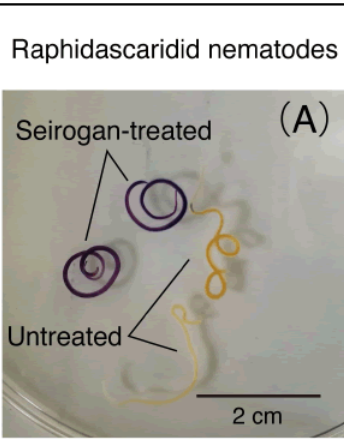
Nematocidal Effect of Japanese Traditional Intestinal Medicine ‘Seirogan’ on Larval Anisakid and Raphidascaridid Nematodes
‘Seirogan’ is a well-known Japanese traditional herbal medicine for stomachache or diarrhea due to digestive disorders. Recently, it was reported that the administration of Seirogan alleviated gastric anisakiasis symptoms, and that Seirogan quickly suppressed the motility of Anisakis larvae in vitro.
Arch Pharmacol Ther, 2021, Volume 3, Issue 2, p48-51 | DOI: 10.33696/Pharmacol.3.027
ProLung™-budesonide Inhibits SARS-CoV-2 Replication and Reduces Lung Inflammation
Inhaled budesonide benefits patients with COVID-19. ProLung™-budesonide enables the sustained, low dose administration of budesonide within a delivery vehicle similar to lung surfactant. ProLung™-budesonide may offer anti-inflammatory and protective effects to the lung in COVID-19, yet it’s effect on SARS-CoV-2 replication is unknown.
Arch Pharmacol Ther, 2021, Volume 3, Issue 2, p52-65 | DOI: 10.33696/Pharmacol.3.028
Karyotypic Profile of Chronic Myeloid Leukemia in Patients Diagnosed at Tertiary Level in Afghanistan
Balanced translocation resulting in fusion of the Abelson gene (ABL1) from chromosome 9q34 with the breakpoint cluster region (BCR) gene on chromosome 22q11.2 is the pathognomonic molecular driver of CML. The resulting BCRABL 1 fusion gene is both the diagnostic as well as therapeutic target of CML. The first agent with tyrosine kinase inhibitor activity that was licenced in 2000 for treatment of CML patients, was Imatinib, gradually followed by multiple agents with higher efficacy.
Prevalence of Symptom Clusters in Cancer Patients at First Presentation in Palliative Care Clinic as per Different Disease Groups
Cancer has its own disease burden and patients usually suffer from symptom clusters when they are referred for palliative treatment. Identification of symptom cluster trajectories will help clinician to take into account measures that can optimize quality of life of palliative patients. Therefore the aim of this paper is to determine the overall prevalence of symptoms and symptoms clusters in different disease groups according to etiology at the time of first visit to Palliative care clinic by using HIS Palliative First Assessment note indicating Edmonton symptom scale.
COVID-19 Clinical Research
While the global COVID-19 pandemic has challenged the entire humanity and health systems, it also triggered researchers to urgently perform clinical trials to assess the safety and efficacy of many agents and modalities to combat COVID-19. As of April 22, over 650 clinical studies have been registered both in USA and internationally. Results from these studies are also coming at a brisk pace in this unprecedented emergency.
Therapeutic Values of Ketamine for COVID-19-Cared Patients: An Expert’s Point of View
Ketamine has long been used in the field of anesthesia [1]. Its rapid and long-acting analgesic effects associated with its dissociative properties have also established its use in prehospital and emergency department patients.
A Bioinformatics Protocol for Rational Design of Peptide Vaccines and the COVID-19 Rampage
The currently ongoing coronavirus pandemic, the SARSCOV- 2, interchangeably referred to as the COVID-19 infection, has in a short span of time altered the ways and means of almost all of mankind. So strong has been its effect that all human activity ceased in one way or another for a considerable time, led to significant loss of life and economic drain of.
Prospective Evaluation of Effect of Metformin on Activation of AMP-activated Protein Kinase (AMPK) and Disease Control in a Sub-group Analysis of Patients with GI Malignancies
Observational studies have demonstrated association of metformin with reduced cancer incidence and mortality in multiple cancer types, including gastrointestinal (GI) malignancies. Anti-neoplastic effects of metformin are believed through many mechanisms including activation of AMP-activated protein kinase, which controls mammalian target of rapamycin (mTOR) growth regulatory pathway.
Interviewing Techniques for Patients with Intellectual Disability
Levels of Intellectual Disability and Categories of Communicative Skills When conducting a patient interview, it is crucial to understand the individuals’ level of ID as well as their expressive language skills in order to communicate effectively
Searching for Easy Reliable Prognostic Parametres in Colorectal Cancer Patients Evaluation
Tumor node metastasis (TNM) staging system is the most useful method in predicting prognosis of colorectal cancer (CRC), the third most common cause of death worldwide, even if other biological markers are currently under evaluation to assess their role in affecting CRC outcome and planning the best tailored therapeutic approach. Several molecular factors are being demonstrated to be effective in influencing both overall survival (OS) and disease-free survival (DFS) in CRC, acting on different aspects of tumor promoting and progression.
Lessons Learnt from COVID-19: How Can We Prepare for Another Pandemic?
Five months into the COVID-19 pandemic, the U.S. death toll from the virus has now surpassed 100,000 people. Many more cases remain nationwide, while an unknown number of patients currently harbor the virus asymptomatically. While health officials are now optimistic regarding the decline in prevalence and number of deaths due to COVID-19 and the possibility of a vaccine by the fall, we cannot lose sight of the bigger picture: the next pandemic.
Safety of Using Rituximab Therapy During COVID-19 Pandemic
Our modern world is facing extraordinary circumstances while passing through a serious pandemic caused by the novel coronavirus (COVID-19) which may lead to multi-organ system failure & death. Bcell depletion could compromise antiviral immunity, which makes the safety of rituximab use in the COVID19 era unclear.
Educators as Essential Workers in the Era of COVID-19: Applying Lessons from Disaster Recovery
In the article, “Mental Health Framework: Coronavirus pandemic in post-Katrina New Orleans” [1], Shervington and Richardson offer recommendations about how to anticipate and address disaster-related, trauma exposures associated with the coronavirus pandemic
How Well Do Hemodialysis Patients Respond to the BNT162b2 mRNA COVID-19 Vaccine?
In January 2020, the World Health Organization (WHO) classified COVID-19 to be a Public Health Emergency of International Concern and declared it a pandemic on March 11, 2020 [1]. Over one hundred and eighty-five million people have been infected by SARS-CoV-2 and roughly four million have died worldwide so far
Why Do Patients Not Meet the Pharmacological Treatment?
Therapeutic compliance has been defined as the degree to which the behaviour of a person corresponds with the recommendations of the health professional [1].
Domination of Nephrotic Problems among Diabetic Patients of Bangladesh
Nearly 80% of people with diabetes live in low and middle-income countries. It increases healthcare use and expenditure and imposes a huge economic burden on the healthcare systems. The International Diabetes Federation estimated 7.1 million people with diabetes in Bangladesh and almost an equal number with undetected diabetes. This number is estimated to double by 2025.
Safety and Efficacy of s-MOX Regimen in Patients with Colorectal Cancer Who Developed Cardiotoxicity Following Fluoropyrimidine Administration: A Case Series
Fluoropyrimidines compose the backbone of regimens to treat many common solid tumors, including gastrointestinal (GI), breast and head/neck. As we continue to use these agents routinely, recognition of rare but real toxicities, such as cardiotoxicity, has also improved. The treatment options for patients who have encountered fluoropyrimidine-induced cardiotoxicity are limited as many anti-angiogenic drugs also pose a cardiac risk.
In silico Analysis for the Repurposing of Broad-spectrum Antiviral Drugs against Multiple Targets from SARS-CoV-2: A Molecular Docking and ADMET Approach
SARS-CoV-2 belongs to the genus Beta of the Coronaviridae family of enveloped single-stranded, positive-sense ribonucleic acid (RNA) with a genome length of 30,000bp. The virion is composed of various non-structural (RNA dependent RNA polymerase also known as RdRp) and structural proteins such as Spike (S), Nucleocapsid (N), Matrix (M), and Envelope (E) proteins.
Body Mass Index and Treatment Response in Patients with Cardiac Light-Chain Amyloidosis
Elevated body mass index (BMI) has been associated with an increased risk of cancer and has been shown to have a negative impact on survival in patients with breast, prostate, oral cancer, and leukemia. In plasma cell dyscrasias, obesity has not only been shown to be a risk factor for the development of multiple myeloma, but also has been associated with a higher rate of progression from monoclonal gammopathy of unknown significance (MGUS) to multiple myeloma, and if intervened on, has bee
Predicting COVID-19 Hospitalized Patients’ Outcome with Homocysteine
The COVID-19 pandemic has provoked a global, rapid increase of cases due to the high infectivity of the etiological agent, COVID-19 virus. In February 2021, over 110 million confirmed COVID-19 cases with 1 million deaths were reported worldwide (www.who.int).
Dexamethasone: The First Drug to be Shown to Decrease Mortality in Critically Ill Patients with COVID-19
Background: The precise role of corticosteroids for treatment of coronavirus disease 2019 (COVID-19) is unclear due to lack of randomized trials. Objective: To review the therapeutic value of corticosteroids for treatment of hospitalized patients with COVID-19 with more emphasis on randomized trials. Methods: English literature search of electronic databases supplemented by manual search up to June 29, 2020. Search terms included corticosteroids, COVID-19, dexamethasone, methylprednisolone, hydrocortisone, mortality, safety. Randomized trials were the main focus of research, but observational studies were also reviewed.
How to Prevent Rehospitalization in Patients with COVID-19
Since December 2019, Severe Acute Respiratory Syndrome Coronavirus 2 (SARS-CoV-2) caused by 2019 Novel Coronavirus (2019-nCoV) has resulted in 89,000 cases of Corona Virus Disease 2019 (COVID-19), formerly known as Novel Coronavirus Pneumonia (NCP) in China, including 2,450 deaths.
Scientific Archives is a global publisher initiated with the mission of ensuring equal opportunity for accessing science to research community all over the world. Spreading research findings with great relevance to all channels without any barrier is our goal. We want to overcome the challenges of Open Access with ensured quality and transparency.