

Loading
Archives of Cancer Biology and Therapy
ISSN: 2692-8302
Volume 1, Issue 3, p52-71
Articles published in this issue are Open Access and licensed under Creative Commons Attribution License (CC BY NC) where the readers can reuse, download, distribute the article in whole or part by mentioning proper credits to the authors.
Role of the Gut Microbiome in the Modulation of Cancer Immunotherapy Response
The gut microbiome or gut flora is a vast community of microorganisms such as bacteria, viruses, protozoa, and fungi that inhabit the digestive tract of the human and other animals. In the human body, bacterial species colonize into the oral cavity, skin, vagina, and placenta, however, the largest population of microorganisms resides in the intestine. The majority of gut microbiota belong to the phyla Firmicutes, Bacteroidetes, Proteobacteria and Actinobacteria.
Arch Cancer Biol Ther, 2020, Volume 1, Issue 3, p52-54 | DOI: 10.33696/cancerbiology.1.011

Prognostic Role of Human Epididymis Protein 4 (HE4) in Ovarian Cancer Treatment: Our Point of View
In the last 10 years, the marker “Human Epididymis protein 4 (HE4)” for the management of gynecological tumors has entered powerfully in the world literature. At the moment, carrying out an accurate research in the main scientific portals such as PubMed, we can find more than 2,000 works concerning Cancer antigen-125 (Ca125), but those concerning HE4 are less than 400. The assessment of the prognostic significance of Ca125 has been described in more than 1000 scientific papers, whereas in the case of HE4 such works are only about 100.
Arch Cancer Biol Ther, 2020, Volume 1, Issue 3, p55-58 | DOI: 10.33696/cancerbiology.1.012
Can Filtration Technology Advance Culture of Circulating Tumor Cells towards Precision Medicine?
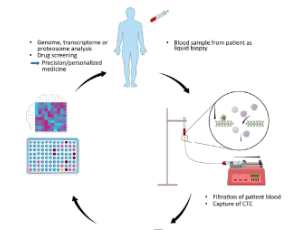
Expansion of Circulating Tumor Cells (CTC), the metastatic seeds of cancer in the blood stream, holds great potential in clinical application, especially towards precision medicine. Given the relatively rare nature of CTCs, their culture remains to be a significant challenge. When developing technologies for CTC culture, there are key elements that need careful consideration, including the speed of culture, compatibility with downstream analysis, and the implementation of the technology into established clinical daily routines. Herein, we briefly discuss the implications of our recent report of an ultrathin filter for the capture and culture of circulating colon cancer cells.
Arch Cancer Biol Ther, 2020, Volume 1, Issue 3, p59-64 | DOI: 10.33696/cancerbiology.1.013
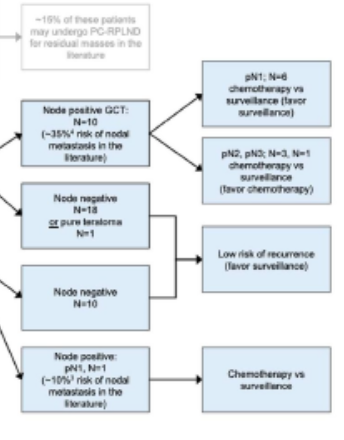
Influence of Clinical Risk Factors on Outcomes in Men with Stage I Non-Seminomatous Germ Cell Tumor Undergoing Robot-Assisted Retroperitoneal Lymph Node Dissection
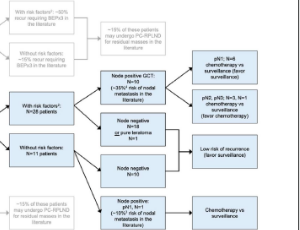
We recently published our multi-institutional experience performing primary robot-assisted retroperitoneal lymph node dissection (RA-RPLND) for men with non-seminomatous germ cell tumor (NSGCT). We concluded that primary RA-RPLND for NSGCT can be performed safely with low complication rates, acceptable early oncologic outcomes, and lower overall theoretical chemotherapy burden. In this commentary, we explore outcomes in clinical stage I patients stratified by clinical risk factors (RF) and estimate reductions in chemotherapy burden.
Arch Cancer Biol Ther, 2020, Volume 1, Issue 3, p64-67 | DOI: 10.33696/cancerbiology.1.014
Sentinel Lymph Node Biopsy after Neoadjuvant Chemotherapy for Breast Cancer
Breast cancer is the second most common cancer worldwide, affecting nearly one in eight women. Accurate cancer staging is essential for determining the patient’s prognosis and for choosing the appropriate treatment. The staging system most often used is the American Joint Committee on Cancer (AJCC) TNM system, where T refers to the size of the tumor, N refers to spread of the primary cancer to nearby lymph nodes, and M refers to the spread of metastasis to distant sites in the body.
Arch Cancer Biol Ther, 2020, Volume 1, Issue 3, p68-71 | DOI: 10.33696/cancerbiology.1.015

Prevalence of Symptom Clusters in Cancer Patients at First Presentation in Palliative Care Clinic as per Different Disease Groups
Cancer has its own disease burden and patients usually suffer from symptom clusters when they are referred for palliative treatment. Identification of symptom cluster trajectories will help clinician to take into account measures that can optimize quality of life of palliative patients. Therefore the aim of this paper is to determine the overall prevalence of symptoms and symptoms clusters in different disease groups according to etiology at the time of first visit to Palliative care clinic by using HIS Palliative First Assessment note indicating Edmonton symptom scale.
Chimeric Antigen Receptor CAR NK Cells Emerging Immunotherapy for the Treatment of Cancer
Although NK cells are recognized as effector lymphocytes of the innate immune system, they also regulate the adaptive immune response by releasing inflammatory cytokines and developing immunological memory. Unlike other lymphocytes such as T or B cells, NK cells do not express rearrangeable, antigen-specific receptors.
Emerging Role of TRPML1 Mucolipin Endolysosomal Channel in Cancer
The transient receptor potential mucolipin 1 (TRPML1) is an endolysosomal channel belonging to the TRP family. Clinically, mutations of TRPML1 have been responsible for a severe lysosomal storage disorder called mucolipidosis type IV.
Uniportal VATS Lobectomy for Lung Cancer: Feasibility and Cost Effectiveness in a Single Center Experience
In last decades, video-assisted thoracic surgery (VATS) together with robotic-assisted thoracic surgery (RATS) can be considered the biggest innovation in thoracic surgery. This approach drastically changed the way of performing surgical operations, improving patient’s outcome undergoing thoracic surgery.
Circulating Cell-Free RNA: A New Perspective for Endometrial Cancer
In order to implement the knowledge of cancer to monitor its evolution and setting, in the last decade, new minimally invasive and repeatable samples collection have been developed such as liquid biopsy. Cancer biomarkers originating from tumors can represent the molecular status of the tumor or its metastases which release them directly into body fluids or indirectly due to disruption of tumor/metastatic tissue. These biomarkers are detectable in liquid biopsy.
Searching for Easy Reliable Prognostic Parametres in Colorectal Cancer Patients Evaluation
Tumor node metastasis (TNM) staging system is the most useful method in predicting prognosis of colorectal cancer (CRC), the third most common cause of death worldwide, even if other biological markers are currently under evaluation to assess their role in affecting CRC outcome and planning the best tailored therapeutic approach. Several molecular factors are being demonstrated to be effective in influencing both overall survival (OS) and disease-free survival (DFS) in CRC, acting on different aspects of tumor promoting and progression.
Deubiquitinase as Potential Targets for Cancer Immunotherapy
During the last few decades, immunotherapy is considered to be an important approach to help our immune system to fight various kinds of diseases, such as tumor. Sometimes, it works very well for some types of cancers, for example: bladder cancer, colorectal cancer, breast cancer and lymphoma.
The Challenge of Cognitive Dissonance in the Delivery of Precision Medicine in Veterinary Oncology
The use of molecular and genomic analysis of a cancer as a means to define a patient-specific treatment is interchangeably referred to as Precision Medicine, Personalized Medicine, or Genomically-directed medicine (herein, collectively PMED). In the foregoing commentary we have focused on PMED approaches related to treatment selection and do not prioritize the development of novel molecular assays used to guide patient diagnostics or prognostication.
Synthetic Lethal Drug Combinations Targeting Proteasome and Histone Deacetylase Inhibitors in TP53-Mutated Cancers
Background: We have recently published SL-BioDP, a web resource for querying, exploration and visualization of potential synthetic lethal targets and possible synergistic drug combinations for 18 cancer types. Methods: From our predictive synthetic lethality model used in SL-BioDP, we inferred TP53 mutation lead to potential synergistic drug combination of Bortezomib and Vorinostat. Here we show, how to extrapolate the drug combination results by combining drug screening data from cancer cell lines and showed the potential synergy of the drug targets, proteasome, and histone deacetylase (HDAC) pathways respectively, for patient survival advantage.
Role of the Gut Microbiome in the Modulation of Cancer Immunotherapy Response
The gut microbiome or gut flora is a vast community of microorganisms such as bacteria, viruses, protozoa, and fungi that inhabit the digestive tract of the human and other animals. In the human body, bacterial species colonize into the oral cavity, skin, vagina, and placenta, however, the largest population of microorganisms resides in the intestine. The majority of gut microbiota belong to the phyla Firmicutes, Bacteroidetes, Proteobacteria and Actinobacteria.
Do Support Vector Machines Play a Role in Stratifying Patient Population Based on Cancer Biomarkers
Cancer is a worldwide public health issue that affects millions of people every year. In 2018 there were 17 million newly documented cases of cancer globally (8.8 million in men and 8.2 million in women), leading to 9.6 million deaths. Cancer is a vastly heterogeneous disease, with over 100 different types of cancer currently identified in humans; the most common types of cancer are lung, female breast, bowel and prostate, these four types account for more than 40% of all new cancer case
Prognostic Role of Human Epididymis Protein 4 (HE4) in Ovarian Cancer Treatment: Our Point of View
In the last 10 years, the marker “Human Epididymis protein 4 (HE4)” for the management of gynecological tumors has entered powerfully in the world literature. At the moment, carrying out an accurate research in the main scientific portals such as PubMed, we can find more than 2,000 works concerning Cancer antigen-125 (Ca125), but those concerning HE4 are less than 400. The assessment of the prognostic significance of Ca125 has been described in more than 1000 scientific papers, whereas in the case of HE4 such works are only about 100.
Can Filtration Technology Advance Culture of Circulating Tumor Cells towards Precision Medicine?
Expansion of Circulating Tumor Cells (CTC), the metastatic seeds of cancer in the blood stream, holds great potential in clinical application, especially towards precision medicine. Given the relatively rare nature of CTCs, their culture remains to be a significant challenge. When developing technologies for CTC culture, there are key elements that need careful consideration, including the speed of culture, compatibility with downstream analysis, and the implementation of the technology into established clinical daily routines. Herein, we briefly discuss the implications of our recent report of an ultrathin filter for the capture and culture of circulating colon cancer cells.
Influence of Clinical Risk Factors on Outcomes in Men with Stage I Non-Seminomatous Germ Cell Tumor Undergoing Robot-Assisted Retroperitoneal Lymph Node Dissection
We recently published our multi-institutional experience performing primary robot-assisted retroperitoneal lymph node dissection (RA-RPLND) for men with non-seminomatous germ cell tumor (NSGCT). We concluded that primary RA-RPLND for NSGCT can be performed safely with low complication rates, acceptable early oncologic outcomes, and lower overall theoretical chemotherapy burden. In this commentary, we explore outcomes in clinical stage I patients stratified by clinical risk factors (RF) and estimate reductions in chemotherapy burden.
Sentinel Lymph Node Biopsy after Neoadjuvant Chemotherapy for Breast Cancer
Breast cancer is the second most common cancer worldwide, affecting nearly one in eight women. Accurate cancer staging is essential for determining the patient’s prognosis and for choosing the appropriate treatment. The staging system most often used is the American Joint Committee on Cancer (AJCC) TNM system, where T refers to the size of the tumor, N refers to spread of the primary cancer to nearby lymph nodes, and M refers to the spread of metastasis to distant sites in the body.
Platelet Hyperactivity and Dysfunction in Diabetes and Cancer
However, the entire coagulation cascade is dysfunctional, in progressed chronic diabetes and cancer patients. Platelets (PLTs) in type 2 diabetic (DT2) involved in Thrombosis and Haemostasis (T&H) of individuals adhere to vascular endothelium and aggregate more voluntarily than those in healthy individuals, as are abnormalities in the microvascular and macrovascular circulations. However it is already known that the circulating PLTs are essential for T&H, inflammation growth factors delivery, regeneration; and knowledge of their function is fundamental to understanding the pathophysiology of vascular disease in diabetes and cancer-related diseases.
Development of HPV 16/18 E6 Oncoprotein Paperbased Nanokit for Enhanced Detection of HPV 16/18 E6 Oncoprotein in Cervical Cancer Screening
According to global cancer statistics GLOBOCAN, carcinoma of cervix is ranked as the fourth most common malignancy among women worldwide with an estimation of 570,000 cases and 311,000 deaths in 2018. It is the second most common female malignancy in Lowand- Middle Income Countries (LMICs). In Kenya, the prevalence is 25 cases per 100,000 women. Approximately 75% cases of cervical cancer are caused by persistent infections of the cervical mucosal epithelium with carcinogenic types of human papillomaviruses (HPVs) mainly 16 and 18.
Gastric Cancer: A Brief Review, from Risk Factors to Treatment
Gastric cancer (GC), also known as stomach cancer, is a worldwide health problem. Anatomically, it can occur from the gastroesophageal junction to distal portions of the stomach. Considering both sexes, worldwide, it is the 5th most common neoplasm (5.7%) and the 3rd cause of mortality among malignancies, leading to approximately 782,000 deaths in 2018. The incidence varies geographically but 50% of new cases are diagnosed in developed countries. High incidence is observed in Asia, Latin America, and in the central and eastern parts of Europe. There are several ways to classify GC, but the most used is Lauren’s Classification, which proposes two main histological groups: intestinal and diffuse. This classification is important because there are marked etiological, pathological, and epidemiological differences between the subgroups, guiding the clinical approach for each patient.
Botulinum Toxin: The Promising Future of Prostate Cancer Treatment
Peripheral nerves have been shown to modulate the growth and spread of tumours in the prostate, feeding both cancer cells and the stroma in the tumour environment. Several in vitro and in vivo studies have reported the effect of botulinum toxin (BT) on tumour tissue in the prostate. BT in humans has been observed to cause increased apoptosis of cancer cells, with morphological changes characterized by extensive degenerative and atrophic areas of cancer, reduced cytoplasm, and pyknotic nuclei, compared to the characteristics of cancer tissues injected with saline solution.
Safety and Efficacy of s-MOX Regimen in Patients with Colorectal Cancer Who Developed Cardiotoxicity Following Fluoropyrimidine Administration: A Case Series
Fluoropyrimidines compose the backbone of regimens to treat many common solid tumors, including gastrointestinal (GI), breast and head/neck. As we continue to use these agents routinely, recognition of rare but real toxicities, such as cardiotoxicity, has also improved. The treatment options for patients who have encountered fluoropyrimidine-induced cardiotoxicity are limited as many anti-angiogenic drugs also pose a cardiac risk.
Scientific Archives is a global publisher initiated with the mission of ensuring equal opportunity for accessing science to research community all over the world. Spreading research findings with great relevance to all channels without any barrier is our goal. We want to overcome the challenges of Open Access with ensured quality and transparency.